
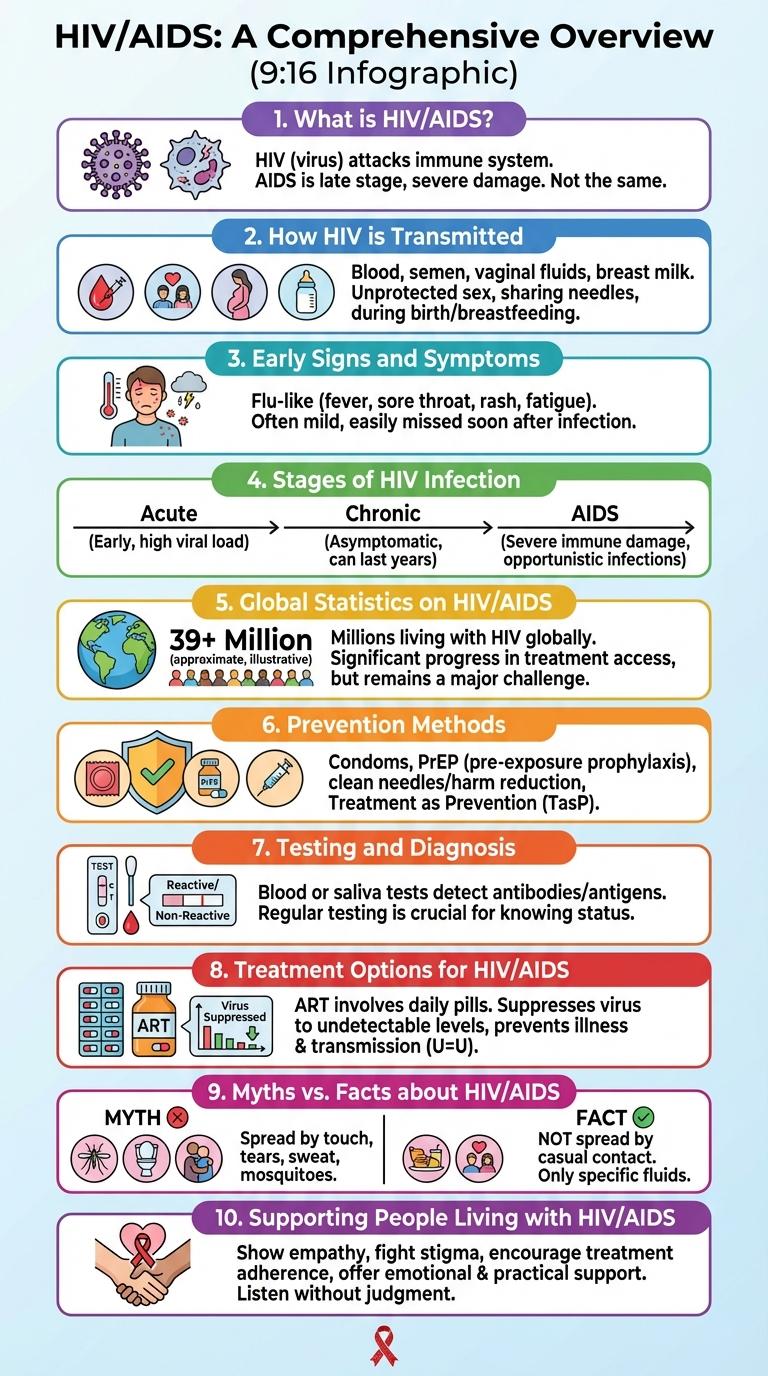
HIV/AIDS remains a critical global health issue with millions affected worldwide. Visual data helps clarify complex information about transmission, prevention, and treatment. Infographics effectively highlight key statistics and promote awareness for better public understanding.
What is HIV/AIDS?
Human Immunodeficiency Virus (HIV) is a virus that attacks the body's immune system, specifically the CD4 cells (T cells), which help the immune system fight infections. If untreated, HIV reduces the number of these cells, making the body more vulnerable to infections and certain cancers.
Acquired Immunodeficiency Syndrome (AIDS) is the most advanced stage of HIV infection. It occurs when the immune system is severely damaged, and the body can no longer defend itself against opportunistic infections or illnesses.
How HIV is Transmitted
HIV (Human Immunodeficiency Virus) spreads through direct contact with certain body fluids from a person who has HIV. Understanding transmission routes is crucial to prevent new infections and protect public health.
- Unprotected Sexual Contact - HIV is commonly transmitted through vaginal, anal, or oral sex without using condoms or HIV prevention medications.
- Sharing Needles or Syringes - Using contaminated needles for drug use or medical injections can directly transmit the virus.
- Mother-to-Child Transmission - HIV can pass from an infected mother to her baby during pregnancy, childbirth, or breastfeeding.
Early Signs and Symptoms
Early detection of HIV/AIDS is crucial for effective management and treatment. Recognizing the initial signs and symptoms can lead to timely medical intervention.
- Fever and Fatigue - Persistent fever and extreme tiredness are common early symptoms of HIV infection.
- Swollen Lymph Nodes - Enlarged lymph nodes often indicate the body's response to viral infection during early HIV stages.
- Skin Rash - A widespread rash can appear within weeks of HIV exposure, signaling the immune system's reaction.
Identifying these early symptoms supports early testing and improves health outcomes for those affected by HIV/AIDS.
Stages of HIV Infection
HIV infection progresses through three main stages: Acute Infection, Clinical Latency, and Acquired Immunodeficiency Syndrome (AIDS). During Acute Infection, the virus rapidly replicates, and flu-like symptoms may appear. Clinical Latency is a prolonged phase where the virus remains active but reproduces at low levels, followed by AIDS, the most severe stage marked by a significant decline in immune function.
Global Statistics on HIV/AIDS
| Statistic | Value |
|---|---|
| People living with HIV worldwide | 38 million (2023) |
| New HIV infections per year | 1.5 million (2023) |
| Annual global AIDS-related deaths | 650,000 (2023) |
| Percentage of people accessing antiretroviral therapy | 85% |
| Regions most affected by HIV/AIDS | Sub-Saharan Africa (67% of global cases) |
Prevention Methods
Preventing HIV/AIDS involves strategies that reduce the risk of transmission through various effective methods. Understanding and utilizing these prevention tactics can significantly decrease new infections worldwide.
- Use of Condoms - Consistent and correct use of condoms during sexual intercourse greatly lowers the chances of HIV transmission.
- Pre-Exposure Prophylaxis (PrEP) - PrEP is a daily medication for people at high risk of HIV to prevent infection before exposure.
- Regular HIV Testing - Frequent testing helps individuals know their status early, enabling timely treatment and reducing transmission risks.
- Safe Injection Practices - Using sterile needles and syringes prevents HIV spread among people who inject drugs.
- Mother-to-Child Transmission Prevention - Antiretroviral therapy during pregnancy, labor, and breastfeeding prevents HIV transmission from mother to baby.
Testing and Diagnosis
HIV testing is crucial for early diagnosis and prompt treatment. Various testing methods include rapid antibody tests, nucleic acid tests (NAT), and home testing kits.
Early diagnosis improves treatment outcomes and reduces transmission risk. Regular testing is recommended for high-risk groups, including sexually active adults and intravenous drug users.
Treatment Options for HIV/AIDS
HIV/AIDS treatment involves antiretroviral therapy (ART), which suppresses the virus and improves quality of life. Early diagnosis and consistent treatment allow people living with HIV to manage the disease effectively.
Antiretroviral drugs work by targeting different stages of the HIV lifecycle, preventing the virus from multiplying. Common classes of ART include NRTIs, NNRTIs, protease inhibitors, and integrase inhibitors. Regular monitoring by healthcare providers is essential to adjust therapy and maintain viral suppression.
Myths vs. Facts about HIV/AIDS
Can HIV be transmitted through casual contact like hugging or sharing utensils? HIV cannot be spread by casual contact such as hugging, shaking hands, or sharing dishes. The virus requires specific bodily fluids like blood, semen, vaginal fluids, or breast milk for transmission.
Is HIV only a concern for certain groups of people? HIV affects individuals regardless of age, gender, ethnicity, or sexual orientation. Anyone exposed to the virus may become infected, highlighting the importance of universal prevention measures.
Does HIV always lead to AIDS immediately after infection? HIV infection does not instantly progress to AIDS; it may take several years without treatment. Antiretroviral therapy can control the virus and delay or prevent the onset of AIDS.
Can a person get HIV by mosquito bites? Mosquitoes do not transmit HIV as the virus cannot reproduce inside insects. HIV transmission requires direct contact with infected bodily fluids.
Is there a cure for HIV/AIDS? Currently, there is no cure for HIV/AIDS, but effective treatments exist that allow people to live long, healthy lives. Early diagnosis and consistent treatment improve outcomes and reduce transmission risk.