
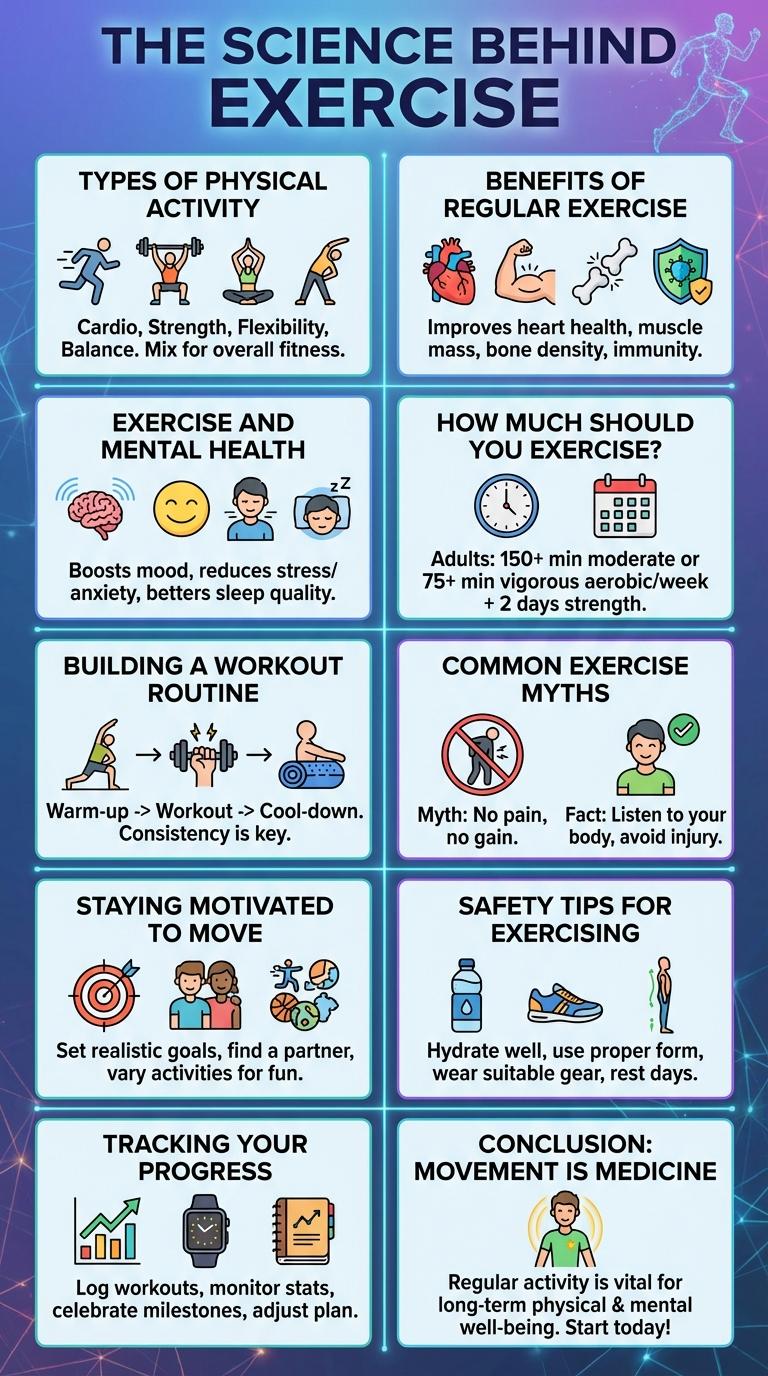
Exercise infographics visually break down essential fitness information, making workout routines easy to understand and follow. They highlight key benefits such as improved cardiovascular health, increased strength, and enhanced mental well-being. These graphical representations help users track progress and stay motivated on their fitness journey.
The Science Behind Exercise
Exercise increases the production of endorphins, chemicals in the brain that reduce pain and trigger positive feelings. Regular physical activity improves cardiovascular health by strengthening the heart and increasing blood circulation. It also enhances brain function by boosting the growth of new neural connections and improving memory and learning.
Types of Physical Activity
| Type of Physical Activity | Description |
|---|---|
| Aerobic Exercise | Activities such as running, cycling, swimming that increase heart rate and improve cardiovascular endurance. |
| Strength Training | Exercises like weightlifting, resistance band workouts focused on building muscle strength and tone. |
| Flexibility Exercises | Stretching routines and yoga improve range of motion and reduce injury risk. |
| Balance Exercises | Activities including tai chi and stability ball workouts that enhance coordination and stability. |
| High-Intensity Interval Training (HIIT) | Short bursts of intense exercise alternated with low-intensity recovery periods to boost metabolism and burn fat. |
Benefits of Regular Exercise
Engaging in regular exercise significantly enhances physical and mental well-being. Consistent physical activity boosts energy levels and promotes longevity.
- Improves Cardiovascular Health - Regular exercise strengthens the heart and reduces the risk of heart disease.
- Enhances Mental Health - Physical activity releases endorphins that help alleviate stress and anxiety.
- Supports Weight Management - Exercise increases metabolism and aids in maintaining a healthy weight.
Incorporating regular exercise into daily routines is essential for overall health and vitality.
Exercise and Mental Health
Exercise significantly improves mental health by reducing symptoms of anxiety and depression. Regular physical activity promotes the release of endorphins, which enhance mood and cognitive function.
- Boosts Mood - Physical activity increases endorphin production, leading to enhanced feelings of happiness.
- Reduces Stress - Exercise lowers cortisol levels, helping to alleviate stress and tension in the body.
- Enhances Sleep Quality - Consistent exercise contributes to deeper, more restful sleep, which supports mental well-being.
How Much Should You Exercise?
Exercise recommendations vary based on age, fitness level, and health goals. The World Health Organization suggests adults engage in at least 150 minutes of moderate-intensity aerobic activity per week.
Combining aerobic exercises with muscle-strengthening activities enhances overall health. Aim for muscle-strengthening exercises on two or more days each week to improve strength and bone health.
Building a Workout Routine
How can you effectively build a workout routine? Establish clear fitness goals to tailor your exercises to your needs. Consistency and gradual progression are key to achieving sustainable results.
What types of exercises should a balanced routine include? Incorporate strength training, cardiovascular workouts, and flexibility exercises for overall health. This combination supports muscle growth, endurance, and injury prevention.
How often should you exercise each week? Aim for at least 150 minutes of moderate-intensity activity or 75 minutes of vigorous activity weekly. Spread workouts across multiple days to maximize recovery and performance.
What role does warm-up and cool-down play in a workout? Warming up prepares your body by increasing blood flow and reducing injury risk. Cooling down aids in recovery by gradually lowering heart rate and stretching muscles.
How can you track progress in your workout routine? Use tools like fitness apps, journals, or wearable devices to monitor performance and improvements. Regular assessments help adjust your routine for continued growth.
Common Exercise Myths
Exercise is essential for maintaining physical and mental health, but many myths can lead to misconceptions. Understanding these common exercise myths helps you create a more effective fitness routine.
Myth: You must exercise every day to see results. Rest days are crucial for muscle recovery and overall performance improvement.
Myth: Cardio is the only way to lose weight. Strength training builds muscle, boosts metabolism, and supports long-term fat loss.
Myth: Sweating means you're burning more fat. Sweat regulates body temperature and is not a direct indicator of fat burning.
Myth: Spot reduction can eliminate fat from specific areas. Fat loss occurs throughout the body, not just in targeted spots.
Staying Motivated to Move
Staying motivated to exercise is essential for maintaining a consistent fitness routine. Understanding key strategies can help you keep moving and achieve your health goals.
- Set Clear Goals - Defining specific, achievable exercise goals increases focus and motivation.
- Create a Routine - Scheduling workouts at regular times builds habit and reduces procrastination.
- Track Your Progress - Monitoring improvements with apps or journals boosts encouragement and accountability.
Safety Tips for Exercising
Exercise improves physical health, mental well-being, and overall energy levels. Following safety tips reduces the risk of injury and enhances workout effectiveness. Proper warm-up, hydration, and using correct form are essential for safe exercise.