
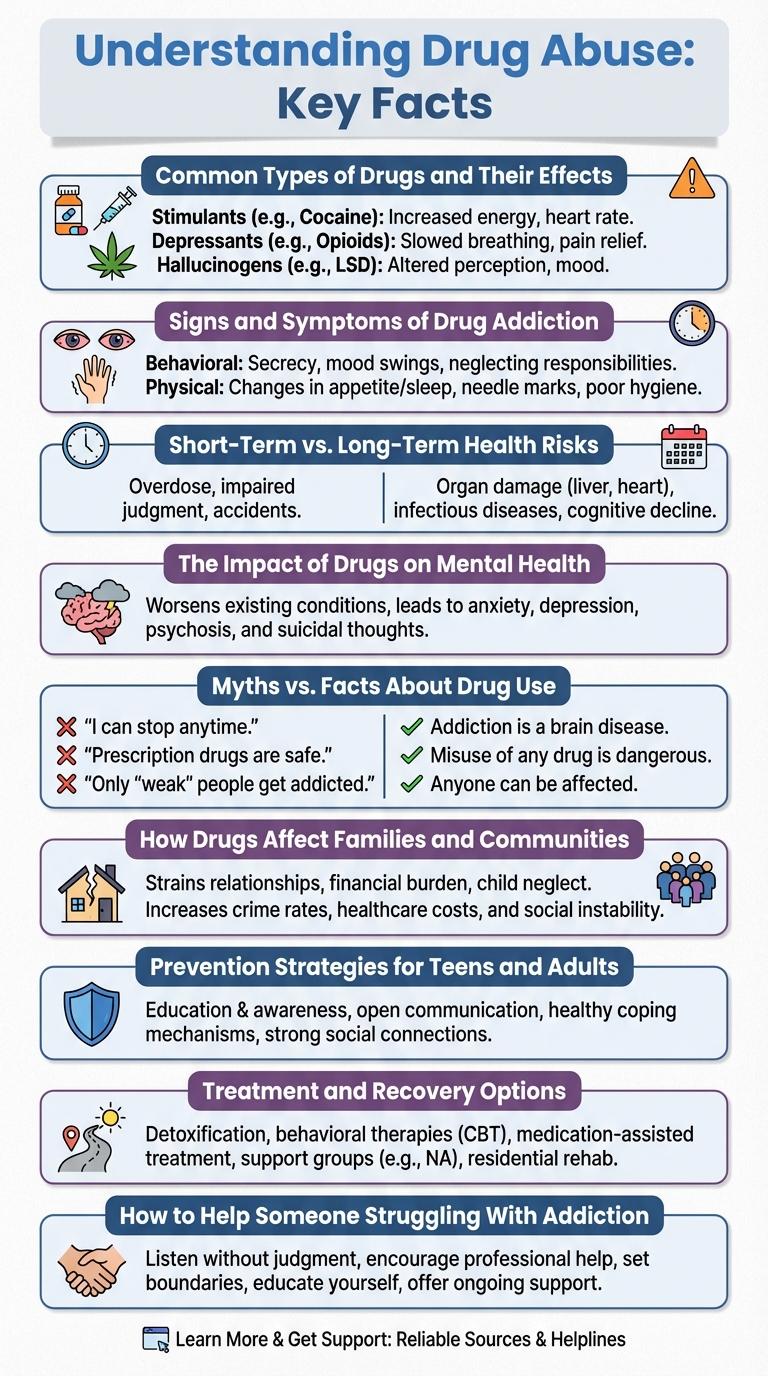
Raising drug awareness is crucial for educating communities about the risks and consequences associated with substance abuse. Infographics offer a visually engaging way to communicate important facts, prevention tips, and support resources effectively. This graphic highlights key information to empower individuals to make informed decisions and promote healthier lifestyles.
Understanding Drug Abuse: Key Facts
Drug abuse affects millions worldwide, impacting physical health, mental well-being, and societal stability. Raising awareness is crucial to prevent misuse and support recovery efforts.
- Prevalence - Over 35 million people experience drug use disorders globally, according to WHO data.
- Health Risks - Drug abuse increases the risk of chronic diseases, mental health issues, and overdose deaths.
- Youth Vulnerability - Adolescents are particularly susceptible due to ongoing brain development and peer pressure.
- Economic Impact - Drug abuse contributes to productivity loss and healthcare costs exceeding billions annually.
- Prevention - Education and community programs significantly reduce rates of drug initiation and abuse.
Common Types of Drugs and Their Effects
Drug awareness is essential to understand the impact of various substances on health. Knowledge about common types of drugs and their effects helps in prevention and informed decision-making.
Stimulants such as cocaine and methamphetamine increase energy and alertness but can lead to heart problems and addiction. Depressants like alcohol and benzodiazepines slow down brain activity, causing relaxation but also impairing coordination and judgment. Hallucinogens, including LSD and psilocybin, distort perception and mood, sometimes resulting in hallucinations and altered thought processes.
Signs and Symptoms of Drug Addiction
Drug addiction often manifests through distinct behavioral and physical signs. Common symptoms include increased secrecy, changes in sleep patterns, and neglect of personal hygiene. Recognizing these indicators early can lead to timely intervention and support.
Short-Term vs. Long-Term Health Risks
Understanding the differences between short-term and long-term health risks of drug use is crucial for informed decisions. This infographic highlights key effects to raise awareness about potential dangers.
- Short-Term Risks - Acute effects like impaired judgment, overdose, and addiction can occur immediately after drug use.
- Long-Term Risks - Chronic health problems such as organ damage, mental health disorders, and cognitive decline develop over prolonged use.
- Prevention Importance - Early education on these risks can reduce the incidence of drug abuse and promote healthier lifestyles.
The Impact of Drugs on Mental Health
Understanding the impact of drugs on mental health is crucial for prevention and recovery. Drug use can significantly alter brain chemistry, affecting emotional stability and cognitive functions.
- Increased Risk of Depression - Substance abuse often leads to chemical imbalances that heighten the likelihood of depressive disorders.
- Anxiety and Panic Disorders - Many drugs trigger or exacerbate anxiety symptoms, disrupting daily functioning and well-being.
- Cognitive Impairment - Long-term drug use impairs concentration, memory, and decision-making abilities.
Raising awareness about these mental health risks can promote healthier choices and support effective interventions.
Myths vs. Facts About Drug Use
Drug use is often surrounded by myths that can mislead individuals about its effects and risks. Understanding the facts behind these misconceptions is crucial for making informed decisions and promoting healthy choices. This infographic highlights common myths versus facts to provide clear and accurate information about drug use.
How Drugs Affect Families and Communities
| Impact on Families | Impact on Communities |
|---|---|
| Increased conflict and breakdown of trust among family members | Higher crime rates linked to drug-related activities |
| Emotional stress and mental health challenges for loved ones | Strain on local healthcare and social services |
| Financial instability due to treatment costs and loss of income | Decreased property values and neighborhood decline |
| Disrupted parenting, leading to long-term effects on children's development | Reduced workforce productivity impacting local economy |
| Higher risk of domestic violence and child neglect | Community efforts directed toward prevention and rehabilitation programs |
Prevention Strategies for Teens and Adults
How can teens and adults effectively prevent drug abuse? Building strong communication skills and fostering supportive relationships reduce the risk of substance misuse. Education on the dangers of drugs and promoting healthy activities serve as key prevention strategies.
What role does environment play in drug prevention? Creating safe, drug-free spaces at home, school, and work discourages initiation of drug use. Community programs offering positive social engagement further protect against substance abuse.
Why is skill development important in drug prevention? Teaching decision-making and stress management skills empowers individuals to resist peer pressure. These skills increase resilience and promote long-term wellness.
How does awareness impact prevention efforts? Understanding the physical and mental health consequences of drug use motivates informed choices. Awareness campaigns targeting both teens and adults foster a culture of prevention.
What are effective support systems in drug prevention? Access to counseling, mentorship, and peer support provides guidance during vulnerable times. Support networks encourage sobriety and healthy lifestyle habits.
Treatment and Recovery Options
Treatment and recovery options for drug addiction vary based on the substance and individual needs. Effective programs combine medical, psychological, and social support to promote sustainable sobriety.
Medications such as methadone or buprenorphine assist in managing withdrawal symptoms and cravings. Behavioral therapies including cognitive-behavioral therapy (CBT) help patients develop coping strategies and prevent relapse.