
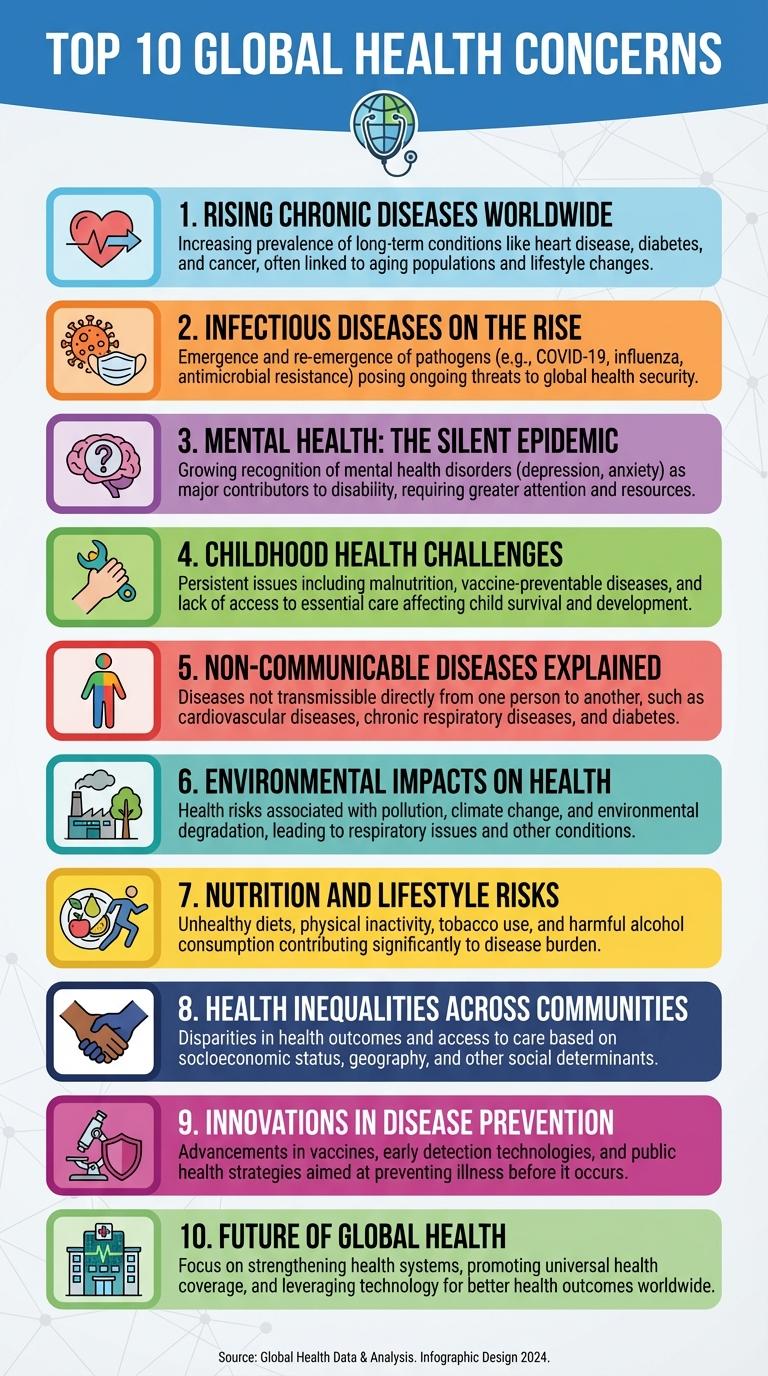
Understanding common health issues is essential for maintaining well-being and preventing chronic conditions. Visual data in an infographic provides clear insights into symptoms, risk factors, and prevention strategies. This approach helps individuals make informed decisions about their health and lifestyle choices.
Top 10 Global Health Concerns
Global health concerns impact millions of lives and require urgent attention to improve health outcomes worldwide. Understanding the top issues helps prioritize efforts in healthcare systems and policy-making.
- Cardiovascular Diseases - Leading cause of death globally, responsible for over 17 million deaths annually.
- Respiratory Diseases - Chronic obstructive pulmonary disease and asthma contribute significantly to global morbidity and mortality.
- Diabetes - Affects over 400 million people worldwide, increasing the risk of serious complications and healthcare costs.
- Infectious Diseases - Diseases like HIV/AIDS, tuberculosis, and malaria remain major public health threats in many regions.
- Mental Health Disorders - Anxiety and depression affect hundreds of millions, contributing significantly to the global burden of disease.
- Cancer - Causes nearly 10 million deaths yearly, representing a growing challenge with aging populations.
- Obesity - Global obesity rates have tripled since 1975, increasing risks for other chronic diseases.
- Maternal and Child Health - High mortality rates persist, especially in low-income countries due to inadequate healthcare access.
- Antimicrobial Resistance - Rising resistance undermines effective treatment of bacterial infections worldwide.
- Environmental Health Risks - Air pollution, water quality, and climate change contribute to a wide range of health problems globally.
Rising Chronic Diseases Worldwide
Chronic diseases such as diabetes, heart disease, and cancer are increasing globally, imposing heavy burdens on healthcare systems. These conditions significantly reduce life expectancy and quality of life across diverse populations.
- Global Prevalence - Over 41 million people die annually from chronic diseases, representing 71% of all deaths worldwide.
- Economic Impact - Chronic illnesses lead to productivity losses exceeding $1 trillion each year due to healthcare costs and absenteeism.
- Risk Factors - Sedentary lifestyles, unhealthy diets, tobacco use, and excessive alcohol consumption drive the rise in chronic disease cases.
Infectious Diseases on the Rise
Infectious diseases are increasing globally, posing significant challenges to public health systems. Factors such as urbanization, climate change, and antibiotic resistance contribute to this rise.
- Emerging Pathogens - New viruses and bacteria continue to appear, leading to outbreaks and pandemics.
- Antibiotic Resistance - Overuse of antibiotics has accelerated the development of drug-resistant infections.
- Global Travel - Increased international travel facilitates rapid spread of infectious agents across borders.
Effective surveillance, vaccination, and public health interventions are crucial to controlling infectious diseases on the rise.
Mental Health: The Silent Epidemic
| Mental Health Statistic | Key Insight |
|---|---|
| 1 in 5 adults experience mental illness annually | Mental health conditions affect 20% of the population each year worldwide |
| 50% of lifetime mental illnesses begin by age 14 | Early intervention is critical to managing long-term mental health |
| Only 43% of people with mental illness receive treatment | Access to mental health care remains limited and stigmatized |
| Suicide is the 2nd leading cause of death among 15-29 year olds | Untreated mental health disorders contribute heavily to youth mortality rates |
| $1 trillion global economic cost per year | Mental health disorders impose a significant financial burden on society |
Childhood Health Challenges
Childhood health challenges significantly impact physical and mental development worldwide. Common issues include respiratory infections, malnutrition, and asthma, which affect millions of children annually.
Early intervention and preventive care play key roles in improving outcomes for children facing health difficulties. Access to vaccinations, proper nutrition, and regular medical check-ups reduces the risk of chronic conditions and supports healthy growth.
Non-Communicable Diseases Explained
Non-Communicable Diseases (NCDs) are chronic conditions that are not transmitted from person to person and include heart disease, diabetes, cancer, and chronic respiratory diseases. These diseases are responsible for over 70% of global deaths, making them a leading public health challenge worldwide. Common risk factors include unhealthy diets, physical inactivity, tobacco use, and excessive alcohol consumption.
Environmental Impacts on Health
Environmental factors significantly influence public health, with air pollution contributing to respiratory diseases and cardiovascular conditions worldwide. Exposure to contaminated water and hazardous chemicals increases the risk of infectious diseases and chronic illnesses. Climate change exacerbates these issues by intensifying natural disasters, causing food insecurity, and spreading vector-borne diseases.
Nutrition and Lifestyle Risks
Nutrition and lifestyle choices significantly impact overall health, influencing the risk of chronic diseases such as heart disease, diabetes, and obesity. Poor dietary habits combined with sedentary lifestyles contribute to the global rise in preventable health conditions.
Balanced nutrition, including sufficient intake of fruits, vegetables, and whole grains, supports immune function and metabolic health. Regular physical activity reduces the risk of lifestyle-related illnesses by improving cardiovascular health and maintaining healthy body weight.
Health Inequalities Across Communities
Health inequalities are disparities in health status or access to healthcare across different communities. These gaps often result from social, economic, and environmental factors affecting vulnerable populations.
Communities with lower income levels experience higher rates of chronic diseases such as diabetes and heart disease. Limited access to quality healthcare and nutritious food contributes significantly to poor health outcomes. Racial and ethnic minorities often face systemic barriers that exacerbate these disparities, leading to reduced life expectancy.