
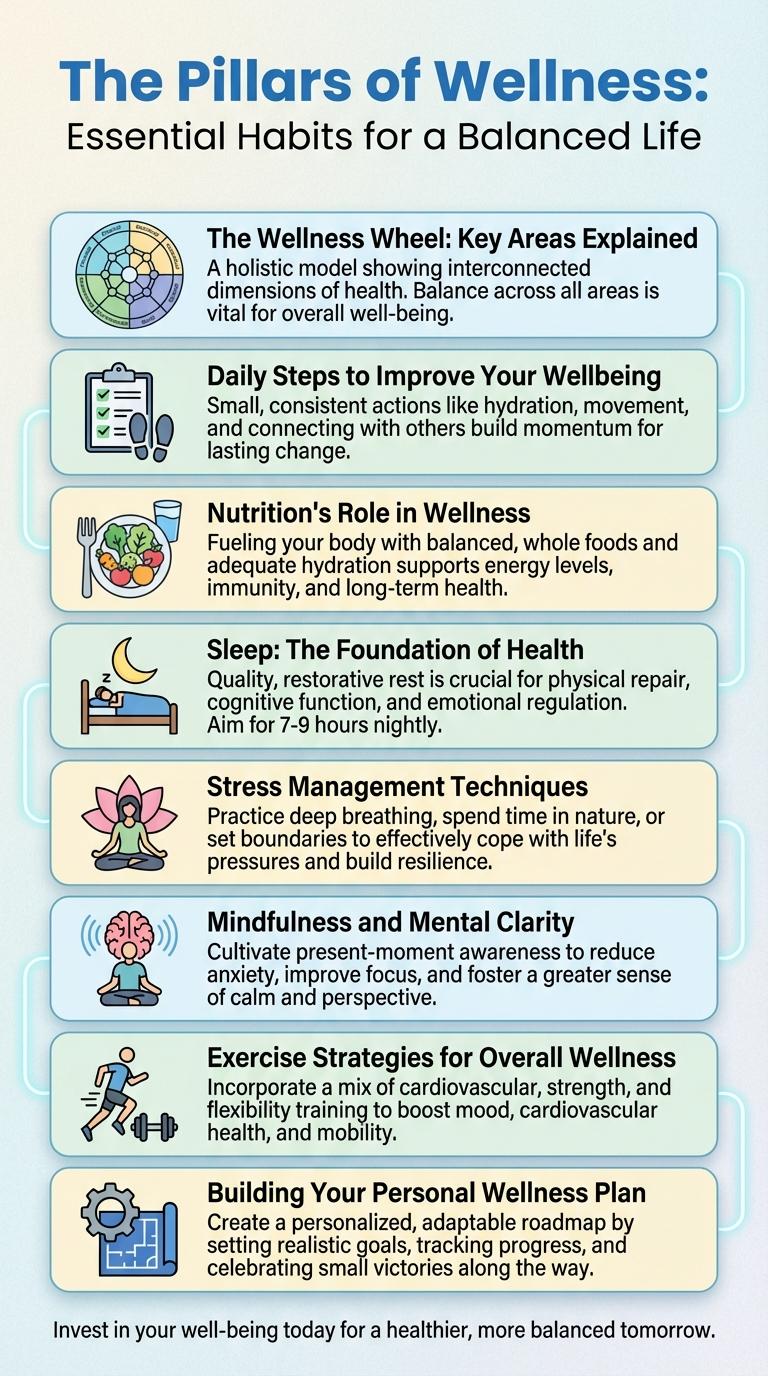
Wellness infographics visually represent key aspects of physical, mental, and emotional health, making complex information easy to understand. These visuals highlight essential habits, benefits, and statistics, promoting a balanced lifestyle. By simplifying data, wellness infographics encourage informed decisions and motivate individuals to prioritize self-care.
The Pillars of Wellness
What are the essential elements that support overall wellness? The Pillars of Wellness encompass physical, emotional, social, intellectual, and spiritual health. These five pillars create a comprehensive framework for maintaining balance and vitality in life.
| Pillar | Description |
|---|---|
| Physical Wellness | Maintaining a healthy body through exercise, nutrition, and sleep. |
| Emotional Wellness | Understanding and managing emotions effectively to foster resilience. |
| Social Wellness | Building meaningful relationships and support networks. |
| Intellectual Wellness | Engaging in continuous learning and critical thinking activities. |
| Spiritual Wellness | Exploring values, beliefs, and purpose to enhance inner peace. |
Essential Habits for a Balanced Life
Wellness is a holistic approach to maintaining physical, mental, and emotional health. Essential habits play a crucial role in achieving a balanced life by promoting overall well-being.
Regular exercise, a nutritious diet, and adequate sleep form the foundation of wellness. Mindfulness practices and social connections further enhance mental clarity and emotional resilience.
The Wellness Wheel: Key Areas Explained
| Wellness Area | Key Focus |
|---|---|
| Physical Wellness | Exercise, nutrition, sleep, regular medical check-ups |
| Mental Wellness | Stress management, mindfulness, cognitive health |
| Emotional Wellness | Self-awareness, emotional regulation, healthy relationships |
| Social Wellness | Community involvement, communication skills, support networks |
| Spiritual Wellness | Purpose, values alignment, meditation, connection to nature |
Daily Steps to Improve Your Wellbeing
Wellness is a holistic approach to maintaining a balanced and healthy lifestyle. Small daily habits can significantly enhance your physical, mental, and emotional wellbeing.
Incorporating simple steps into your routine can boost energy levels and reduce stress. Focus on practices that nurture your body and mind consistently.
Nutrition's Role in Wellness
Nutrition fundamentally influences overall wellness by providing essential nutrients that support bodily functions. Balanced diets contribute to physical health, mental clarity, and long-term disease prevention.
- Macronutrients Balance - Proper intake of proteins, fats, and carbohydrates fuels energy and repairs tissues efficiently.
- Micronutrients Importance - Vitamins and minerals regulate immune responses and metabolic processes critical for health.
- Hydration Effect - Adequate water consumption maintains cellular functions and supports mental focus throughout the day.
Sleep: The Foundation of Health
Sleep is essential for maintaining physical and mental health. Quality rest supports immune function, cognitive performance, and emotional wellbeing.
- Regulates Body Functions - Sleep helps balance hormones that control appetite, stress, and growth.
- Boosts Immune System - Adequate sleep enhances the body's ability to fight infections and inflammation.
- Improves Memory and Learning - During sleep, the brain consolidates information and enhances problem-solving skills.
Prioritizing 7-9 hours of quality sleep nightly is vital for overall wellness.
Stress Management Techniques
Effective stress management is essential for maintaining overall wellness and improving mental clarity. Utilizing proven techniques can reduce anxiety and enhance quality of life.
- Deep Breathing Exercises - Controlled breathing slows heart rate and promotes relaxation.
- Physical Activity - Regular exercise releases endorphins that improve mood and reduce stress hormones.
- Mindfulness Meditation - Focusing on the present moment decreases negative thoughts and enhances emotional resilience.
Mindfulness and Mental Clarity
Mindfulness enhances wellness by promoting mental clarity and reducing stress. Practices such as meditation and deep breathing improve focus and emotional balance. Consistent mindfulness habits lead to a healthier mind and overall well-being.
Exercise Strategies for Overall Wellness
Exercise strategies for overall wellness include a balanced mix of cardiovascular, strength, and flexibility training. Consistent physical activity improves mental health, boosts energy levels, and reduces the risk of chronic diseases. Aim for at least 150 minutes of moderate exercise each week combined with muscle-strengthening activities twice weekly.