
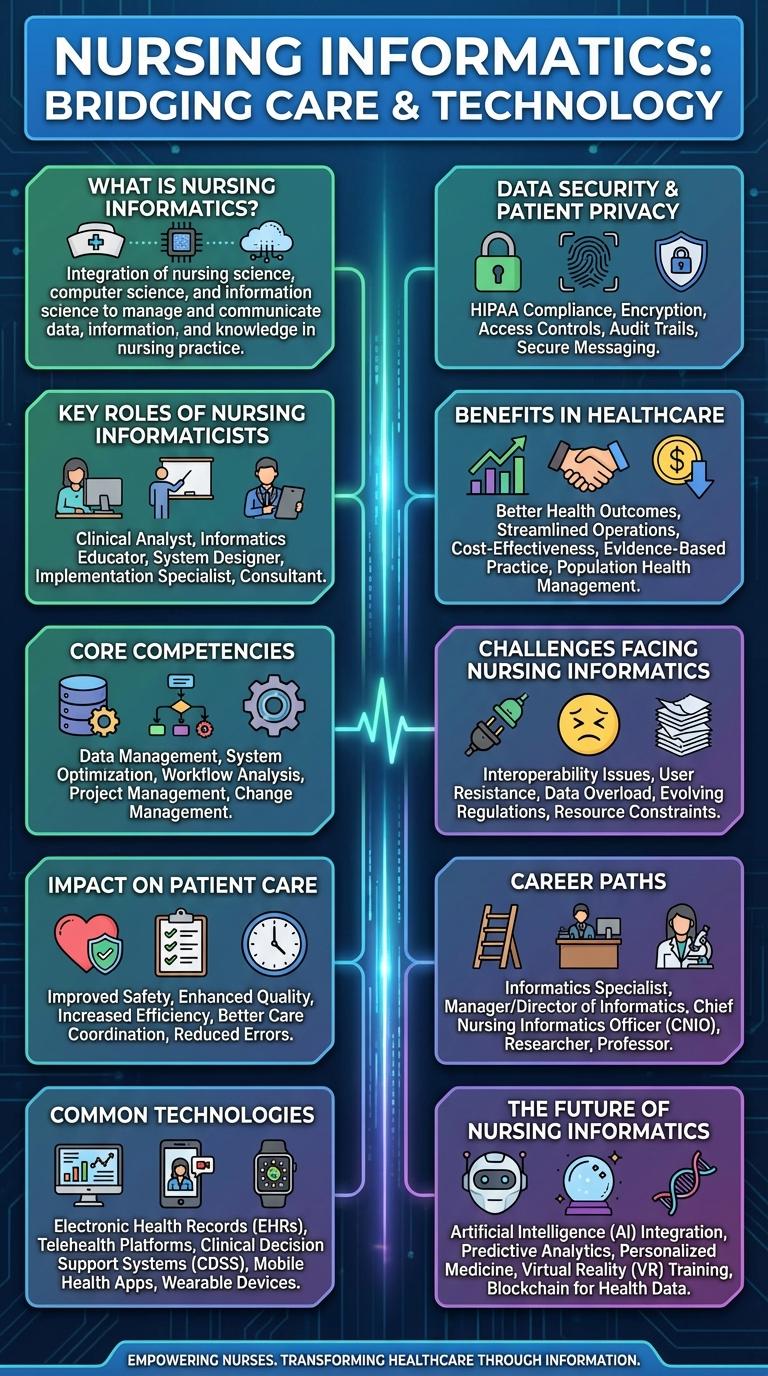
Nursing informatics integrates healthcare, information technology, and data management to enhance patient care and clinical workflows. This field empowers nurses to use electronic health records and data analytics for informed decision-making and improved outcomes. Visualizing these concepts through an infographic highlights key tools, benefits, and evolving trends in nursing informatics.
What is Nursing Informatics?
Nursing informatics integrates nursing science with information technology to enhance patient care and healthcare outcomes. It involves the management and analysis of health data to support clinical decision-making and improve communication among healthcare providers. This field empowers nurses to use technology efficiently, ensuring more accurate documentation and streamlined workflows.
Key Roles of Nursing Informaticists
Nursing informatics integrates nursing science with information technology to enhance patient care. It focuses on managing and analyzing healthcare data to improve outcomes and streamline clinical workflows.
Nursing informaticists play a key role in implementing electronic health records (EHRs) and training staff on digital tools. They analyze clinical data to support evidence-based decision-making and optimize healthcare processes. Their work ensures technology aligns with nursing practice and patient needs.
Core Competencies in Nursing Informatics
Nursing informatics integrates nursing science, computer science, and information technology to manage and communicate data, information, knowledge, and wisdom in nursing practice. Core competencies in nursing informatics ensure effective use of technology to improve patient care and outcomes.
Key competencies include clinical informatics skills, data management, and the ability to analyze and apply health data for decision-making. Proficiency in electronic health records (EHR), telehealth, and security protocols is essential for modern nursing professionals.
Impact of Nursing Informatics on Patient Care
Nursing informatics integrates nursing science with information technology to enhance patient care quality. It improves data management, streamlines communication, and supports clinical decision-making. These advancements lead to better patient outcomes, increased safety, and more efficient healthcare delivery.
Common Technologies in Nursing Informatics
Nursing informatics integrates nursing science with information technology to improve patient care outcomes. Common technologies in this field enhance data management, communication, and clinical decision-making.
- Electronic Health Records (EHRs) - Digital versions of patients' paper charts that provide real-time, patient-centered records accessible to authorized users.
- Clinical Decision Support Systems (CDSS) - Software tools that assist nurses in making informed clinical decisions based on patient data and evidence-based guidelines.
- Telehealth Technologies - Remote communication tools enabling nurses to monitor, assess, and provide care to patients outside traditional clinical settings.
Data Security and Patient Privacy
Nursing informatics integrates nursing science with information technology to enhance patient care. It plays a critical role in managing health data securely and efficiently.
Data security is essential in nursing informatics to protect sensitive patient information from breaches. Strong encryption and access controls help maintain patient privacy and comply with healthcare regulations.
Benefits of Nursing Informatics in Healthcare
Nursing informatics integrates nursing science with information technology to enhance healthcare outcomes. It plays a crucial role in improving patient care efficiency and accuracy.
- Improved Patient Safety - Reduces medication errors and enhances clinical decision-making through electronic health records.
- Enhanced Data Management - Streamlines patient information access, enabling timely and informed care.
- Optimized Workflow - Automates routine tasks, allowing nurses to focus more on direct patient care.
Nursing informatics transforms healthcare by combining technology and nursing expertise to deliver superior patient outcomes.
Challenges Facing Nursing Informatics
Nursing informatics integrates nursing, information science, and computer technology to enhance healthcare delivery. Challenges in this field impact the effectiveness and adoption of health IT systems in clinical settings.
- Data Security Concerns - Protecting patient information from cyber threats remains a critical issue for nursing informatics professionals.
- Integration with Existing Systems - Ensuring seamless interoperability between new informatics tools and legacy healthcare systems is complex and resource-intensive.
- Training and Adaptation - Nurses require ongoing education to effectively use informatics technologies in rapidly evolving clinical environments.
Career Paths in Nursing Informatics
What are the main career paths in nursing informatics? Nursing informatics combines clinical nursing with information technology to improve healthcare delivery. Key career paths include Clinical Informatics Specialist, Nurse Informaticist, Health IT Project Manager, and Nursing Data Analyst.
How does a Clinical Informatics Specialist contribute to healthcare? They bridge the gap between nursing practice and IT systems, ensuring electronic health records (EHR) optimize patient care. Their role enhances data accuracy and supports clinical decision-making.
What responsibilities does a Nurse Informaticist hold? Nurse Informaticists design, implement, and manage health information systems tailored to nursing workflows. They provide training and troubleshoot system issues to improve healthcare outcomes.
Why is a Health IT Project Manager important in nursing informatics? They lead projects involving health information technology deployments or upgrades in clinical settings. Managing timelines, resources, and stakeholder communication is critical to successful project execution.
What skills define a Nursing Data Analyst? They analyze healthcare data to identify trends, improve patient outcomes, and support evidence-based practice. Proficiency in data visualization tools and statistical software is essential for this role.