
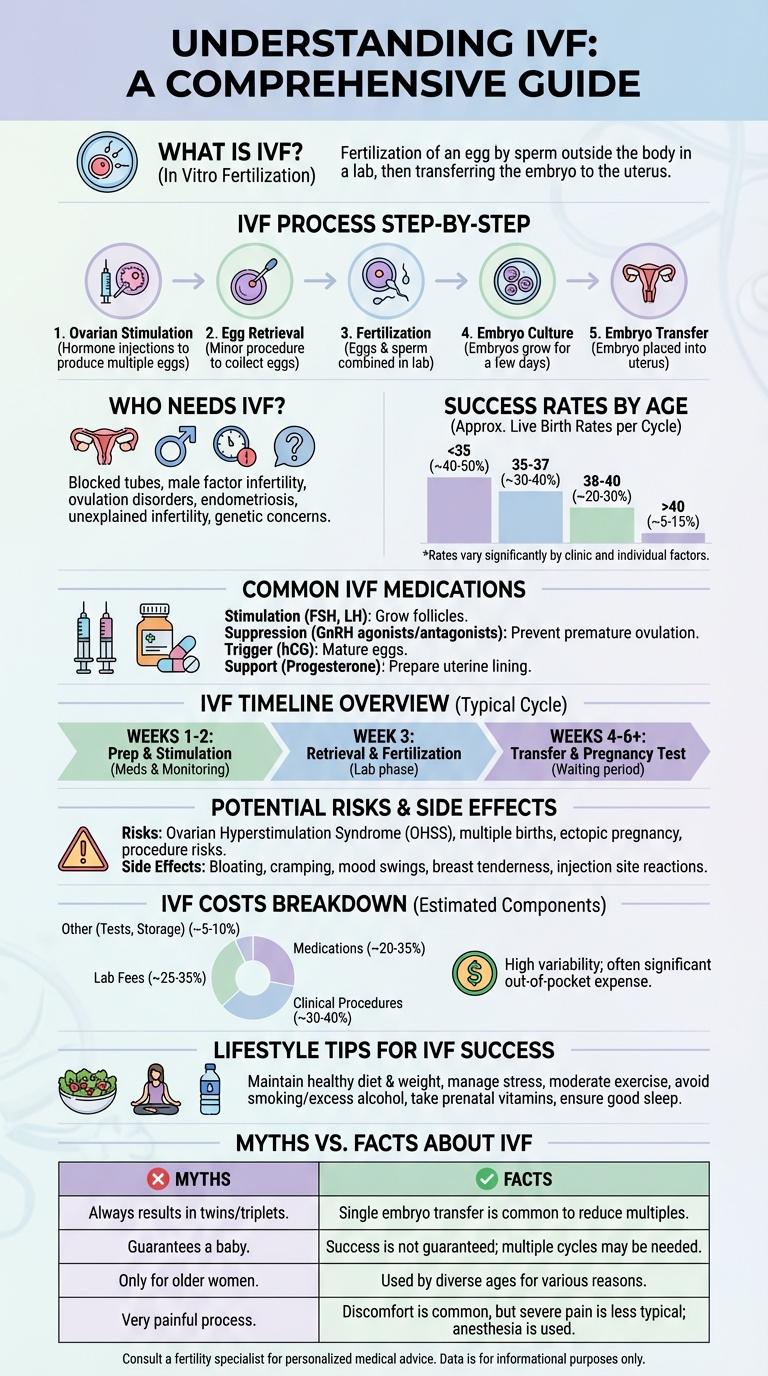
Infographic about IVF visually explains the complex process of in vitro fertilization, highlighting key steps from egg retrieval to embryo transfer. It presents essential information on success rates, common procedures, and potential risks involved in IVF treatments. This clear visual guide helps patients and healthcare providers understand the journey of assisted reproductive technology.
What is IVF?
| Aspect | Details |
|---|---|
| Definition | In Vitro Fertilization (IVF) is an assisted reproductive technology that involves fertilizing an egg with sperm outside the human body. |
| Process | Egg retrieval from ovaries, fertilization in lab, embryo culture, then embryo transfer to uterus. |
| Purpose | Helps individuals or couples facing infertility conceive a child. |
| Success Factors | Age, egg quality, sperm quality, embryo health, and uterine environment influence outcomes. |
| Applications | Treats blocked fallopian tubes, male infertility, unexplained infertility, and genetic screening. |
IVF Process Step-by-Step
In Vitro Fertilization (IVF) is a complex but effective fertility treatment involving several key steps. Each stage is carefully managed to optimize the chances of successful pregnancy.
The process begins with ovarian stimulation, where medication encourages the production of multiple eggs. These eggs are then retrieved from the ovaries using a minor surgical procedure.
Next, the retrieved eggs are fertilized with sperm in a laboratory setting to create embryos. After a few days of monitoring for healthy development, the best-quality embryos are selected for transfer.
The selected embryos are implanted into the uterus through a thin catheter. Surplus viable embryos can be frozen for future use, increasing the overall chances of success.
Who Needs IVF?
In vitro fertilization (IVF) is a medical procedure designed for individuals or couples facing fertility challenges. It helps facilitate conception when natural methods have proven difficult or unsuccessful.
IVF is commonly needed by those with blocked or damaged fallopian tubes, severe male infertility, or unexplained infertility. Women with ovulation disorders or advanced maternal age also benefit significantly from IVF treatments.
Success Rates by Age
In vitro fertilization (IVF) success rates vary significantly based on age, with higher chances observed in younger women. Women under 35 experience success rates of approximately 40-50% per cycle, while those over 40 see rates drop below 10-15%. Understanding these statistics helps individuals make informed decisions regarding fertility treatments.
Common IVF Medications
In vitro fertilization (IVF) involves multiple medications to stimulate ovulation and support embryo implantation. Understanding common IVF medications helps in managing treatment effectively.
- Gonadotropins - Hormones used to stimulate the ovaries to produce multiple eggs during a cycle.
- GnRH Agonists and Antagonists - Drugs that control hormone release to prevent premature ovulation.
- Progesterone - Administered to prepare the uterine lining for embryo implantation and support early pregnancy.
Proper medication usage enhances the chances of successful fertilization and pregnancy in IVF treatment.
IVF Timeline Overview
In vitro fertilization (IVF) involves several key stages spread over approximately four to six weeks. The process begins with ovarian stimulation, followed by egg retrieval, fertilization, and embryo transfer. A pregnancy test is conducted about two weeks after the embryo transfer to confirm success.
Potential Risks and Side Effects
What are the potential risks associated with IVF treatment?
IVF can cause Ovarian Hyperstimulation Syndrome (OHSS), leading to swollen and painful ovaries. There is also a risk of multiple pregnancies, which can increase complications during pregnancy.
Can IVF cause long-term side effects?
Long-term side effects are rare but may include an increased risk of ovarian cancer in some cases. Emotional stress and anxiety are common during and after the treatment process.
What complications can arise from egg retrieval in IVF?
Egg retrieval can cause bleeding, infection, or damage to surrounding organs. Most complications are minor and resolve quickly with medical care.
Is there a risk of birth defects with babies conceived through IVF?
Studies show a slightly higher risk of birth defects in IVF pregnancies compared to natural conception. The overall risk remains low and varies depending on individual health factors.
How does IVF impact maternal health during pregnancy?
IVF pregnancies have a higher chance of preterm birth and low birth weight. Close medical monitoring helps to manage these risks effectively throughout pregnancy.
IVF Costs Breakdown
In vitro fertilization (IVF) involves multiple cost components that can vary based on location and individual treatment needs. Understanding the breakdown of IVF costs helps prospective patients plan their finances effectively.
- Consultation Fees - Initial medical evaluations and consultations set the foundation for personalized IVF treatment.
- Medications - Fertility drugs used to stimulate ovulation constitute a significant portion of the total expense.
- Laboratory Services - Procedures such as egg retrieval, fertilization, and embryo culture occur in specialized labs requiring expert care.
- Embryo Transfer - Transferring embryos to the uterus is a critical step often charged separately.
- Additional Procedures - Optional services like genetic testing or embryo freezing can increase overall costs.
Lifestyle Tips for IVF Success
In vitro fertilization (IVF) success can be influenced by several lifestyle factors that optimize reproductive health. Making informed lifestyle changes boosts the chances of embryo implantation and healthy pregnancy.
Healthy habits support hormonal balance and improve egg and sperm quality, which are critical for IVF outcomes.
- Maintain a Balanced Diet - Consuming nutrient-rich foods with antioxidants promotes egg and sperm health essential for IVF.
- Manage Stress Effectively - Reducing stress through mindfulness or therapy helps regulate hormones for better fertility results.
- Engage in Moderate Exercise - Regular physical activity enhances circulation and overall reproductive function without overexertion.