
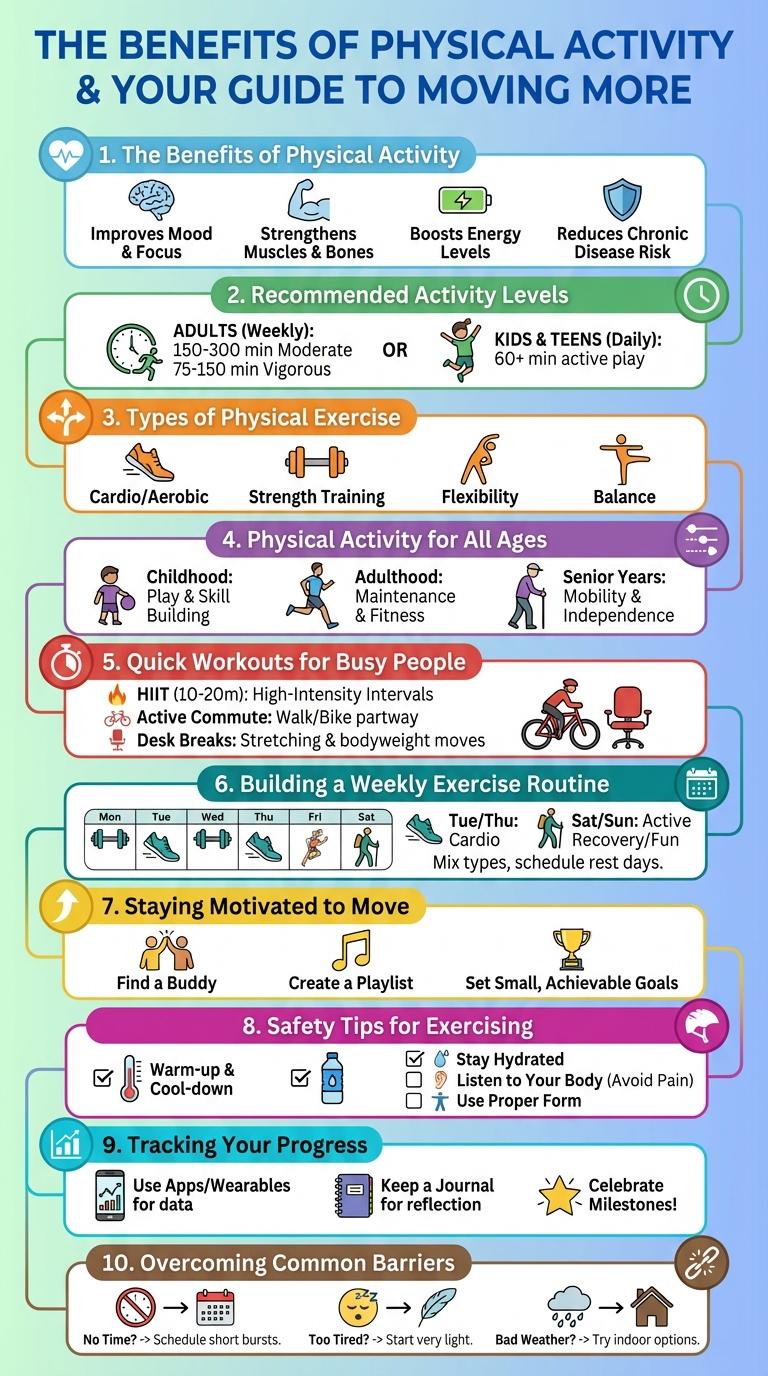
Engaging in regular physical activity boosts cardiovascular health, enhances muscle strength, and improves mental well-being. Visual data in the infographic highlights recommended exercise guidelines, benefits across age groups, and effective ways to incorporate movement into daily routines. Understanding these insights encourages a more active lifestyle that supports overall health and longevity.
The Benefits of Physical Activity
Engaging in regular physical activity significantly improves overall health and well-being. It contributes to enhanced cardiovascular fitness, stronger muscles, and better mental clarity.
Physical activity reduces the risk of chronic diseases such as heart disease, diabetes, and certain cancers. It supports weight management and boosts immune system function. Regular exercise also helps alleviate symptoms of depression and anxiety.
Recommended Activity Levels
| Age Group | Recommended Activity Levels |
|---|---|
| Children (3-5 years) | At least 3 hours per day of physical activity, including energetic play |
| Children and Adolescents (6-17 years) | Minimum 60 minutes of moderate to vigorous activity daily, including aerobic and muscle-strengthening exercises |
| Adults (18-64 years) | 150-300 minutes weekly of moderate-intensity, or 75-150 minutes of vigorous-intensity aerobic activity, plus muscle-strengthening activities twice weekly |
| Older Adults (65+ years) | Same as adults, tailored to ability, focusing on balance and flexibility exercises to prevent falls |
Types of Physical Exercise
What are the main types of physical exercise? Physical exercises are categorized based on their impact on strength, endurance, flexibility, or balance. These types help target different muscle groups and improve overall fitness.
| Type of Exercise | Description |
|---|---|
| Aerobic | Exercises like running and cycling that improve cardiovascular endurance. |
| Strength Training | Activities such as weightlifting that increase muscle mass and strength. |
| Flexibility | Stretching exercises enhancing the range of motion of joints. |
| Balance | Exercises like yoga and tai chi that improve stability and coordination. |
Physical Activity for All Ages
Engaging in regular physical activity benefits individuals of all ages by improving cardiovascular health, enhancing muscle strength, and boosting mental well-being. Children develop motor skills and social interaction, adults maintain a healthy weight and reduce chronic disease risk, while older adults improve balance and cognitive function. Incorporating activities like walking, cycling, or swimming can support lifelong fitness and overall wellness.
Quick Workouts for Busy People
Quick workouts offer effective fitness solutions for individuals with tight schedules. Maximizing exercise benefits in minimal time boosts overall health and energy levels.
- High-Intensity Interval Training (HIIT) - Alternates short bursts of intense activity with recovery periods to burn calories fast.
- Bodyweight Exercises - Uses no equipment and targets multiple muscle groups for strength and endurance.
- Tabata Protocol - A 4-minute workout consisting of 20 seconds of maximum effort followed by 10 seconds of rest, repeated 8 times.
Incorporating these quick workouts regularly supports maintaining fitness despite a busy lifestyle.
Building a Weekly Exercise Routine
Creating a consistent weekly exercise routine improves physical health and boosts mental well-being. Structured planning ensures balanced workouts and long-term fitness success.
- Set Clear Goals - Define specific fitness objectives like strength, endurance, or flexibility to guide your weekly plan.
- Schedule Workouts - Allocate dedicated time slots throughout the week for different types of physical activity to maintain consistency.
- Mix Exercise Types - Incorporate cardio, strength training, and stretching to promote overall fitness and prevent injury.
Staying Motivated to Move
Staying motivated to move requires setting clear, achievable goals that fit your lifestyle. Tracking progress and celebrating small milestones boosts confidence and commitment. Finding activities you enjoy transforms exercise from a chore into a rewarding habit.
Safety Tips for Exercising
Engaging in physical activity promotes overall health and well-being. Practicing safety during exercise reduces the risk of injury and enhances performance.
- Warm Up Properly - Begin each session with light aerobic exercises to prepare muscles and prevent strains.
- Stay Hydrated - Drink water before, during, and after exercise to maintain optimal body function and prevent dehydration.
- Use Proper Equipment - Wear suitable footwear and protective gear to support your body and avoid injuries.
Tracking Your Progress
Tracking your physical activity progress helps maintain motivation and achieve fitness goals. Using apps or wearable devices provides accurate and real-time data on your workouts.
Regularly reviewing your progress highlights improvements and identifies areas needing adjustment. Consistent tracking encourages accountability and fosters a sustainable fitness routine.