
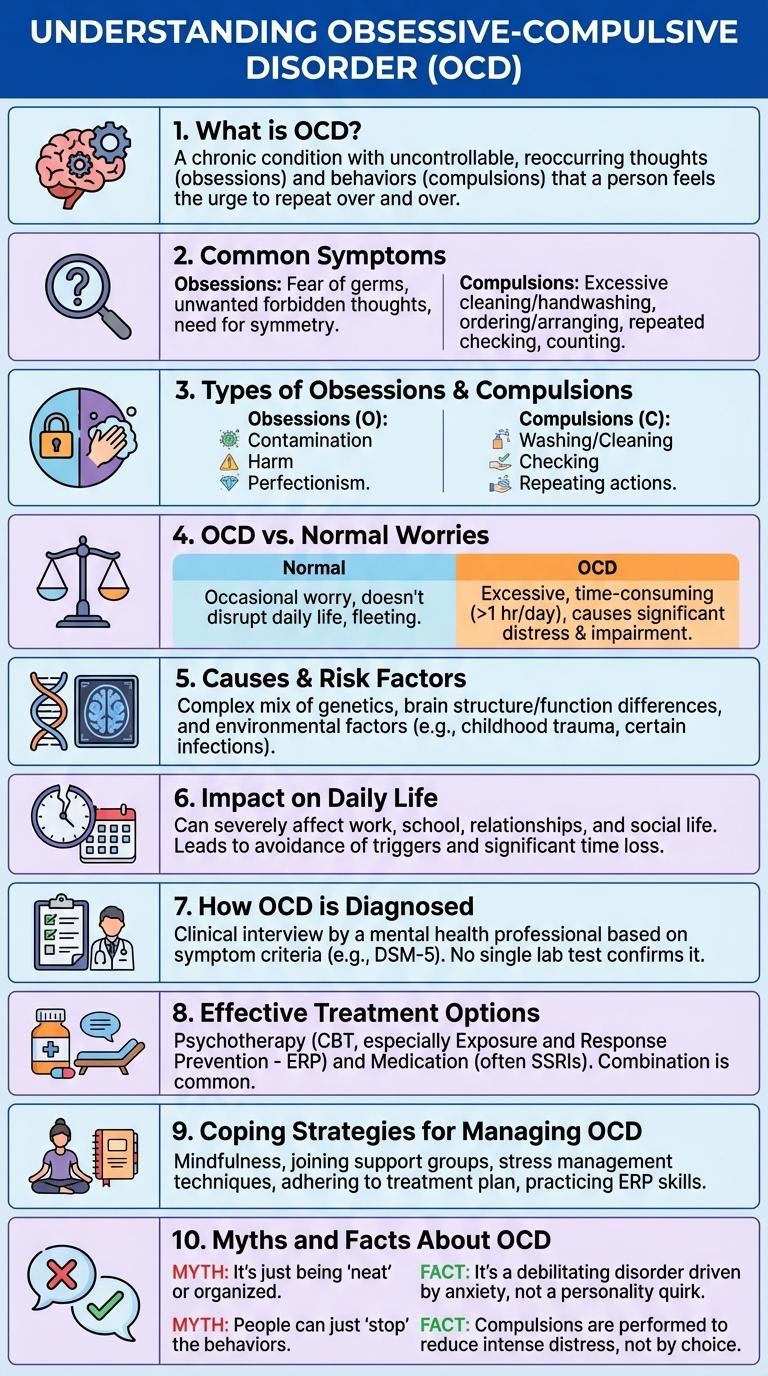
Obsessive-Compulsive Disorder (OCD) affects millions worldwide, characterized by intrusive thoughts and repetitive behaviors. Visualizing key information through an infographic helps clarify symptoms, causes, and treatment options. This accessible format enhances understanding and awareness for individuals and caregivers alike.
What is Obsessive-Compulsive Disorder (OCD)?
Obsessive-Compulsive Disorder (OCD) is a chronic mental health condition characterized by uncontrollable, recurring thoughts (obsessions) and repetitive behaviors (compulsions). These obsessions and compulsions interfere significantly with daily life and cause distress.
Individuals with OCD often feel compelled to perform certain rituals to reduce anxiety caused by obsessive thoughts. The disorder affects approximately 1-2% of the global population and can vary in severity over time.
Common Symptoms of OCD
Obsessive-Compulsive Disorder (OCD) is a mental health condition characterized by unwanted recurring thoughts and repetitive behaviors. Recognizing common symptoms helps in early identification and treatment.
- Obsessions - Persistent, intrusive thoughts or urges that cause distress and anxiety.
- Compulsions - Repetitive actions or rituals performed to reduce the anxiety from obsessions.
- Time-consuming behaviors - Symptoms often interfere with daily activities by consuming significant time.
Early diagnosis and therapy can significantly improve quality of life for those affected by OCD.
Types of Obsessions and Compulsions
Obsessive-Compulsive Disorder (OCD) involves persistent, unwanted thoughts and repetitive behaviors. Understanding the types of obsessions and compulsions clarifies the condition's complexity.
- Contamination Obsessions - Intense fears of germs or dirt leading to excessive cleaning rituals.
- Symmetry and Order Obsessions - Urges to arrange objects perfectly or perform tasks in a specific order.
- Checking Compulsions - Repeatedly verifying locks, appliances, or safety measures to prevent harm.
OCD vs. Normal Worries
| OCD Characteristics | Normal Worries |
|---|---|
| Persistent and intrusive thoughts called obsessions | Occasional concerns about everyday issues |
| Compulsions: repetitive behaviors to reduce anxiety | No repetitive actions; solutions focus on problem-solving |
| Interferes significantly with daily functioning | Usually temporary and manageable without disruption |
| Anxiety remains high despite attempts to ignore or suppress | Anxiety decreases once the issue is addressed or time passes |
| Thoughts seen as irrational and unwanted but are uncontrollable | Worries are proportionate and based on realistic concerns |
Causes and Risk Factors of OCD
Obsessive-Compulsive Disorder (OCD) is a mental health condition characterized by persistent, unwanted thoughts (obsessions) and repetitive behaviors (compulsions). The exact causes of OCD are complex and involve multiple genetic, neurological, and environmental factors.
Risk factors for OCD include a family history of the disorder, certain brain structure abnormalities, and traumatic life events. Stressful experiences and childhood infections have also been linked to increased OCD risk.
Impact of OCD on Daily Life
Obsessive-Compulsive Disorder (OCD) significantly disrupts daily routines by causing persistent, unwanted thoughts and repetitive behaviors. These symptoms interfere with personal, social, and professional activities, reducing overall quality of life.
Individuals with OCD often spend hours performing compulsions, which limits time for work, family, and leisure. The disorder can lead to increased anxiety, stress, and fatigue, further hindering daily functioning. Social interactions may suffer due to embarrassment or misunderstanding of OCD behaviors.
How OCD is Diagnosed
Obsessive-Compulsive Disorder (OCD) diagnosis involves a comprehensive clinical evaluation by a mental health professional. Diagnosis is based on the presence of persistent, unwanted obsessions and compulsions that interfere with daily functioning. Standardized assessment tools like the Yale-Brown Obsessive Compulsive Scale (Y-BOCS) help quantify symptom severity for accurate diagnosis.
Effective Treatment Options
Effective treatment options for Obsessive-Compulsive Disorder (OCD) primarily include Cognitive Behavioral Therapy (CBT) with Exposure and Response Prevention (ERP), which helps patients confront and reduce their compulsive behaviors. Medication such as selective serotonin reuptake inhibitors (SSRIs) can also significantly alleviate symptoms by balancing brain chemistry. Combining therapy and medication often yields the best outcomes for managing OCD long-term.
Coping Strategies for Managing OCD
What are effective coping strategies for managing OCD? Cognitive-behavioral therapy (CBT), especially Exposure and Response Prevention (ERP), is a primary treatment for reducing OCD symptoms. Mindfulness techniques can help patients observe their thoughts without judgment, decreasing compulsive behaviors.