
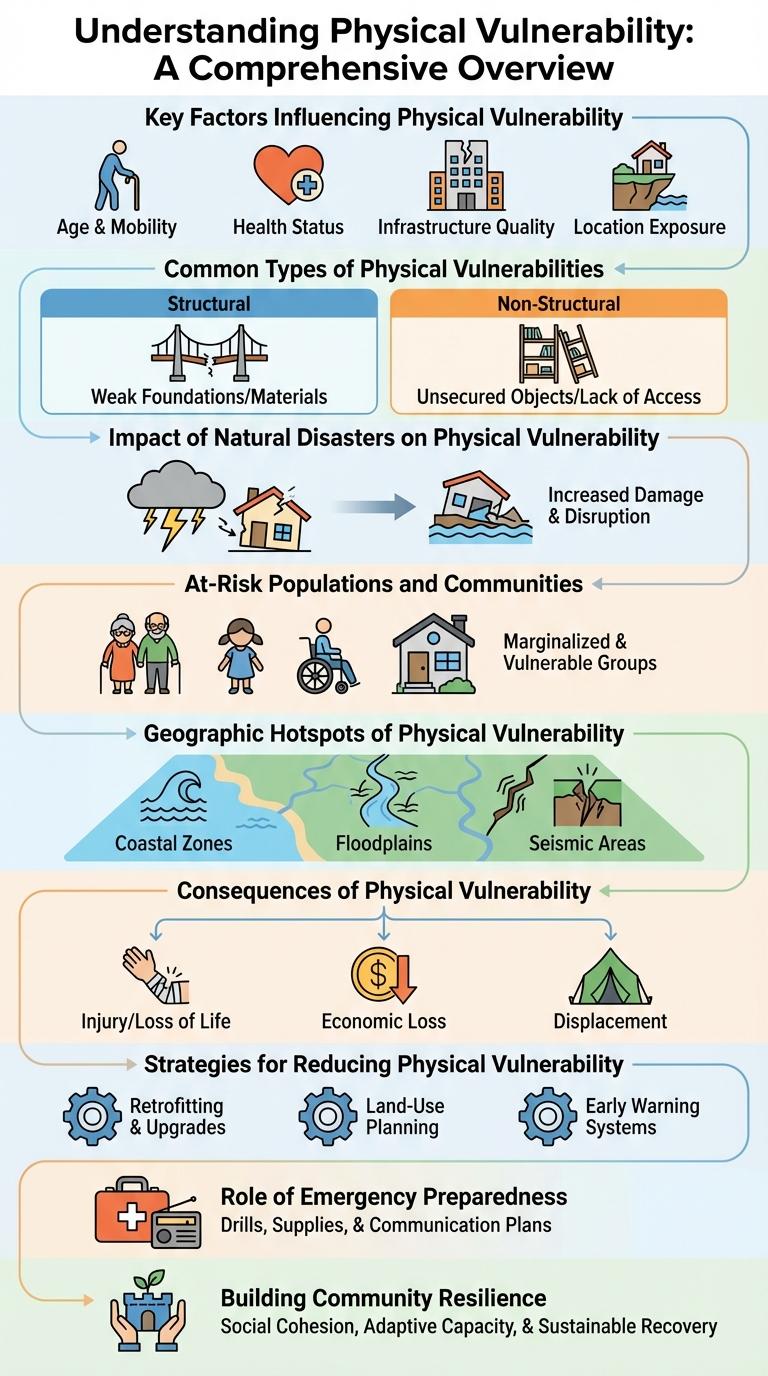
Physical vulnerability refers to the susceptibility of individuals or communities to harm due to physical factors such as natural disasters, infrastructure weaknesses, or health conditions. Understanding these risks helps in developing targeted strategies to enhance safety and resilience. This infographic visually presents key data and insights on the causes and impacts of physical vulnerability.
Understanding Physical Vulnerability
What is physical vulnerability and why is it important to understand?
Physical vulnerability refers to the susceptibility of individuals, structures, or communities to harm from physical hazards such as natural disasters or accidents. Understanding physical vulnerability helps in designing effective risk reduction strategies and enhancing safety measures.
Key Factors Influencing Physical Vulnerability
Physical vulnerability refers to the susceptibility of people, structures, and systems to damage from hazards such as natural disasters or technological failures. Understanding key factors influencing physical vulnerability helps in risk assessment and mitigation planning.
- Structural Integrity - The strength and quality of buildings and infrastructure determine their ability to withstand hazards.
- Geographical Location - Proximity to natural hazard zones like floodplains or fault lines increases physical vulnerability.
- Age of Infrastructure - Older constructions often lack modern safety standards, elevating vulnerability.
Common Types of Physical Vulnerabilities
Physical vulnerabilities refer to weaknesses in the infrastructure or environment that can be exploited to cause damage or loss. Understanding common types helps in implementing effective security measures to protect people and assets.
- Structural Vulnerabilities - Weaknesses in buildings or physical structures that may lead to collapse or damage during natural disasters or attacks.
- Access Control Failures - Inadequate mechanisms that allow unauthorized entry to secure areas, increasing risk of theft or harm.
- Environmental Hazards - Exposure to conditions like flooding, fire, or extreme weather that threaten the integrity of physical assets.
Impact of Natural Disasters on Physical Vulnerability
Physical vulnerability refers to the susceptibility of buildings, infrastructure, and communities to damage caused by natural disasters. Understanding this vulnerability is essential for effective disaster risk management and mitigation.
Natural disasters such as earthquakes, floods, hurricanes, and landslides significantly increase physical vulnerability by damaging infrastructure and disrupting essential services. The extent of damage depends on factors like building materials, construction quality, and geographic location.
At-Risk Populations and Communities
| At-Risk Populations | Physical Vulnerability Factors |
|---|---|
| Elderly Individuals | Reduced mobility, chronic health conditions, limited access to emergency services |
| Children | Developing immune systems, dependence on caregivers, limited awareness of hazards |
| People with Disabilities | Physical limitations, difficulty evacuating, reliance on assistive devices |
| Low-Income Communities | Substandard housing, limited healthcare access, higher exposure to environmental hazards |
| Rural Populations | Remote locations, limited infrastructure, slower emergency response times |
Geographic Hotspots of Physical Vulnerability
Physical vulnerability refers to the susceptibility of populations and infrastructure to damage from natural hazards. Geographic hotspots represent areas with heightened risks due to environmental, social, and infrastructural factors.
- Coastal Regions - High exposure to hurricanes, tsunamis, and sea-level rise increases physical vulnerability in these zones.
- Mountainous Areas - Susceptible to landslides, earthquakes, and flash floods due to unstable terrain.
- Urban Centers in Developing Countries - Dense populations combined with inadequate infrastructure elevate risk levels.
Identifying these geographic hotspots supports targeted disaster risk reduction and resilience planning.
Consequences of Physical Vulnerability
Physical vulnerability significantly increases the risk of injury and long-term health issues following accidents or natural disasters. It often leads to greater economic costs due to medical expenses and loss of productivity. Communities with high physical vulnerability face challenges in recovery and resilience-building efforts.
Strategies for Reducing Physical Vulnerability
Physical vulnerability refers to the susceptibility of individuals or structures to harm from environmental hazards or accidents. Strategies for reducing physical vulnerability focus on strengthening infrastructure, implementing effective safety measures, and enhancing community preparedness. These approaches help minimize damage and improve resilience against physical threats.
Role of Emergency Preparedness
Physical vulnerability refers to the susceptibility of buildings, infrastructure, and communities to damage from natural or man-made hazards. Emergency preparedness plays a crucial role in reducing this vulnerability by ensuring readiness and swift response.
Effective emergency preparedness includes risk assessments, early warning systems, and community training to minimize physical damage during disasters. Strengthening infrastructure and enforcing building codes protect lives and property. Coordinated planning among agencies ensures resources are available and responses are timely.