
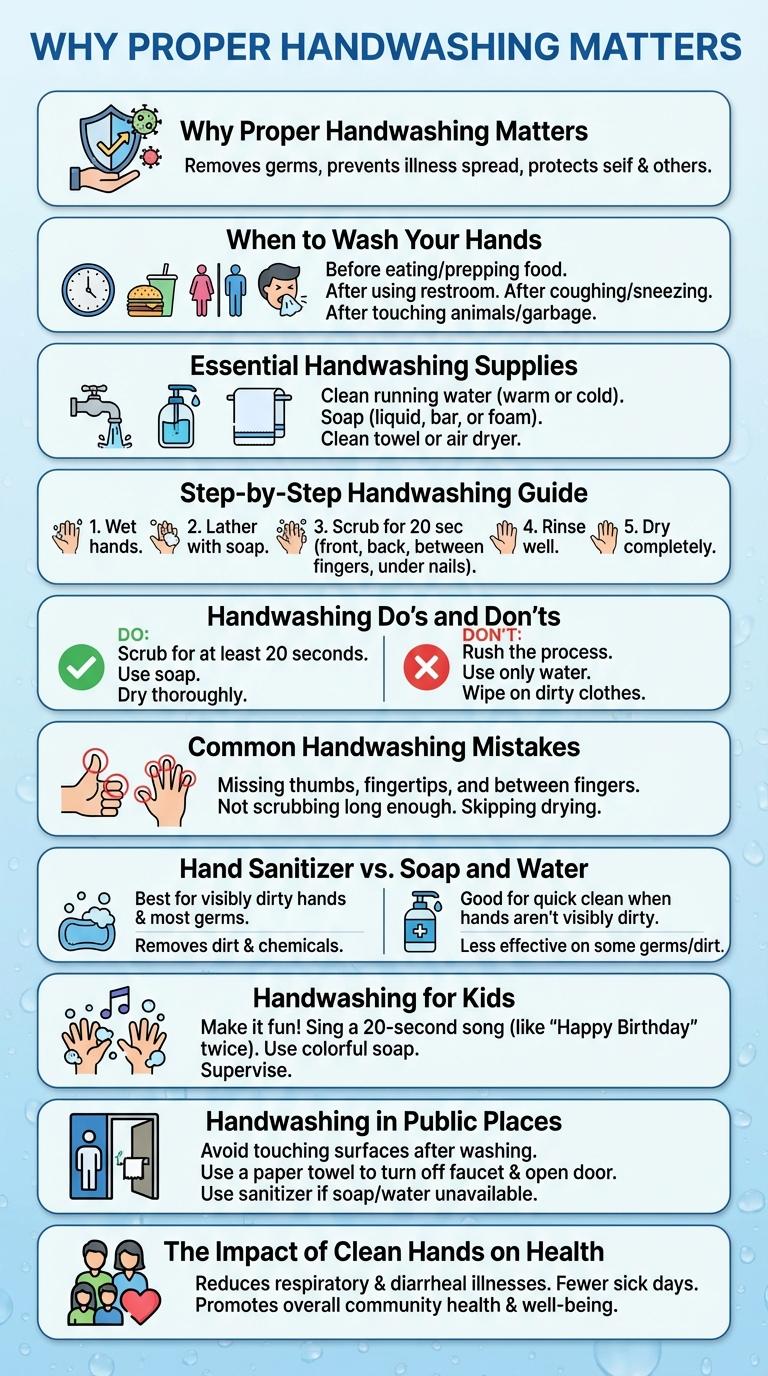
Proper handwashing is essential for preventing the spread of germs and maintaining personal hygiene. Following the correct steps ensures the removal of dirt, bacteria, and viruses effectively. This infographic visually breaks down the handwashing process to promote healthier habits.
Why Proper Handwashing Matters
Proper handwashing is essential to prevent the spread of infectious diseases such as the flu, COVID-19, and gastrointestinal infections. Contaminated hands are a primary vector for germs, transferring pathogens to the body and other surfaces.
Effective handwashing with soap removes bacteria, viruses, and dirt that regular rinsing cannot eliminate. Health organizations recommend washing hands for at least 20 seconds to ensure maximum germ removal and reduce illness risk.
When to Wash Your Hands
| When to Wash Your Hands | Reason |
|---|---|
| Before Eating or Preparing Food | Removes germs to prevent foodborne illnesses |
| After Using the Restroom | Eliminates bacteria and viruses acquired from surfaces |
| After Coughing, Sneezing, or Blowing Your Nose | Prevents the spread of respiratory infections |
| After Touching Garbage or Dirty Surfaces | Reduces contamination from harmful germs |
| Before and After Caring for Someone Who Is Sick | Protects both caregiver and patient from illness |
Essential Handwashing Supplies
Proper handwashing requires essential supplies to ensure effective removal of germs and bacteria. Key items include clean water, soap, and disposable towels or air dryers for drying hands.
Soap helps break down oils and dirt that harbor pathogens, making washing more effective than water alone. Access to clean, running water is crucial to rinse away germs thoroughly. Using disposable towels or air dryers prevents recontamination after washing.
Step-by-Step Handwashing Guide
Proper handwashing is essential to eliminate germs and prevent the spread of infections. Follow this step-by-step guide to ensure your hands are thoroughly cleaned.
Wet your hands with clean, running water and apply enough soap to cover all hand surfaces. Rub your hands palm to palm to create a lather.
Interlace your fingers and scrub between them, including the back of your hands and wrists. Continue rubbing for at least 20 seconds to effectively remove germs.
Rinse your hands thoroughly under clean, running water to wash away soap and contaminants. Dry your hands completely using a clean towel or air dryer to prevent bacteria growth.
Handwashing Do's and Don'ts
Proper handwashing is essential for preventing the spread of germs and infections. Following the right techniques ensures hands are thoroughly cleaned without causing skin damage.
- Wash hands with soap and water - Use clean, running water and lather all hand surfaces with soap for at least 20 seconds.
- Dry hands completely - Use a clean towel or air dryer to remove moisture, reducing bacteria growth.
- Avoid washing with only water - Water alone does not effectively remove germs and dirt.
- Do not use hot water - Hot water can irritate skin and does not improve cleaning effectiveness.
- Avoid touching faucet handles with clean hands - Use a towel or elbow to prevent re-contamination after washing.
Common Handwashing Mistakes
Proper handwashing is crucial to prevent the spread of germs and infections. Many people unknowingly make mistakes that reduce the effectiveness of hand hygiene.
- Skipping Soap - Washing hands with water alone does not remove germs effectively.
- Inadequate Scrubbing Time - Rushing the process by scrubbing less than 20 seconds leaves harmful bacteria behind.
- Missing Common Areas - Neglecting spots like under nails, between fingers, and backs of hands allows germs to persist.
Correct handwashing technique ensures maximum removal of pathogens and promotes better health.
Hand Sanitizer vs. Soap and Water
Proper handwashing is vital to prevent the spread of germs and illnesses. Choosing between hand sanitizer and soap and water depends on the situation and effectiveness required.
- Soap and Water Remove Dirt and Germs - Washing hands with soap and water effectively removes dirt, grease, and microbes that hand sanitizer cannot.
- Hand Sanitizer Kills Many Germs Quickly - Alcohol-based hand sanitizers can reduce bacteria and viruses efficiently when soap and water are unavailable.
- Soap and Water are Preferred for Visible Soiling - Hands visibly dirty or greasy must be washed with soap and water for optimal cleanliness and germ removal.
Handwashing for Kids
Proper handwashing is essential for kids to prevent the spread of germs and stay healthy. Teach children to wash their hands with soap and water for at least 20 seconds, especially before eating and after using the restroom. Fun songs or timers can help kids remember the handwashing steps effectively.
Handwashing in Public Places
Handwashing in public places is essential for preventing the spread of germs and infections. Proper handwashing involves using soap and water, scrubbing for at least 20 seconds, and drying hands thoroughly. Public facilities should provide clean sinks, soap, and disposable towels to encourage effective hand hygiene.