
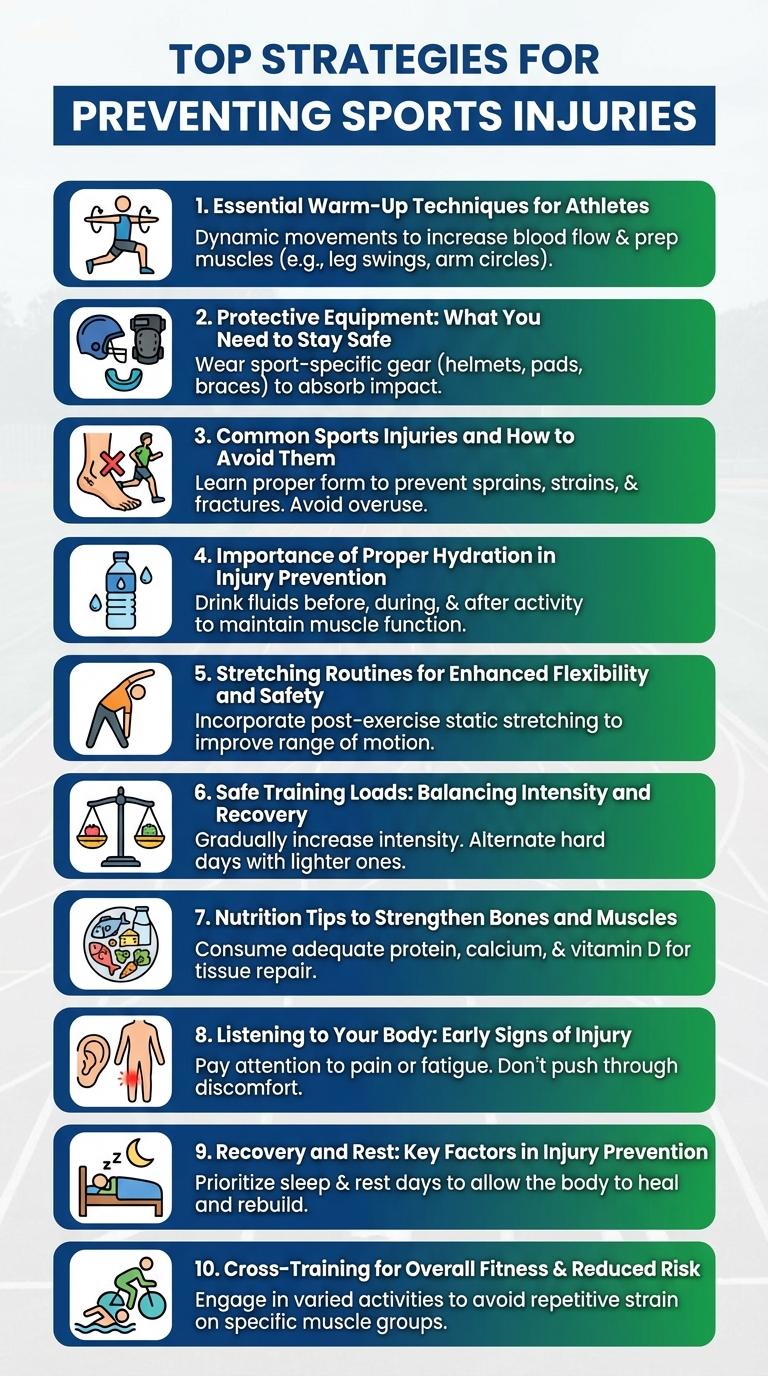
Preventing sports injuries is essential for maintaining athletic performance and long-term health. Effective strategies include proper warm-ups, using appropriate gear, and adhering to correct techniques. Understanding the most common injuries and how to avoid them empowers athletes to stay safe and active.
Top Strategies for Preventing Sports Injuries
Preventing sports injuries is crucial for maintaining athletic performance and long-term health. Implementing effective strategies reduces the risk of injury and promotes safe participation in physical activities.
- Proper Warm-Up and Cool-Down - Engaging in dynamic stretches and gradual warm-up exercises prepares muscles and joints for physical activity.
- Use of Correct Equipment - Wearing sport-specific protective gear minimizes the risk of trauma and impact-related injuries.
- Strength and Conditioning Training - Building muscle strength and flexibility supports joint stability and reduces susceptibility to injury.
Essential Warm-Up Techniques for Athletes
| Warm-Up Technique | Benefits for Injury Prevention |
|---|---|
| Dynamic Stretching | Improves range of motion and increases blood flow to muscles, reducing risk of strains |
| Light Cardiovascular Exercise | Gradually raises heart rate and warms muscles, preparing the body for intense activity |
| Sport-Specific Drills | Activates relevant muscle groups and neuromuscular coordination for better performance and injury avoidance |
| Joint Mobilization Exercises | Enhances joint flexibility and stability, lowering chances of joint-related injuries |
| Progressive Intensity Increase | Allows muscles and tendons to adapt gradually, minimizing the likelihood of acute injuries |
Protective Equipment: What You Need to Stay Safe
Wearing the right protective equipment significantly reduces the risk of sports-related injuries. Helmets, mouthguards, and pads are essential for shielding key body parts during physical activities.
Properly fitted gear enhances safety and boosts confidence on the field. Consistently using protective equipment prevents fractures, concussions, and soft tissue damage, ensuring a safer sports experience.
Common Sports Injuries and How to Avoid Them
Sports injuries are a frequent occurrence in athletes of all levels, often resulting from overuse, improper technique, or lack of preparation. Understanding common injuries and effective prevention strategies is essential to maintaining optimal performance and health.
- Sprains and Strains - Stretching and strengthening exercises improve flexibility and reduce the risk of ligament and muscle injuries.
- Fractures - Wearing proper protective gear and avoiding high-impact collisions help prevent bone breaks during sports activities.
- Concussions - Using helmets and following safe playing techniques minimize head trauma incidents in contact sports.
Importance of Proper Hydration in Injury Prevention
Proper hydration is essential for maintaining physical performance and reducing the risk of sports injuries. Dehydration can lead to muscle cramps, fatigue, and impaired coordination, increasing the likelihood of injury.
Water supports muscle function by regulating temperature and lubricating joints, which helps prevent strains and sprains. Athletes should drink fluids before, during, and after exercise to stay properly hydrated. Monitoring urine color is a simple way to assess hydration status and avoid complications related to dehydration.
Stretching Routines for Enhanced Flexibility and Safety
Stretching routines play a crucial role in sports injury prevention by enhancing flexibility and promoting muscle elasticity. Regular dynamic stretching before exercise prepares muscles for physical activity, reducing the risk of strains and sprains. Incorporating static stretching after workouts aids in muscle recovery and maintains joint range of motion for long-term safety.
Safe Training Loads: Balancing Intensity and Recovery
Managing safe training loads is essential to prevent sports injuries by balancing workout intensity with adequate recovery time. Monitoring training frequency, duration, and intensity helps avoid overuse injuries and ensures optimal performance. Incorporating rest days and active recovery supports muscle repair and reduces fatigue, promoting long-term athlete health.
Nutrition Tips to Strengthen Bones and Muscles
Proper nutrition plays a crucial role in preventing sports injuries by strengthening bones and muscles. Adequate intake of calcium, vitamin D, and protein supports bone density and muscle repair.
Incorporate foods like dairy products, leafy greens, and lean meats to enhance your body's resilience. Staying hydrated and consuming antioxidants helps reduce inflammation and improve recovery times.
Listening to Your Body: Early Signs of Injury
Are you aware of the early signs your body shows before a sports injury occurs? Pain, swelling, and persistent discomfort often signal the need to rest or seek medical advice. Recognizing these symptoms early can prevent minor issues from becoming serious injuries.
How important is it to listen to your body during physical activity? Ignoring fatigue or unusual aches can increase the risk of strains, sprains, and long-term damage. Paying attention to warning signs helps maintain peak performance and promotes faster recovery.
What common signals indicate the start of a sports injury? Symptoms such as sharp pain, joint instability, and restricted movement often precede injury. Early detection allows for timely intervention, reducing downtime and enhancing healing.
When should you stop exercising to avoid sports injuries? If you experience persistent pain, numbness, or swelling, it's crucial to pause and assess your condition. Taking breaks and modifying activities helps protect muscles, ligaments, and tendons from further harm.
How does proper rest contribute to injury prevention? Rest allows the body to repair damaged tissues and reduce inflammation after intense exercise. Incorporating recovery periods in your routine supports sustained physical health and injury resilience.