
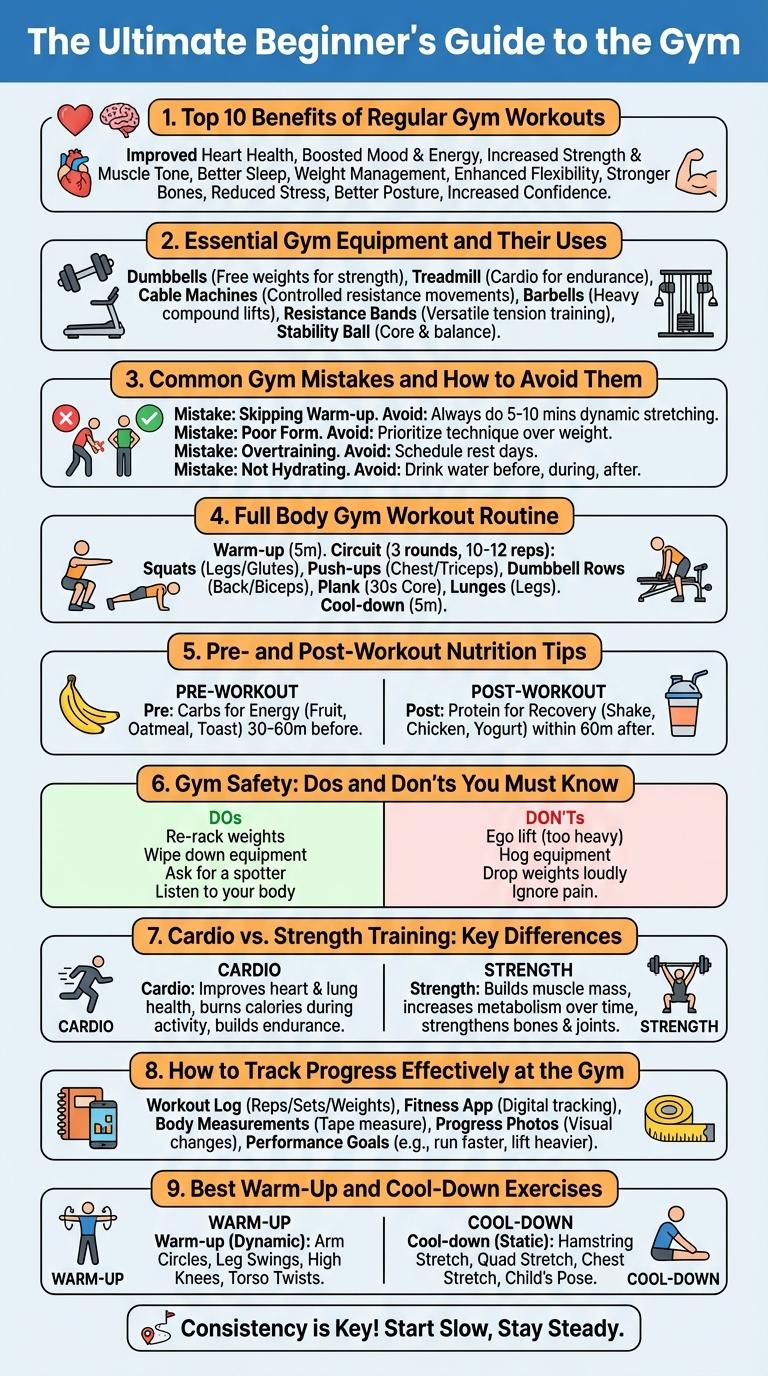
Infographics about gym workouts visually simplify complex fitness data, making it easier to understand exercise routines, nutrition, and progress tracking. They highlight key benefits of different exercises and provide quick tips for maximizing workout efficiency. These graphics help gym enthusiasts stay motivated and informed by presenting essential information in engaging, easy-to-digest formats.
The Ultimate Beginner's Guide to the Gym
| Aspect | Details |
|---|---|
| Getting Started | Choose appropriate gym clothes and footwear to ensure comfort. Begin with a warm-up routine like walking or light jogging for 5-10 minutes to prepare muscles. |
| Essential Equipment | Focus on machines like the treadmill, stationary bike, and weight machines to build cardio and strength. Free weights such as dumbbells aid in muscle toning and flexibility. |
| Workout Structure | Incorporate strength training, cardiovascular exercises, and flexibility workouts. Use a balanced schedule alternating days for different muscle groups and rest days. |
| Nutrition Tips | Hydrate before, during, and after workouts. Consume protein-rich foods to support muscle recovery. Avoid heavy meals right before exercise. |
| Safety and Progression | Start with low weights and correct form to prevent injuries. Gradually increase intensity and duration. Consult gym staff or trainers for personalized advice. |
Top 10 Benefits of Regular Gym Workouts
Why are regular gym workouts essential for overall health? Regular gym workouts enhance cardiovascular health and increase muscle strength. Consistent exercise at the gym helps manage weight and improves mental well-being.
How does gym training improve mental health? Physical activity at the gym reduces stress levels and boosts mood by releasing endorphins. This improves focus, sleep quality, and overall emotional stability.
What impact do gym workouts have on weight management? Gym workouts burn calories and increase metabolism, aiding in weight loss and maintenance. Strength training builds lean muscle mass, which supports long-term fat reduction.
Can gym exercises increase energy levels? Regular physical activity at the gym improves stamina and reduces fatigue. Enhanced oxygen and nutrient delivery to tissues boost overall energy throughout the day.
How do gym workouts contribute to better bone health? Weight-bearing exercises stimulate bone growth and increase bone density. This reduces the risk of osteoporosis and fractures as you age.
Do gym workouts help with chronic disease prevention? Consistent exercise lowers the risk of heart disease, type 2 diabetes, and certain cancers. Physical activity also improves blood pressure and cholesterol levels.
In what ways does the gym support muscle toning and strength? Resistance training builds and tones muscles, improving body composition. Stronger muscles enhance physical performance and daily functional activities.
How does frequent gym attendance affect flexibility and balance? Stretching and balance exercises increase joint mobility and stability. Better flexibility and balance reduce injury risk and improve posture.
Does gym training improve sleep quality? Regular exercise regulates sleep patterns and promotes deeper, more restorative sleep. Improved sleep supports cognitive function and overall health.
Why is the gym a good place for social interaction and motivation? Group classes and gym communities foster social support and accountability. This environment encourages consistent workouts and goal adherence.
Essential Gym Equipment and Their Uses
Essential gym equipment plays a crucial role in achieving fitness goals efficiently. Understanding their uses helps maximize workout benefits and prevent injuries.
Dumbbells are versatile for strength training, targeting multiple muscle groups. Treadmills provide effective cardiovascular workouts with adjustable speed and incline. Resistance bands offer portable, low-impact exercises ideal for muscle toning and rehabilitation.
Common Gym Mistakes and How to Avoid Them
Common gym mistakes include improper form, overtraining, and neglecting warm-ups, which can lead to injuries and slow progress. Avoid these pitfalls by learning correct techniques, allowing adequate rest between sessions, and performing dynamic stretches before workouts. Consistency with safe practices enhances overall fitness results and reduces the risk of setbacks.
Full Body Gym Workout Routine
A full body gym workout routine targets all major muscle groups in a single session, promoting balanced strength and muscle development. Key exercises include squats, deadlifts, bench presses, rows, and overhead presses to engage legs, back, chest, and shoulders efficiently. Performing this routine 3 times per week can enhance overall fitness and support fat loss.
Pre- and Post-Workout Nutrition Tips
Effective pre- and post-workout nutrition supports muscle growth and recovery. Proper timing and nutrient selection enhance workout performance and results.
- Pre-Workout Carbohydrates - Consuming complex carbs 30-60 minutes before exercise provides sustained energy for intense workouts.
- Hydration - Drinking water before and during exercise maintains hydration and prevents fatigue.
- Post-Workout Protein - Intake of high-quality protein within 30 minutes after exercise aids muscle repair and synthesis.
- Post-Workout Carbs - Simple carbohydrates after workouts replenish glycogen stores quickly for optimal recovery.
- Avoid Heavy Meals Pre-Workout - Large, fatty meals before exercise can cause discomfort and reduce performance.
Balancing these nutrition strategies optimizes muscle gains, energy levels, and overall fitness progress.
Gym Safety: Dos and Don'ts You Must Know
Gym safety is essential to prevent injuries and ensure a productive workout experience. Following basic dos and don'ts can help maintain a safe environment for everyone.
Do warm up before exercising to prepare your muscles and reduce strain. Don't ignore proper form, as incorrect technique can lead to serious injuries.
Cardio vs. Strength Training: Key Differences
Cardio training focuses on improving cardiovascular endurance by increasing heart rate through activities like running, cycling, or swimming. Strength training aims to build muscle mass and enhance overall strength using resistance exercises such as weightlifting and bodyweight movements.
Cardio sessions typically burn more calories during the workout, which supports fat loss and heart health. Strength training increases resting metabolic rate, helping to maintain muscle and improve body composition over time.
How to Track Progress Effectively at the Gym
Tracking progress at the gym is essential for achieving fitness goals efficiently. Effective monitoring helps identify improvements and areas needing adjustment for optimal results.
- Set Clear Goals - Define specific, measurable objectives such as weight loss, muscle gain, or endurance improvement to stay focused.
- Use a Workout Journal - Record exercises, sets, reps, and weights to track performance and progress over time.
- Take Regular Measurements - Monitor body metrics like weight, body fat percentage, and muscle circumference to assess physical changes.
- Track Performance Metrics - Measure improvements in strength, speed, or endurance using tools like running pace or max lifts.
- Utilize Technology - Use fitness apps and wearable devices to automate data collection and analyze workout trends effectively.