
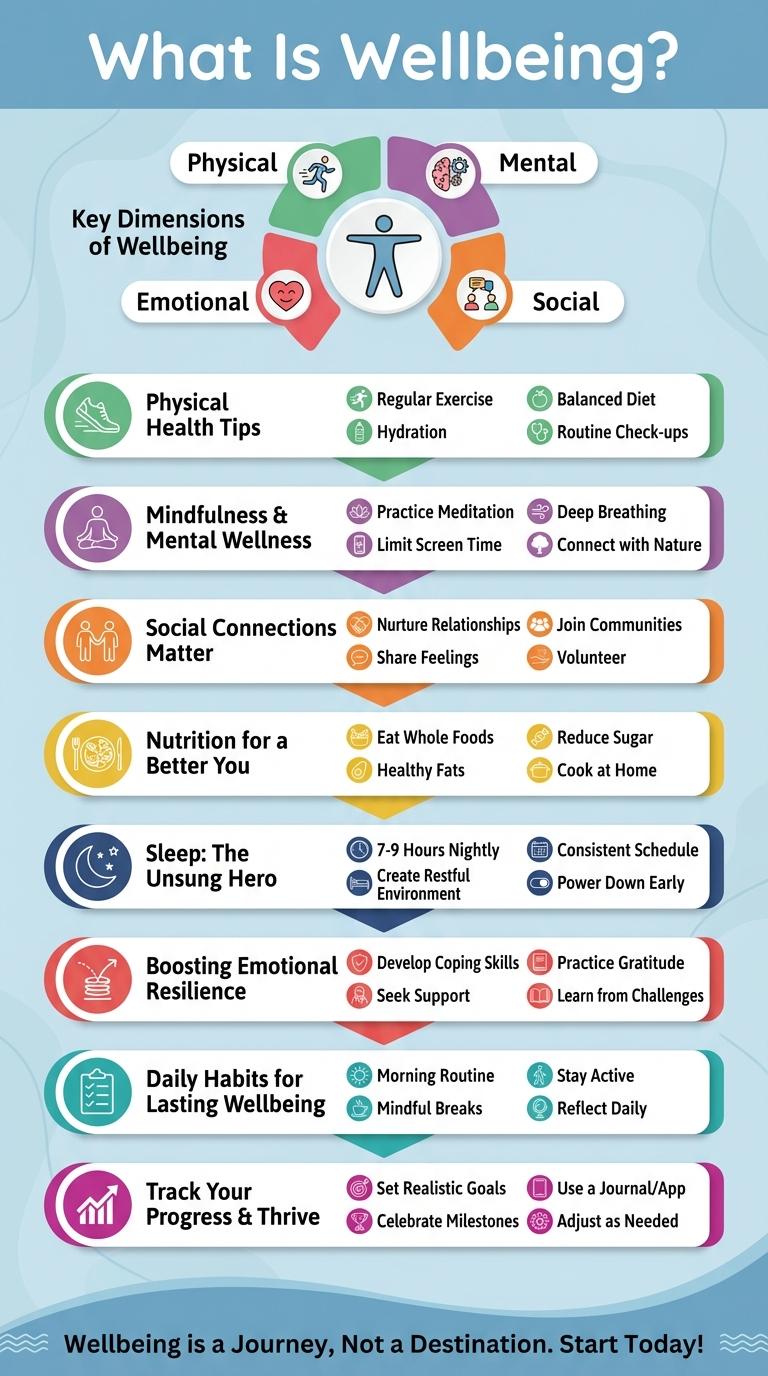
An infographic about wellbeing visually presents key aspects of physical, mental, and emotional health to promote a balanced lifestyle. It highlights practical tips for managing stress, improving sleep, and maintaining nutritious habits. This engaging format helps simplify complex information, making it easier to understand and apply daily wellness strategies.
What Is Wellbeing?
| Aspect | Definition |
|---|---|
| Emotional Wellbeing | Ability to manage emotions, cope with stress, and maintain a positive outlook. |
| Physical Wellbeing | State of physical health through exercise, nutrition, and rest. |
| Social Wellbeing | Quality of relationships, social connections, and support networks. |
| Mental Wellbeing | Ability to think clearly, learn, and maintain a balanced mental state. |
| Purpose and Fulfillment | Sense of meaning in life and alignment with personal values and goals. |
Key Dimensions of Wellbeing
Wellbeing encompasses multiple dimensions that contribute to overall health and life satisfaction. Understanding these key dimensions helps individuals achieve balanced and fulfilling lives.
- Physical Wellbeing - Maintaining bodily health through exercise, nutrition, and adequate rest supports energy and vitality.
- Mental Wellbeing - Emotional resilience and cognitive balance contribute to managing stress and fostering positive thoughts.
- Social Wellbeing - Building meaningful relationships and community connections enhances support and belonging.
Physical Health Tips
Maintaining physical health is vital for overall wellbeing. Regular exercise and a balanced diet are key components in boosting energy and enhancing mood.
Engaging in at least 150 minutes of moderate activity weekly supports cardiovascular health. Proper hydration and sufficient sleep further promote physical vitality and immune function.
Mindfulness & Mental Wellness
Mindfulness and mental wellness are essential components of overall wellbeing, promoting balanced emotional health and resilience. Practicing mindfulness improves focus, reduces stress, and enhances emotional regulation.
- Mindfulness reduces stress - Regular mindfulness practice lowers cortisol levels, helping to manage anxiety and stress effectively.
- Improved emotional regulation - Mindfulness strengthens neural pathways associated with emotional control and self-awareness.
- Enhanced cognitive function - Consistent mindfulness supports better attention, memory, and decision-making skills.
Social Connections Matter
Why are social connections essential for wellbeing?
Strong social ties improve mental health, reduce stress levels, and increase longevity. People with supportive relationships are more likely to engage in healthy behaviors and recover faster from illnesses.
Nutrition for a Better You
Good nutrition is essential for enhancing physical and mental wellbeing. A balanced diet rich in fruits, vegetables, whole grains, and lean proteins supports energy levels and cognitive function. Staying hydrated and limiting processed foods contribute to overall health and vitality.
Sleep: The Unsung Hero
Sleep is a critical component of overall wellbeing often overlooked. It plays a vital role in physical health, mental clarity, and emotional balance.
Quality sleep supports immune function, memory consolidation, and hormone regulation. Adults typically require 7-9 hours of sleep per night for optimal health. Chronic sleep deprivation increases the risk of heart disease, diabetes, and depression.
Boosting Emotional Resilience
Emotional resilience is the ability to adapt and recover from stress, adversity, or trauma. Strengthening this skill enhances mental health and promotes overall wellbeing.
Key strategies to boost emotional resilience include practicing mindfulness, maintaining strong social connections, and engaging in regular physical activity. Developing healthy coping mechanisms helps manage emotions effectively during challenging times.
Daily Habits for Lasting Wellbeing
Daily habits play a crucial role in sustaining long-term wellbeing by promoting physical, mental, and emotional health. Incorporating consistent exercise, balanced nutrition, and mindfulness practices creates a strong foundation for overall wellness. Prioritizing sleep quality, hydration, and positive social interactions further enhances resilience and life satisfaction.