
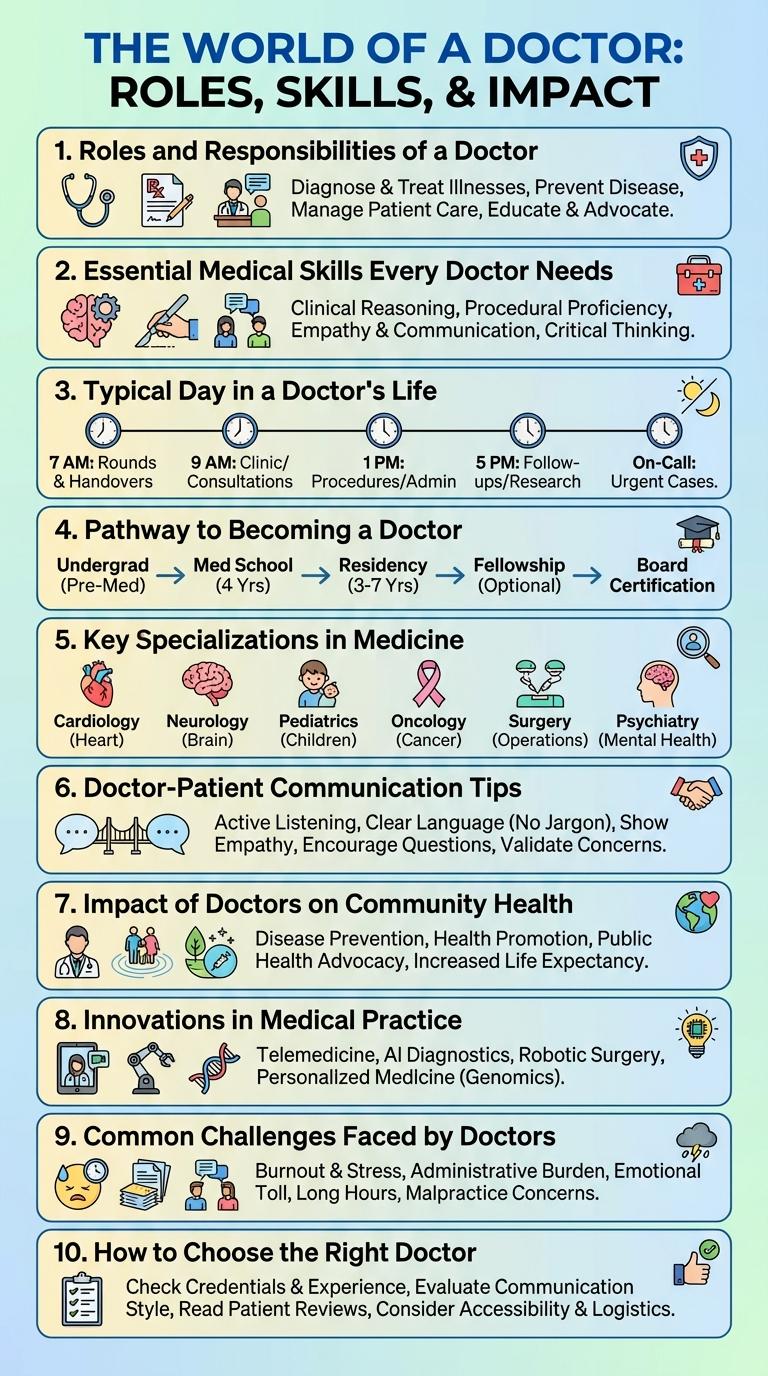
Doctors play a vital role in diagnosing, treating, and preventing illnesses, ensuring patients receive optimal care. Infographics visually present key information about medical professionals, highlighting their expertise, specializations, and contributions to healthcare. These visual tools enhance understanding of a doctor's impact on patient health and the medical field overall.
Roles and Responsibilities of a Doctor
Doctors diagnose and treat illnesses, ensuring patients receive accurate medical care. They conduct physical exams, order tests, and prescribe medications to manage health conditions. Doctors also educate patients on disease prevention and promote overall wellness.
Essential Medical Skills Every Doctor Needs
Doctors must possess a diverse set of essential medical skills to provide effective patient care. Mastery of these skills ensures accurate diagnosis, treatment, and patient safety.
- Clinical Knowledge - Comprehensive understanding of medical conditions and treatments is fundamental for accurate diagnosis.
- Communication Skills - Clear communication with patients and colleagues enhances care coordination and patient satisfaction.
- Diagnostic Abilities - Expertise in interpreting symptoms and test results is crucial for effective treatment planning.
Typical Day in a Doctor's Life
Doctors play a vital role in healthcare, managing patient care through diverse tasks. Their daily routines balance clinical responsibilities and administrative duties.
- Patient Consultations - Doctors evaluate symptoms, diagnose conditions, and recommend treatments during patient visits.
- Medical Procedures - Performing surgeries, administering therapies, or conducting tests are integral to a doctor's schedule.
- Documentation - Maintaining accurate patient records ensures effective communication and continuity of care.
- Collaboration - Doctors coordinate with nurses, specialists, and other healthcare staff to provide holistic treatment.
- Continuous Learning - Staying updated with medical research and advances is essential for improving patient outcomes.
Each day demands adaptability, compassion, and expertise from doctors to deliver quality healthcare.
Pathway to Becoming a Doctor
Becoming a doctor requires rigorous education and training, starting with a bachelor's degree in a science-related field. Aspiring doctors must then pass the Medical College Admission Test (MCAT) to apply for medical school.
Medical school typically lasts four years, combining classroom instruction with clinical experience. After earning an MD or DO degree, graduates enter residency programs to specialize and gain hands-on expertise.
Key Specializations in Medicine
Doctors specialize in various fields to provide targeted medical care. Key specializations address different health needs and conditions.
Cardiology focuses on heart-related diseases, while neurology deals with disorders of the nervous system. Pediatrics cares for children's health, and oncology treats cancer patients.
Doctor-Patient Communication Tips
Effective doctor-patient communication is essential for accurate diagnosis and successful treatment outcomes. Clear interaction builds trust and encourages patients to share vital health information.
- Active Listening - Doctors should fully focus on the patient's words and emotions to understand concerns thoroughly.
- Use Simple Language - Avoiding medical jargon helps patients comprehend their health conditions and treatment plans.
- Empathy and Support - Expressing empathy fosters a comfortable environment, promoting patient openness and adherence.
Impact of Doctors on Community Health
How do doctors influence community health outcomes? Doctors play a crucial role in preventing and managing diseases within communities. Their expertise and care significantly improve overall public health and quality of life.
What is the economic impact of doctors on healthcare systems? Efficient medical care by doctors reduces hospital admissions and lowers healthcare costs. This leads to more sustainable healthcare spending and resource allocation.
How do doctors contribute to health education in communities? Doctors provide vital health information that empowers individuals to make informed lifestyle choices. Health education promotes disease prevention and early detection.
Why is access to doctors important for vulnerable populations? Timely medical care by doctors addresses health disparities in underserved communities. It ensures equitable access to essential health services and support.
Innovations in Medical Practice
| Innovation | Impact on Medical Practice |
|---|---|
| Telemedicine | Enables remote consultations and follow-ups, improving patient access and reducing travel time. |
| Artificial Intelligence (AI) | Enhances diagnostic accuracy and treatment planning through data analysis and predictive modeling. |
| Robotic Surgery | Offers precision and minimally invasive procedures, reducing recovery time and complications. |
| Electronic Health Records (EHR) | Streamlines information sharing among healthcare providers, improving coordination and care quality. |
| Wearable Health Devices | Monitors vital signs in real-time, facilitating early detection and personalized medical interventions. |
Common Challenges Faced by Doctors
Doctors play a critical role in healthcare but face numerous challenges daily. These obstacles impact their efficiency and overall well-being.
Common challenges include long working hours, high patient volumes, and emotional stress from patient outcomes. Managing administrative tasks and staying updated with medical advancements add to their workload. Addressing these issues is vital for maintaining quality patient care and doctor satisfaction.