
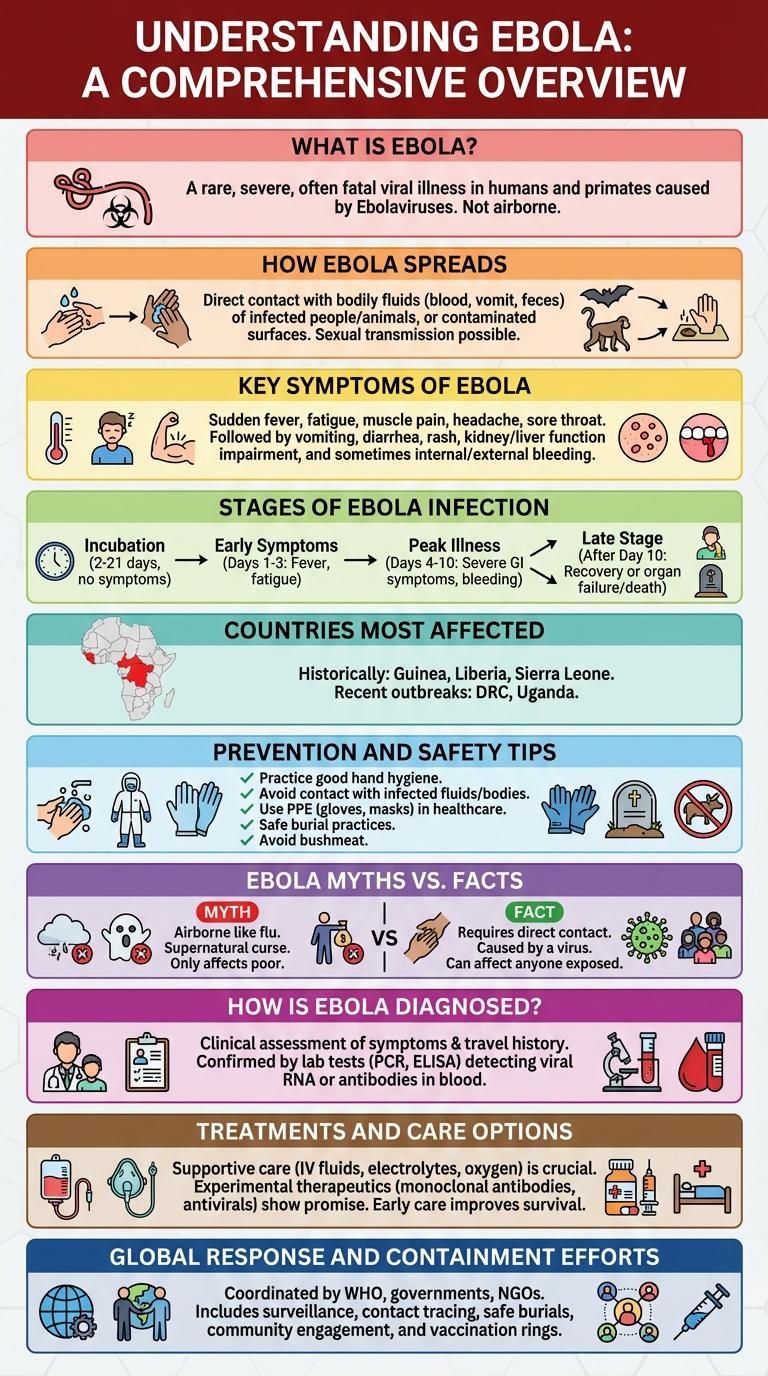
Ebola is a severe, often fatal illness caused by the Ebola virus, characterized by fever, hemorrhaging, and organ failure. The infographic highlights key facts about transmission, symptoms, prevention methods, and outbreak statistics to raise awareness. Understanding these critical elements helps promote timely response and containment efforts.
What is Ebola?
Ebola is a severe viral disease caused by the Ebola virus, primarily affecting humans and nonhuman primates. It leads to hemorrhagic fever, which can result in severe bleeding, organ failure, and death.
The virus spreads through direct contact with bodily fluids of infected individuals or contaminated surfaces. Early symptoms include fever, fatigue, muscle pain, and later progress to vomiting and internal bleeding.
How Ebola Spreads
Ebola is a contagious virus that spreads through direct contact with infected bodily fluids. Understanding its transmission methods is crucial to preventing outbreaks.
The virus can be transmitted from animals to humans and between humans through bodily fluids.
- Contact with Infected Fluids - Transmission occurs through blood, saliva, sweat, urine, vomit, and feces of infected individuals.
- Handling Contaminated Objects - Sharing needles or touching contaminated surfaces can spread the virus.
- Animal to Human Transmission - Contact with infected wild animals like fruit bats or primates initiates zoonotic transmission.
Key Symptoms of Ebola
Ebola is a severe viral infection causing acute illness in humans. Recognizing its key symptoms early can help in prompt diagnosis and treatment.
- Fever - High fever is one of the first and most common symptoms of Ebola infection.
- Severe Headache - Intense headaches often accompany the onset of the disease.
- Muscle Pain - Widespread muscle aches and weakness are typical during the illness.
- Vomiting and Diarrhea - Gastrointestinal symptoms frequently appear as the disease progresses.
- Bleeding - Internal and external bleeding can occur in severe cases of Ebola.
Early detection of these symptoms is critical for controlling outbreaks and improving patient outcomes.
Stages of Ebola Infection
Ebola virus disease progresses through distinct stages, each marked by specific symptoms and clinical findings. Understanding these stages aids in timely diagnosis and treatment to improve patient outcomes.
- Incubation Period - The virus remains asymptomatic for 2 to 21 days after exposure, with no transmissibility during this phase.
- Early Symptoms - Sudden onset of fever, fatigue, muscle pain, headache, and sore throat occurs, resembling common viral infections.
- Advanced Stage - Severe symptoms develop including vomiting, diarrhea, rash, impaired kidney and liver function, and in some cases, internal and external bleeding.
Countries Most Affected
Which countries have been most affected by Ebola outbreaks? The Ebola virus has primarily impacted several countries in West and Central Africa. These nations experienced significant cases and mortality rates during major outbreaks.
| Country | Notable Ebola Outbreaks |
|---|---|
| Democratic Republic of the Congo | Multiple outbreaks, including the 2018-2020 Kivu epidemic with over 3,400 cases |
| Guinea | 2014-2016 West Africa epidemic, part of the largest Ebola outbreak worldwide |
| Sierra Leone | 2014-2016 epidemic, reporting more than 14,000 cases |
| Liberia | 2014-2016 outbreak with widespread transmission and thousands of fatalities |
| Sudan | Multiple outbreaks, including significant cases in the 1976 discovery year |
Prevention and Safety Tips
Ebola is a severe viral disease causing hemorrhagic fever with high mortality rates. Early prevention and safety measures are essential to control the spread of the virus.
Avoid direct contact with blood and bodily fluids of infected individuals or animals. Use protective gear such as gloves and masks when caring for patients. Practice thorough hand hygiene by washing hands regularly with soap and water or using alcohol-based sanitizer.
Ebola Myths vs. Facts
| Ebola Myth | Ebola Fact |
|---|---|
| Ebola spreads through the air like the flu. | Ebola transmits via direct contact with bodily fluids, not airborne. |
| Only Africans can get Ebola. | Ebola can infect anyone exposed to the virus, regardless of location or ethnicity. |
| Toilet seats can spread Ebola. | Virus transmission requires direct contact with infected fluids, not surfaces like toilet seats. |
| Ebola can be cured with traditional remedies. | No cure exists yet, but supportive care and experimental treatments improve survival rates. |
| Survivors remain contagious indefinitely. | Survivors are no longer contagious after the virus clears from the blood and bodily fluids. |
How Is Ebola Diagnosed?
Ebola is diagnosed primarily through laboratory testing of blood samples from individuals showing symptoms. Early detection relies on identifying the presence of the Ebola virus using techniques such as PCR (polymerase chain reaction).
Healthcare providers screen for Ebola by evaluating symptoms and exposure history before confirming diagnosis with molecular assays. Accurate diagnosis is crucial for timely treatment and containment of outbreaks.
Treatments and Care Options
Ebola virus disease requires immediate medical attention with supportive treatments such as intravenous fluids, electrolyte balance, and oxygen therapy to improve survival. Experimental antiviral drugs like remdesivir and monoclonal antibodies, including Inmazeb and Ebanga, show promising results in reducing mortality. Isolation and strict infection control measures are essential to prevent virus spread during treatment and care.