
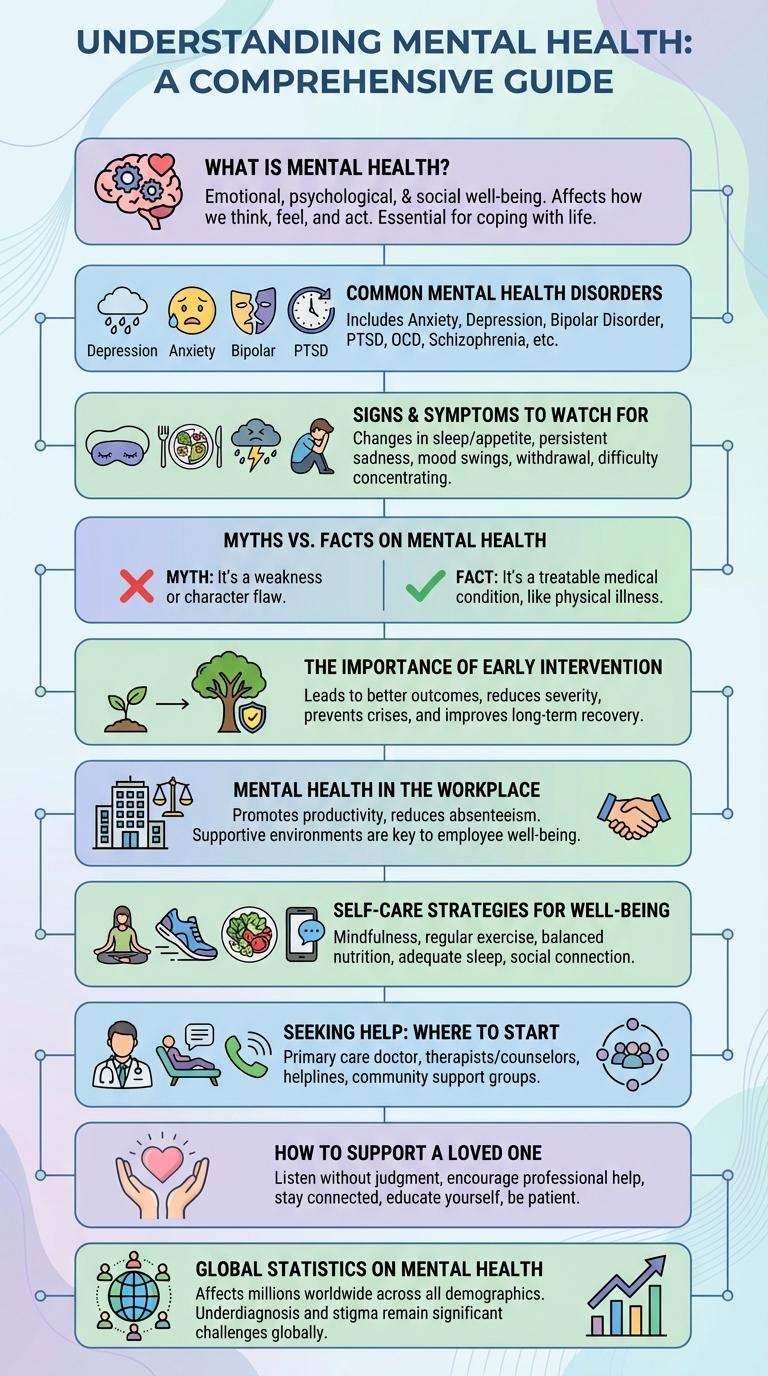
Mental health awareness plays a crucial role in promoting well-being and reducing stigma surrounding mental illnesses. This infographic highlights important statistics, common mental health conditions, and effective strategies for support and treatment. Understanding these key points empowers individuals to seek help and foster a supportive community.
What Is Mental Health?
Mental health encompasses emotional, psychological, and social well-being influencing thoughts, feelings, and behavior. It affects how individuals handle stress, relate to others, and make choices.
- Definition - Mental health refers to a person's cognitive and emotional well-being.
- Importance - Good mental health supports productivity and healthy relationships.
- Factors - Genetics, environment, and lifestyle contribute to mental health status.
Common Mental Health Disorders
Mental health awareness highlights the importance of understanding common mental health disorders such as depression, anxiety, bipolar disorder, and schizophrenia. These conditions affect millions worldwide, impacting daily life, work, and relationships. Early recognition and proper treatment improve outcomes and reduce stigma.
Signs & Symptoms to Watch For
Mental health awareness is essential for recognizing early signs and symptoms that may indicate underlying issues. Common indicators include persistent sadness, anxiety, withdrawal from social activities, changes in sleep patterns, and difficulty concentrating. Identifying these signs early allows for timely support and intervention, promoting better mental well-being.
Myths vs. Facts on Mental Health
Mental health awareness helps dispel common misconceptions and promotes understanding of mental illnesses. Clearing myths about mental health encourages support and reduces stigma.
- Myth: Mental health problems are rare - Mental health disorders affect millions globally, making them common health conditions.
- Myth: People with mental illness are violent - Most individuals with mental health issues are not violent and are more likely to be victims than perpetrators.
- Myth: Mental health struggles indicate weakness - Mental health conditions are medical issues, not a sign of personal weakness or failure.
The Importance of Early Intervention
Mental health awareness plays a crucial role in identifying and addressing psychological issues early. Early intervention can significantly improve long-term outcomes for individuals experiencing mental health challenges.
- Reduces Severity - Timely support can prevent mental health conditions from worsening over time.
- Improves Recovery - Early care increases the likelihood of full recovery and better quality of life.
- Decreases Stigma - Awareness promotes openness, making it easier for people to seek help promptly.
Promoting early intervention encourages proactive mental health management and fosters resilience.
Mental Health in the Workplace
Mental health awareness in the workplace is crucial for fostering a supportive and productive environment. Recognizing signs of stress and anxiety helps in early intervention and reduces absenteeism.
Employees experiencing mental health challenges often face reduced concentration and lower job satisfaction. Employers can implement wellness programs, provide access to counseling, and promote open communication. Creating a stigma-free culture encourages employees to seek help without fear of judgment.
Self-Care Strategies for Well-being
How can self-care strategies improve mental health awareness? Practicing self-care promotes emotional balance and reduces stress. Regular self-care routines enhance overall well-being and resilience.
What are effective self-care strategies for mental well-being? Key strategies include mindfulness meditation, physical exercise, and maintaining a healthy sleep schedule. These habits support brain health and emotional stability.
Why is mindfulness important in self-care? Mindfulness helps individuals stay present and reduces anxiety symptoms. It fosters emotional regulation and cognitive clarity.
How does physical exercise contribute to mental health? Exercise releases endorphins, which act as natural mood lifters. It also improves sleep quality and reduces symptoms of depression.
What role does sleep play in mental well-being? Adequate sleep supports cognitive functions and emotional resilience. Poor sleep is linked to increased stress and mental health disorders.
Seeking Help: Where to Start
Mental health awareness emphasizes the importance of recognizing when to seek help. Early intervention can significantly improve emotional well-being and overall quality of life.
Start by talking to a trusted friend, family member, or healthcare professional. Numerous resources, including therapists, support groups, and hotlines, are available to guide you through the process.
How to Support a Loved One
| How to Support a Loved One | Key Actions |
|---|---|
| Listen Actively | Provide a non-judgmental space and validate their feelings. |
| Educate Yourself | Understand mental health conditions through credible sources. |
| Encourage Professional Help | Suggest therapy or counseling while respecting their pace. |
| Be Patient | Recovery varies; avoid pressuring or rushing their progress. |
| Offer Practical Support | Assist with daily tasks or accompany them to appointments. |