
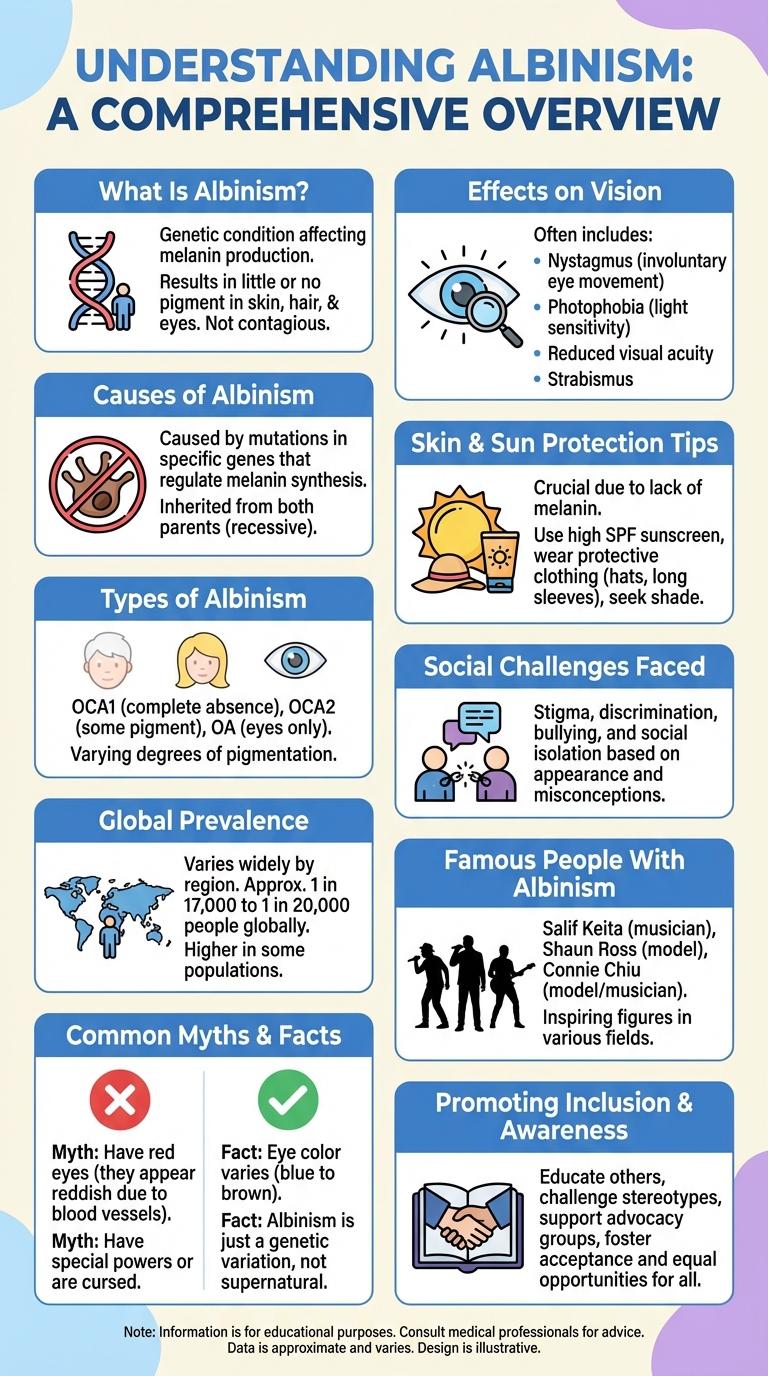
Albinism is a genetic condition characterized by a lack of melanin pigment in the skin, hair, and eyes, leading to increased sensitivity to sunlight and vision problems. Understanding its causes, symptoms, and challenges enhances awareness and promotes acceptance. This infographic provides key facts and insights about albinism to educate and inform diverse audiences.
What Is Albinism?
Albinism is a genetic condition characterized by a lack of melanin pigment in the skin, hair, and eyes. This results in very light or white coloration and increased sensitivity to sunlight.
People with albinism have vision problems due to the abnormal development of the retina and optic nerves. The condition affects all ethnic groups worldwide, with varying prevalence rates. Albinism is inherited in an autosomal recessive pattern, meaning both parents must carry the gene for a child to be affected.
Causes of Albinism
Albinism is a genetic condition caused by mutations in genes responsible for melanin production. These mutations lead to little or no pigment in the skin, hair, and eyes.
The most common types result from defects in the OCA1 and OCA2 genes. These genetic changes disrupt the enzyme tyrosinase, essential for melanin synthesis.
Types of Albinism
Albinism is a genetic condition characterized by a lack of melanin pigment in the skin, hair, and eyes. This condition leads to increased sensitivity to sunlight and vision problems.
- Oculocutaneous Albinism (OCA) - Affects the skin, hair, and eyes, causing very light pigmentation and vision issues.
- Ocular Albinism (OA) - Primarily affects the eyes while skin pigmentation remains normal.
- Hermansky-Pudlak Syndrome (HPS) - A rare type with albinism symptoms combined with bleeding disorders and lung problems.
Understanding the types of albinism helps in accurate diagnosis and tailored care for affected individuals.
Global Prevalence
| Region | Estimated Prevalence |
|---|---|
| Sub-Saharan Africa | 1 in 1,400 to 1 in 5,000 individuals |
| United States | Approximately 1 in 17,000 to 1 in 20,000 individuals |
| Europe | Approximately 1 in 17,000 to 1 in 20,000 individuals |
| Asia | Rare, about 1 in 20,000 to 1 in 40,000 individuals |
| Global Average | Estimated 1 in 18,000 to 1 in 20,000 individuals |
Common Myths & Facts
Albinism is a genetic condition characterized by a lack of melanin, resulting in very light skin, hair, and eye color. A common myth is that people with albinism have red eyes, but their eye color is often light blue or brown due to visible blood vessels. People with albinism require sun protection to prevent skin damage, debunking the myth that they are immune to sunburn.
Effects on Vision
Albinism significantly impacts vision due to the lack of melanin pigment in the eyes, affecting the development of the retina and optic nerves. This condition often results in reduced visual acuity and sensitivity to light.
Individuals with albinism commonly experience nystagmus, a rapid involuntary movement of the eyes, which hampers clear vision. Photophobia, or light sensitivity, is another frequent symptom caused by the insufficient pigmentation in the iris and retina.
Skin & Sun Protection Tips
Albinism is a genetic condition characterized by a lack of melanin in the skin, hair, and eyes, increasing sensitivity to sunlight. Proper sun protection is essential to prevent skin damage and reduce the risk of skin cancer.
Effective skin and sun protection strategies help individuals with albinism maintain healthy skin and minimize UV exposure.
- Use Broad-Spectrum Sunscreen - Apply a sunscreen with SPF 30 or higher that protects against UVA and UVB rays to exposed skin daily.
- Wear Protective Clothing - Opt for long-sleeved shirts, wide-brimmed hats, and UV-blocking sunglasses to shield skin and eyes from the sun.
- Seek Shade Whenever Possible - Limit direct sun exposure, especially during peak hours from 10 a.m. to 4 p.m., to reduce UV radiation risks.
Social Challenges Faced
Albinism is a genetic condition characterized by a lack of melanin pigment, affecting skin, hair, and eyes. People with albinism face unique social challenges that impact their daily lives and well-being.
- Stigma and Discrimination - Individuals with albinism often encounter social exclusion and prejudice due to their appearance.
- Misconceptions and Myths - False beliefs about albinism lead to fear, myths, and harmful cultural practices in some communities.
- Limited Access to Education and Employment - Social barriers and lack of support restrict educational and job opportunities for people with albinism.
Famous People With Albinism
Albinism is a genetic condition characterized by a lack of melanin pigment in the skin, hair, and eyes. Many famous individuals with albinism have made significant contributions to entertainment, sports, and activism. Their unique appearance and achievements help raise awareness and challenge stereotypes about albinism.
| Famous Person | Field |
|---|---|
| Salif Keita | Music (Singer) |
| Connie Chiu | Fashion (Model) |
| Thando Hopa | Model & Activist |
| Zebra Katz | Music (Rapper) |
| Shaun Ross | Model & Actor |