
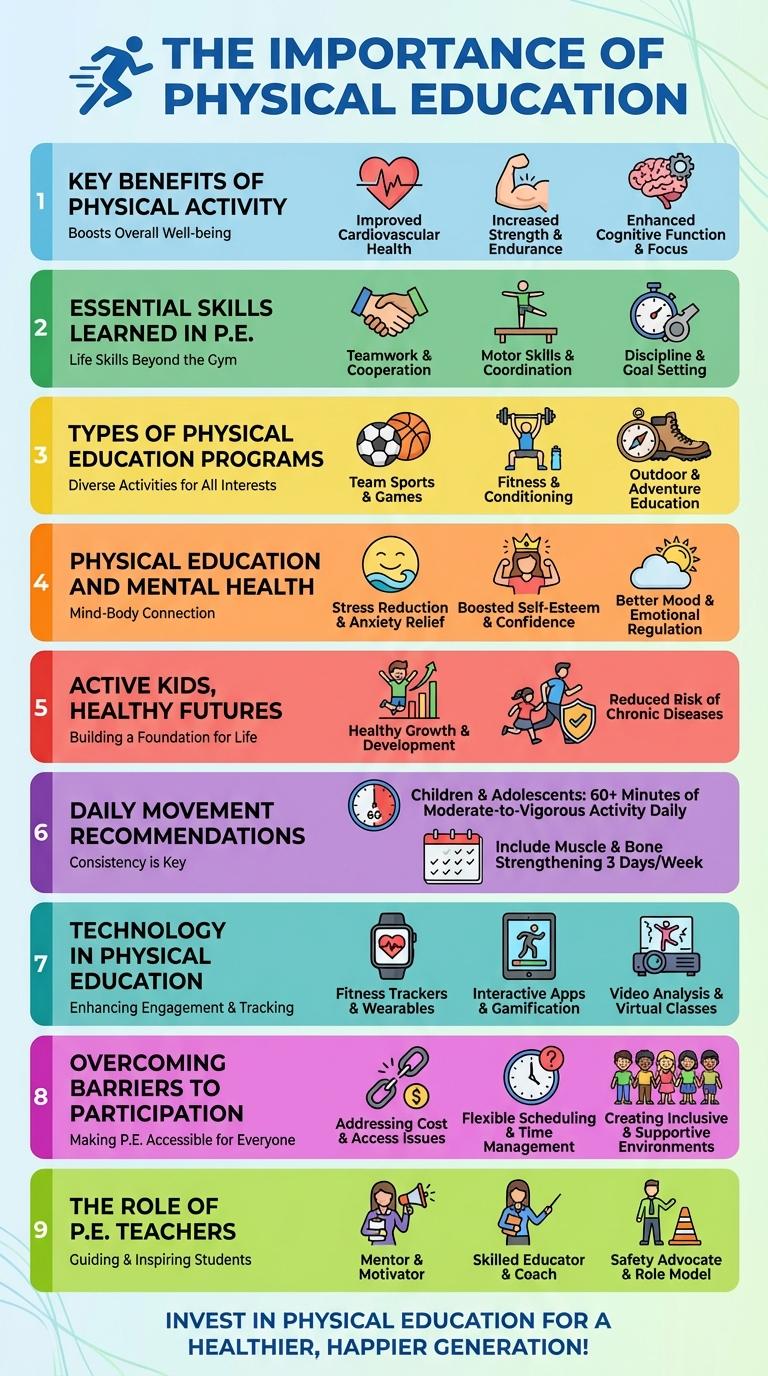
Physical education plays a vital role in fostering overall health and wellness, promoting physical fitness, and enhancing mental well-being. This infographic highlights key statistics, benefits, and effective strategies to engage students in active learning. Understanding the impact of physical education helps educators and parents support lifelong healthy habits.
The Importance of Physical Education
Physical education plays a crucial role in promoting overall health and well-being by encouraging regular physical activity. It helps improve cardiovascular fitness, muscle strength, and flexibility, reducing the risk of chronic diseases.
Engaging in physical education also enhances mental health by reducing stress, anxiety, and depression. Students develop social skills, teamwork, and discipline through structured physical activities and sports.
Key Benefits of Physical Activity
Physical education plays a crucial role in promoting overall health and well-being. Engaging in regular physical activity improves cardiovascular fitness, strengthens muscles, and enhances flexibility.
Students who participate in physical education often demonstrate better mental health, with reduced stress and anxiety levels. Physical activity also supports cognitive function, boosting concentration and academic performance.
Essential Skills Learned in P.E.
Physical education teaches essential skills such as teamwork, coordination, and discipline. These skills promote both physical fitness and social interaction among students. Mastery of these abilities contributes to overall well-being and lifelong healthy habits.
Types of Physical Education Programs
Physical education programs enhance physical fitness and promote lifelong health habits. Various types address different educational and fitness needs for diverse populations.
- Traditional PE Programs - Emphasize fundamental motor skills, team sports, and physical fitness activities for all students.
- Adaptive PE Programs - Tailored to individuals with disabilities, focusing on inclusive physical activities and personalized fitness plans.
- Specialized Sports Programs - Concentrate on developing advanced skills and competitive training in specific sports disciplines.
Physical Education and Mental Health
Physical education plays a crucial role in enhancing mental health by reducing symptoms of anxiety and depression through regular physical activity. Engaging in exercises like running, yoga, and team sports promotes the release of endorphins, which are natural mood lifters. Consistent participation in physical education classes improves cognitive function, boosts self-esteem, and fosters social interaction, all vital for mental well-being.
Active Kids, Healthy Futures
Physical education plays a crucial role in shaping active kids for healthier futures. Encouraging consistent physical activity helps prevent childhood obesity and promotes lifelong wellness.
- Daily Activity Guidelines - Children should engage in at least 60 minutes of moderate to vigorous physical activity every day to support healthy growth.
- Improved Academic Performance - Regular physical exercise enhances concentration, memory, and classroom behavior in school-aged children.
- Long-Term Health Benefits - Early adoption of physical activity habits reduces risks of chronic diseases such as diabetes, heart disease, and hypertension.
Investing in quality physical education programs ensures active kids today grow into healthy adults tomorrow.
Daily Movement Recommendations
Physical education plays a crucial role in promoting daily movement for overall health. Consistent physical activity supports physical, mental, and emotional well-being.
- Children and Adolescents - Should engage in at least 60 minutes of moderate to vigorous physical activity daily to support growth and development.
- Adults - Are recommended to perform at least 150 minutes of moderate-intensity or 75 minutes of vigorous-intensity aerobic activity weekly for cardiovascular health.
- Seniors - Should include balance and muscle-strengthening exercises along with aerobic activities to maintain mobility and reduce fall risk.
Technology in Physical Education
How is technology transforming physical education today? Modern technology integrates wearable devices and interactive apps to monitor and enhance student performance. These tools provide real-time feedback, increasing motivation and improving athletic skills effectively.
What types of technology are commonly used in physical education? Wearable fitness trackers, heart rate monitors, and motion sensors help track physical activity levels with accuracy. Virtual reality and gamified exercise platforms create engaging, immersive experiences promoting active participation.
How does technology benefit students in physical education classes? Students receive personalized data to understand their fitness progress and set achievable goals. Technology enables inclusive learning environments by accommodating diverse abilities and providing adaptive training programs.
What role do mobile apps play in physical education programs? Mobile apps facilitate exercise planning, progress tracking, and instructional guidance outside the classroom environment. They promote ongoing physical activity and healthy habits through reminders and motivational challenges.
How are educators leveraging technology to improve teaching methods? Teachers utilize digital tools to analyze performance metrics and tailor lessons that address individual student needs. Technology supports innovative assessment methods, fostering a more dynamic and effective physical education curriculum.
Overcoming Barriers to Participation
Physical education plays a crucial role in promoting health and wellness among individuals of all ages. Overcoming barriers to participation ensures that everyone has access to the benefits of physical activity.
Common barriers include lack of time, limited resources, and physical disabilities. Strategies to overcome these barriers involve providing inclusive programs, adapting activities to various ability levels, and raising awareness about the importance of regular exercise. Schools and communities can collaborate to create supportive environments that encourage consistent participation in physical education.