
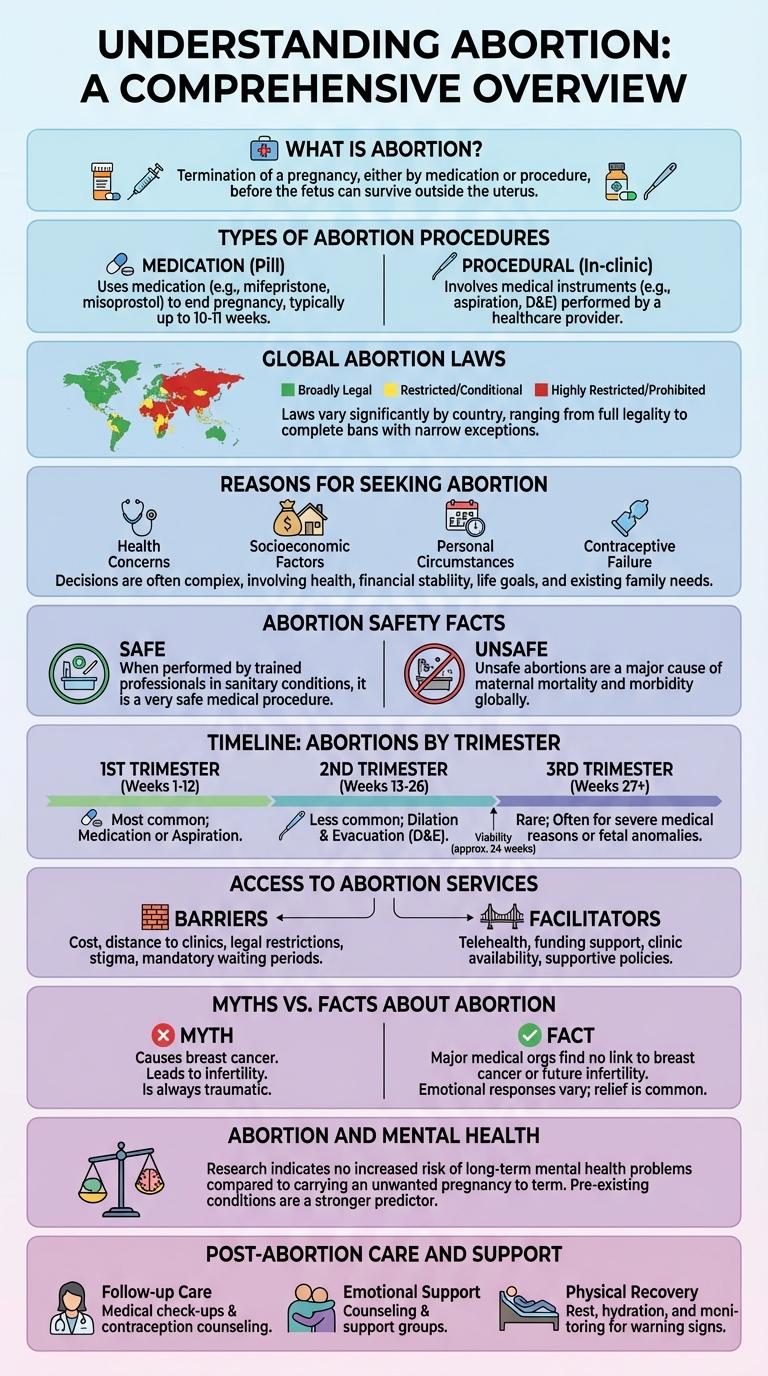
This infographic presents key data and facts about abortion, highlighting its prevalence, legal status, and health implications worldwide. It offers insights into demographic trends, access to healthcare services, and the impact of legislation on women's reproductive rights. Visualizing this information helps foster informed discussions and promotes awareness of the complexities surrounding abortion.
What Is Abortion?
Abortion is the medical process of ending a pregnancy before the fetus can survive outside the womb. It can be performed using medication or surgical procedures, depending on the gestational age. Access to safe abortion is a critical aspect of reproductive health care worldwide.
Types of Abortion Procedures
Abortion procedures vary based on the pregnancy stage and medical considerations. Understanding the different types helps in making informed healthcare decisions.
- Medical Abortion - Uses medication to end a pregnancy within the first 10 weeks by inducing uterine contractions.
- Suction Aspiration - A surgical method that removes pregnancy tissue through suction, typically performed during the first trimester.
- Dilation and Evacuation (D&E) - A second-trimester procedure combining suction and surgical instruments to clear the uterus.
Global Abortion Laws
Global abortion laws vary significantly, reflecting diverse cultural, religious, and political landscapes. Understanding these differences is essential for comprehending access to reproductive healthcare worldwide.
- Permissive Laws - Countries like Canada and the Netherlands allow abortion without restriction as to reason during early pregnancy stages.
- Conditional Access - Some nations permit abortion only under specific circumstances, such as risk to the mother's health or fetal abnormalities.
- Restrictive Policies - Several countries, including El Salvador and the Philippines, impose near-total bans on abortion with strict penalties.
Reasons for Seeking Abortion
Abortion is sought for a variety of personal, medical, and socio-economic reasons. Understanding these reasons helps inform public health policies and support services.
Common reasons for seeking abortion include financial difficulties, concerns about existing family responsibilities, and health risks to the pregnant person. Many individuals also cite timing and personal circumstances as critical factors. Access to safe abortion services enables individuals to make decisions best suited to their lives and well-being.
Abortion Safety Facts
| Abortion Safety Fact | Details |
|---|---|
| Legality and Safety | Legal abortions provided by qualified professionals are among the safest medical procedures. |
| Complication Rates | Complications occur in less than 0.5% of cases when abortion is performed in a proper medical setting. |
| Methods Used | Medical and surgical abortions are both safe and effective, depending on pregnancy duration. |
| Risk Compared to Childbirth | Risk of death from legal abortion is lower than that of childbirth. |
| Importance of Access | Access to safe abortion reduces maternal mortality and health complications worldwide. |
Timeline: Abortions by Trimester
Abortions are categorized by three trimesters in pregnancy: first (0-13 weeks), second (14-26 weeks), and third (27-40 weeks). Most abortions occur in the first trimester, with decreasing rates in later trimesters due to medical and legal factors.
Approximately 90% of abortions take place during the first trimester. Second trimester abortions account for about 8%, while third trimester procedures are less than 2%, typically reserved for critical medical situations.
Access to Abortion Services
How accessible are abortion services worldwide? Access to abortion services varies greatly depending on geographic location, legal frameworks, and social factors. Many regions impose strict regulations that limit the availability of safe procedures.
What barriers do individuals face when seeking abortion care? Common obstacles include mandatory waiting periods, lack of nearby clinics, and financial constraints. These barriers disproportionately affect vulnerable populations and contribute to unsafe abortion practices.
Which countries provide the most accessible abortion services? Nations like Canada, the Netherlands, and Sweden have liberal abortion laws and well-established healthcare systems. These countries offer timely and confidential abortion care without excessive restrictions.
How does legislation impact access to abortion services? Restrictive laws lead to clinic closures and reduced provider numbers, increasing travel distances for patients. Conversely, supportive policies encourage comprehensive reproductive healthcare and education.
What role do healthcare professionals play in abortion access? Trained providers are essential for safe abortion care and counseling. Expanding provider training and removing stigma are key steps to improving service availability.
Myths vs. Facts About Abortion
Abortion is surrounded by many myths and misconceptions that can distort public understanding. Clear facts help individuals make informed decisions about reproductive health.
- Myth: Abortion causes infertility - Scientific studies show that abortion does not affect a woman's ability to conceive in the future.
- Myth: Most abortions are unsafe - Legally performed abortions under medical supervision are among the safest medical procedures.
- Fact: Abortion is a common experience - Approximately 1 in 4 women in the United States will have an abortion by age 45.
- Myth: Abortion increases mental health problems - Research indicates that abortion does not increase the risk of mental health disorders when compared to carrying an unintended pregnancy to term.
- Fact: Access to abortion improves public health - Access to safe abortion services helps reduce maternal mortality and promotes overall health outcomes.
Understanding the facts about abortion empowers individuals and supports public health efforts globally.
Abortion and Mental Health
Abortion and mental health are interconnected topics studied extensively in psychological research. Studies show that the majority of individuals who undergo abortion do not experience long-term negative mental health outcomes. Access to safe abortion services alongside supportive counseling can help minimize any potential emotional distress.