
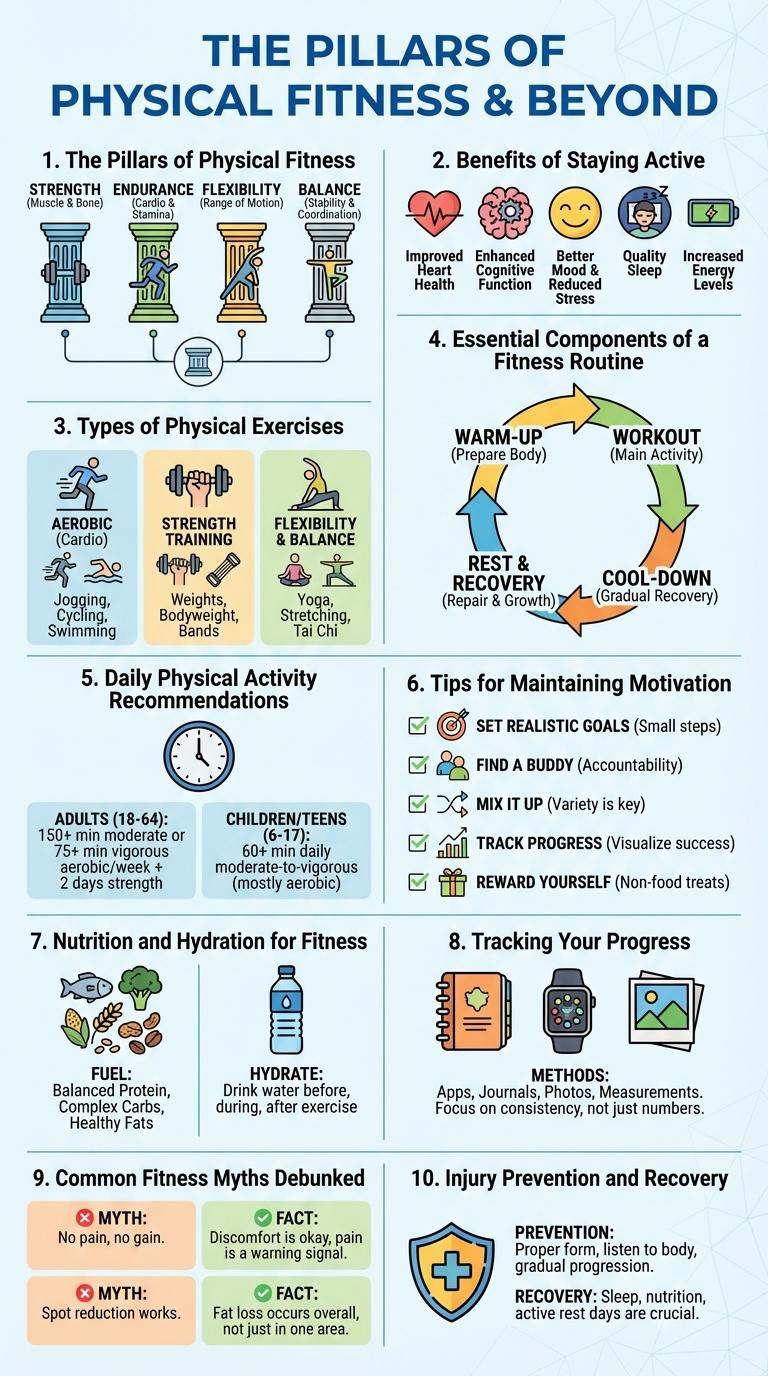
Physical fitness plays a crucial role in maintaining overall health and well-being by enhancing cardiovascular endurance, muscle strength, and flexibility. Regular exercise supports weight management, reduces the risk of chronic diseases, and improves mental health through the release of endorphins. This infographic highlights key components, benefits, and practical tips for incorporating physical activity into daily routines.
The Pillars of Physical Fitness
Physical fitness is built on essential components that promote overall health and performance. Understanding these pillars helps create balanced workout routines and improve physical well-being.
- Cardiovascular Endurance - The ability of the heart and lungs to supply oxygen during sustained physical activity.
- Muscular Strength - The maximum force that a muscle or group of muscles can generate.
- Flexibility - The range of motion available at a joint, aiding in movement and injury prevention.
Benefits of Staying Active
Regular physical activity improves cardiovascular health, boosts mental well-being, and strengthens muscles. Staying active helps maintain a healthy weight and reduces the risk of chronic diseases such as diabetes and hypertension. Engaging in exercise daily enhances energy levels and promotes better sleep quality.
Types of Physical Exercises
Physical fitness encompasses various types of exercises designed to improve strength, endurance, flexibility, and overall health. Common categories include aerobic exercises like running and cycling that boost cardiovascular health, strength training such as weightlifting for muscle development, and flexibility exercises like yoga that enhance mobility. Integrating a balanced mix of these exercise types ensures comprehensive physical fitness and reduces the risk of injury.
Essential Components of a Fitness Routine
| Component | Description |
|---|---|
| Cardiovascular Endurance | The ability of the heart and lungs to supply oxygen during sustained physical activity. Examples include running, cycling, and swimming. |
| Muscular Strength | The maximum force muscles can exert in a single effort. Weight lifting and resistance training improve this component. |
| Muscular Endurance | The muscles' ability to perform repetitive contractions over time without fatigue. Activities like cycling and bodyweight exercises enhance endurance. |
| Flexibility | The range of motion available at a joint. Stretching exercises and yoga increase flexibility and reduce injury risk. |
| Body Composition | The relative proportion of fat and lean mass in the body. Achieved through balanced diet and regular exercise for optimal health. |
Daily Physical Activity Recommendations
Daily physical activity is essential for maintaining overall health and preventing chronic diseases. Following recommended guidelines ensures balanced fitness and well-being.
- Adults should aim for 150 minutes of moderate-intensity activity per week - Activities like brisk walking or cycling enhance cardiovascular health and endurance.
- Include muscle-strengthening exercises at least twice a week - Strength training improves muscle mass, bone density, and metabolic rate.
- Children and adolescents need at least 60 minutes of activity daily - This supports healthy growth, development, and mental well-being.
Consistent daily movement contributes significantly to long-term physical and mental health.
Tips for Maintaining Motivation
Maintaining motivation is key to achieving long-term physical fitness goals. Consistent strategies help overcome plateaus and sustain enthusiasm for exercise.
- Set Clear Goals - Define specific, measurable, and realistic fitness objectives to track progress effectively.
- Vary Your Workouts - Incorporate diverse exercises to prevent boredom and engage different muscle groups.
- Reward Progress - Celebrate milestones with meaningful rewards to reinforce positive behavior.
Nutrition and Hydration for Fitness
How do nutrition and hydration impact physical fitness? Proper nutrition fuels the body with essential nutrients necessary for energy production and muscle repair. Adequate hydration regulates body temperature and supports optimal physical performance.
What are the key nutrients for fitness enthusiasts? Proteins aid in muscle recovery, carbohydrates provide energy, and healthy fats support hormone production. Vitamins and minerals, such as vitamin D and magnesium, enhance bone health and muscle function.
How much water should you drink during exercise? Experts recommend drinking 7-10 ounces of water every 10-20 minutes during physical activity. Staying hydrated prevents fatigue and improves endurance.
Which foods promote effective hydration? Fruits like watermelon and oranges contain high water content and electrolytes. Consuming these alongside water helps maintain fluid balance during workouts.
Why is timing of nutrition important for fitness? Consuming a balanced meal with carbs and protein 2 hours before exercise boosts energy availability. Post-workout nutrition helps replenish glycogen stores and repairs muscle tissue.
Tracking Your Progress
Tracking your progress is essential for effective physical fitness improvement. It helps identify strengths and areas needing adjustment to reach your goals efficiently.
Use tools like fitness apps, wearable devices, or a workout journal to record workouts, duration, and intensity. Regularly monitoring metrics such as weight, body measurements, and performance benchmarks guides informed decisions. This consistent tracking motivates and ensures steady progress in your fitness journey.
Common Fitness Myths Debunked
Many people believe that lifting weights makes you bulky, but strength training actually helps build lean muscle and boosts metabolism. Cardio is often thought to be the only way to lose weight, yet a combination of both cardio and resistance training is most effective.
Some assume that working out every day is necessary for fitness, but rest days are essential for muscle recovery and preventing injury. Spot reduction, the idea that you can lose fat from one area by exercising it, is a myth; fat loss occurs throughout the entire body.