
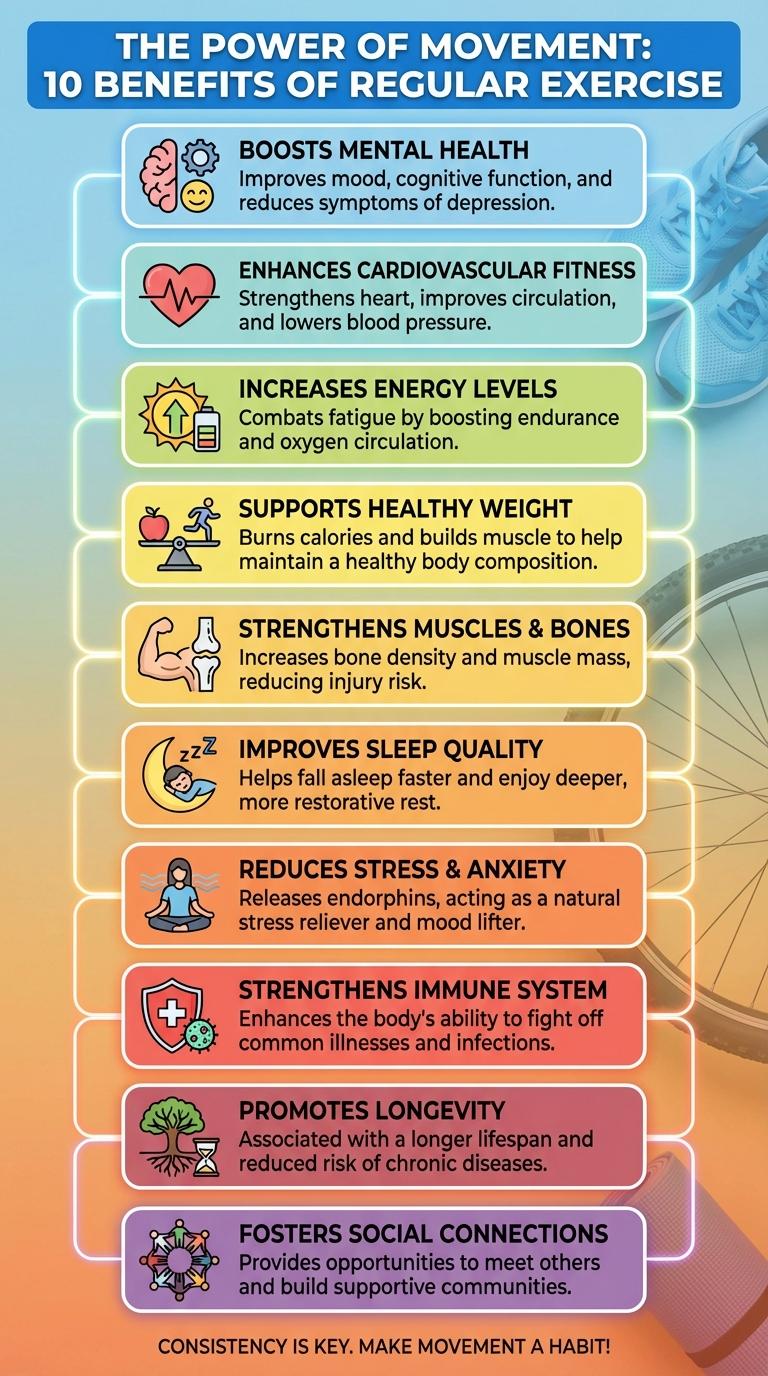
Regular exercise boosts overall health by improving cardiovascular fitness, strengthening muscles, and enhancing mental well-being. It helps regulate weight, reduces the risk of chronic diseases, and promotes better sleep quality. Engaging in physical activity also increases energy levels and supports emotional resilience.
Boosts Mental Health
Exercise significantly enhances mental health by reducing stress and anxiety levels. It promotes the release of endorphins, which improve mood and overall cognitive function.
- Reduces Stress - Physical activity lowers cortisol levels, helping to alleviate stress and induce relaxation.
- Improves Mood - Exercise triggers the release of serotonin and dopamine, key neurotransmitters that elevate mood and combat depression.
- Enhances Cognitive Function - Regular exercise boosts brain plasticity and memory, supporting sharper thinking and learning capabilities.
Enhances Cardiovascular Fitness
Exercise significantly enhances cardiovascular fitness by improving heart and lung function. Regular physical activity strengthens the heart muscle, leading to more efficient blood circulation throughout the body.
- Improves Heart Efficiency - Exercise increases stroke volume, allowing the heart to pump more blood with each beat.
- Boosts Lung Capacity - Physical activity enhances the lungs' ability to take in oxygen and expel carbon dioxide.
- Reduces Blood Pressure - Consistent exercise helps maintain healthy blood pressure levels by improving arterial elasticity.
Improved cardiovascular fitness lowers the risk of heart disease and supports overall health.
Increases Energy Levels
Regular exercise significantly increases energy levels by improving cardiovascular efficiency and muscle strength. Enhanced blood flow delivers more oxygen and nutrients to tissues, boosting overall vitality.
Engaging in physical activity stimulates the production of mitochondria, the energy powerhouses within cells, resulting in higher stamina. Consistent workouts reduce fatigue and improve mental clarity, making daily tasks easier. Increased energy from exercise contributes to better mood and productivity throughout the day.
Supports Healthy Weight
Exercise plays a crucial role in maintaining a healthy weight by increasing calorie burn and boosting metabolism. Regular physical activity helps balance energy intake and expenditure, preventing excess fat accumulation.
Engaging in strength training builds lean muscle mass, which elevates resting metabolic rate, aiding long-term weight management. Consistent exercise also reduces visceral fat, lowering risks associated with obesity.
Strengthens Muscles & Bones
Exercise plays a crucial role in strengthening muscles and bones by stimulating muscle growth and increasing bone density. Weight-bearing and resistance exercises help prevent osteoporosis and reduce the risk of fractures. Regular physical activity enhances overall musculoskeletal health, leading to improved strength, balance, and endurance.
Improves Sleep Quality
Exercise significantly improves sleep quality by helping regulate the body's internal clock, known as the circadian rhythm. Engaging in physical activity increases total sleep time and enhances deep sleep phases, which are crucial for restorative rest.
Regular workouts reduce symptoms of insomnia and sleep apnea, promoting easier and faster sleep onset. Improved sleep from exercise enhances cognitive function, mood, and overall health, creating a positive cycle of well-being.
Reduces Stress & Anxiety
| Benefit | Details |
|---|---|
| Reduces Stress Hormones | Exercise lowers cortisol levels, the primary stress hormone, helping to calm the mind. |
| Enhances Mood | Physical activity stimulates the release of endorphins and serotonin, which improve mood and reduce anxiety. |
| Improves Sleep Quality | Regular exercise promotes better sleep patterns, leading to decreased stress and mental relaxation. |
| Boosts Self-Confidence | Achieving fitness goals enhances self-esteem, reducing feelings of anxiety. |
| Provides Mindfulness Opportunity | Exercise encourages focus on body movements, distracting from negative thoughts and reducing stress. |
Strengthens Immune System
Regular exercise enhances the immune system by promoting better circulation, which allows immune cells to travel more efficiently throughout the body. Physical activity reduces inflammation and stimulates the production of infection-fighting antibodies and white blood cells. Consistent workouts improve overall immune response, helping the body defend against illnesses more effectively.
Promotes Longevity
Engaging in regular exercise significantly enhances life expectancy by reducing the risk of chronic diseases. Physical activity supports healthy aging and improves overall quality of life.
- Reduces Risk of Heart Disease - Exercise strengthens the heart and improves circulation, lowering cardiovascular disease risks.
- Improves Immune Function - Consistent physical activity boosts the immune system, helping to fight infections and illnesses more effectively.
- Enhances Brain Health - Exercise promotes neuroplasticity and cognitive function, reducing the risk of age-related mental decline.