
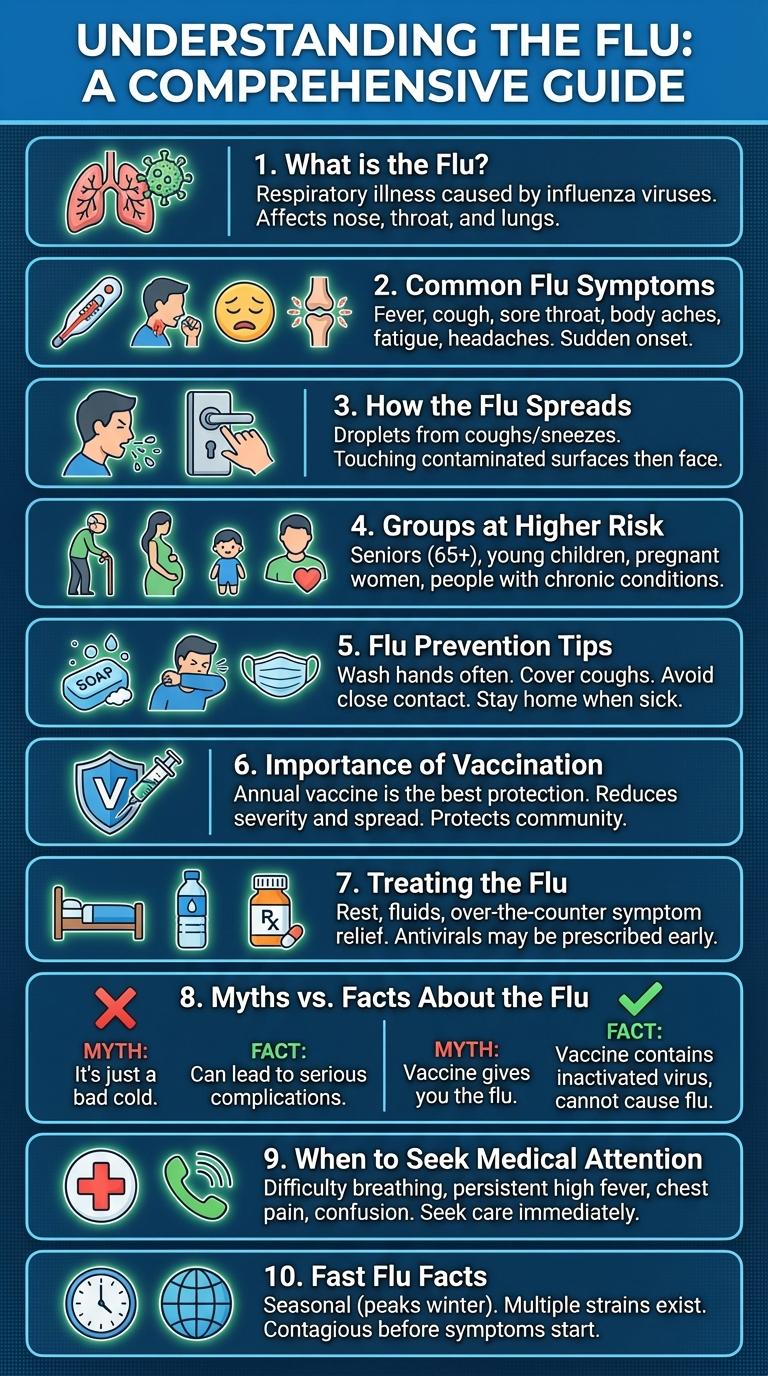
Infographics about the flu visually present critical information on symptoms, prevention methods, and vaccination benefits. They simplify complex data into easy-to-understand graphics that help increase public awareness and encourage healthy practices. Clear visuals highlighting flu transmission and high-risk groups support effective community health strategies.
What is the Flu?
The flu, or influenza, is a contagious respiratory illness caused by influenza viruses. It affects the nose, throat, and sometimes the lungs, leading to symptoms like fever, cough, sore throat, and body aches. Seasonal flu spreads easily through droplets when infected people cough, sneeze, or talk.
Common Flu Symptoms
| Common Flu Symptoms | Description |
|---|---|
| Fever | High body temperature, often above 100.4degF (38degC) |
| Cough | Persistent dry or productive cough causing throat irritation |
| Fatigue | Severe tiredness and weakness lasting several days |
| Muscle Aches | Widespread body muscle pain and stiffness |
| Headache | Moderate to severe head pain, often continuous during illness |
How the Flu Spreads
The flu virus spreads easily from person to person through respiratory droplets. These droplets are released when an infected person coughs, sneezes, or talks.
People can catch the flu by breathing in these droplets or by touching surfaces contaminated with the virus and then touching their face. The flu virus thrives in crowded places and close contact settings. Proper hygiene and vaccination reduce the risk of transmission significantly.
Groups at Higher Risk
Who are the groups at higher risk of contracting the flu? People aged 65 and older face greater complications from the flu virus. Young children under 5, especially those under 2 years, are also highly vulnerable.
What about individuals with chronic health conditions? Those with asthma, diabetes, or heart disease have an increased risk of severe flu symptoms. Pregnant women are more prone to flu-related complications due to immune system changes.
How does the flu impact healthcare workers and caregivers? Healthcare workers are exposed to flu viruses frequently, raising their infection risk. Caregivers of high-risk individuals also have higher chances of transmitting the flu virus.
| Group | Risk Factors |
|---|---|
| Older Adults (65+) | Weaker immune response, higher complication rates |
| Young Children (Under 5) | Developing immune systems, hospitalization risk |
| Chronic Health Conditions | Asthma, diabetes, heart disease increase severity |
| Pregnant Women | Immune changes affect flu severity |
| Healthcare Workers & Caregivers | Frequent exposure, risk of transmission |
Flu Prevention Tips
Flu prevention is essential for reducing the spread of influenza viruses and protecting public health. Simple habits can significantly lower the risk of contracting and transmitting the flu.
- Get Vaccinated Annually - The flu vaccine strengthens your immune system by targeting the most common virus strains each season.
- Practice Regular Hand Washing - Washing hands with soap and water removes flu viruses and prevents infection.
- Avoid Close Contact with Sick Individuals - Minimizing exposure to infected persons reduces your chances of contracting the flu.
Importance of Vaccination
Flu vaccination significantly reduces the risk of infection and severe illness caused by influenza viruses. It protects vulnerable populations, including the elderly, young children, and individuals with chronic health conditions. Widespread immunization helps prevent flu outbreaks and reduces the overall burden on healthcare systems.
Treating the Flu
Treating the flu involves relieving symptoms and preventing complications. Antiviral medications prescribed by healthcare providers can reduce the severity and duration of the illness.
Rest, hydration, and over-the-counter pain relievers help manage fever and body aches. Early treatment within 48 hours improves outcomes, especially for high-risk groups such as young children, elderly, and those with chronic conditions.
Myths vs. Facts About the Flu
The flu is often misunderstood, leading to misinformation about its causes and prevention. Correct knowledge helps protect individuals and communities effectively.
- Myth: The flu is just a bad cold - The flu is caused by influenza viruses and can result in severe symptoms and complications.
- Fact: Flu vaccines reduce the risk - Annual flu vaccines significantly decrease the chances of contracting and spreading the virus.
- Myth: Antibiotics cure the flu - Antibiotics do not work against viral infections like the flu, only against bacterial infections.
- Fact: The flu can lead to serious health issues - Complications such as pneumonia and hospitalization are common in high-risk groups.
- Myth: Only sick people spread the flu - Healthy individuals can also carry and transmit the flu virus before symptoms appear.
Understanding the facts about the flu encourages better health decisions and effective prevention strategies.
When to Seek Medical Attention
Flu symptoms can range from mild to severe, but certain signs indicate the need for immediate medical attention. Severe difficulty breathing, persistent chest pain, or sudden dizziness require urgent evaluation.
High fever lasting more than three days or a worsening cough should prompt a visit to a healthcare provider. Young children, elderly individuals, and those with chronic health conditions are at higher risk and should seek care promptly if flu symptoms escalate.