
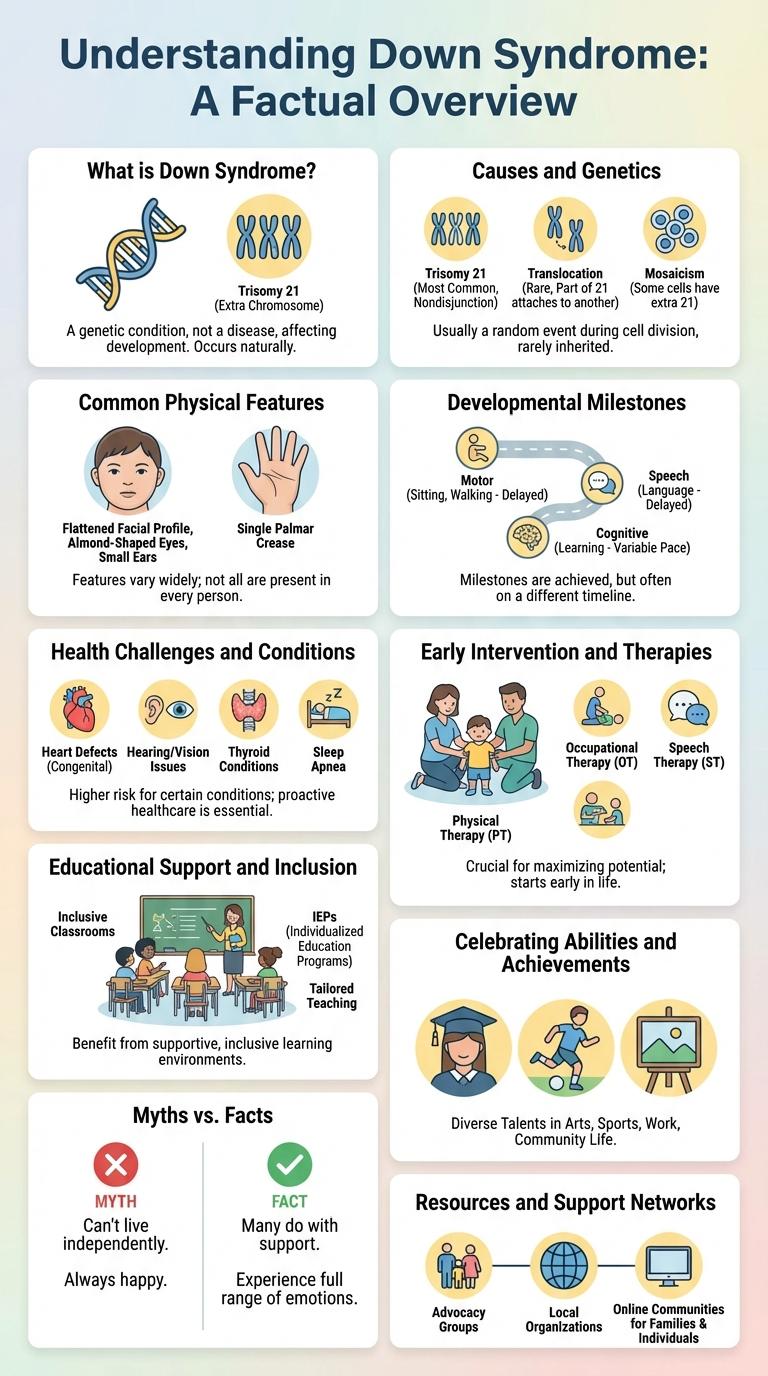
Down syndrome is a genetic condition characterized by the presence of an extra chromosome 21, impacting cognitive development and physical features. Infographics effectively illustrate key facts, statistics, and common traits associated with this condition. Visual data presentation helps increase awareness and understanding of Down syndrome for diverse audiences.
What is Down Syndrome?
| Aspect | Details |
|---|---|
| Definition | Down Syndrome is a genetic condition caused by the presence of an extra copy of chromosome 21, also known as trisomy 21. |
| Genetic Cause | Extra chromosome 21 leads to developmental and intellectual differences. |
| Prevalence | Occurs in approximately 1 in every 700 births worldwide. |
| Characteristics | Distinct facial features, developmental delays, and possible health challenges such as heart defects. |
| Diagnosis | Confirmed through prenatal screening and genetic testing after birth. |
Causes and Genetics of Down Syndrome
Down syndrome is caused by the presence of an extra copy of chromosome 21, resulting in trisomy 21. This chromosomal anomaly occurs due to nondisjunction during cell division, leading to three copies of chromosome 21 instead of the usual two. Genetic factors influencing the risk include maternal age, with higher chances of nondisjunction occurring as maternal age increases.
Common Physical Features
Down syndrome is a genetic condition caused by an extra copy of chromosome 21. It affects physical growth, facial characteristics, and cognitive development.
Common physical features include a flat facial profile, especially around the nose. People with Down syndrome often have almond-shaped eyes that slant upward. Low muscle tone and a single deep crease across the palm are also typical traits.
Developmental Milestones
Down syndrome is a genetic condition that influences developmental milestones, affecting physical and cognitive growth. Understanding these milestones helps in providing appropriate support and interventions for children with Down syndrome.
- Delayed Motor Skills - Children with Down syndrome often achieve motor milestones like sitting, crawling, and walking later than their peers.
- Speech and Language Development - Speech often develops slower and may require targeted speech therapy for effective communication skills.
- Cognitive Milestones - Intellectual development varies but generally involves mild to moderate learning challenges.
Early intervention and supportive therapies can significantly improve developmental outcomes for children with Down syndrome.
Health Challenges and Conditions
Down syndrome is a genetic condition that presents various health challenges impacting multiple body systems. Early diagnosis and management can improve quality of life and reduce complications.
- Congenital Heart Defects - Approximately 50% of individuals with Down syndrome have heart abnormalities requiring medical intervention.
- Respiratory Issues - Increased susceptibility to infections and respiratory conditions due to immune system differences.
- Thyroid Disorders - Higher prevalence of hypothyroidism necessitating regular thyroid function screening.
Early Intervention and Therapies
Early intervention plays a crucial role in supporting children with Down syndrome. It includes therapies that target developmental milestones to enhance learning and growth.
Common therapies include speech therapy, physical therapy, and occupational therapy. These approaches help improve communication, motor skills, and daily functioning.
Educational Support and Inclusion
Educational support and inclusive practices play a crucial role in enhancing learning outcomes for students with Down syndrome. Tailored teaching strategies and supportive environments foster social integration and academic success.
- Individualized Education Plans (IEPs) - Customized learning goals address unique strengths and challenges of students with Down syndrome.
- Inclusive Classrooms - Integration with peers promotes social skills and reduces stigma.
- Specialized Support Services - Access to speech therapy, occupational therapy, and assistive technologies improves communication and learning.
Myths vs. Facts
Is Down syndrome the same for everyone who has it? Down syndrome varies widely among individuals, with differences in abilities and health conditions. It is not a one-size-fits-all diagnosis.
Can people with Down syndrome attend regular schools? Many individuals with Down syndrome successfully learn in inclusive classrooms with appropriate support. Education plans tailored to their needs promote their growth and independence.
Do all people with Down syndrome have severe intellectual disability? Intellectual abilities vary, with many leading fulfilling lives and learning new skills. Support and early intervention play a key role in development.
Is Down syndrome caused by something the parents did? Down syndrome results from a chromosomal anomaly, specifically an extra copy of chromosome 21. It is not caused by lifestyle or actions of the parents.
Can people with Down syndrome live healthy, long lives? Advances in healthcare have significantly increased life expectancy, often into the 60s and beyond. Access to medical care improves quality of life and longevity.
Celebrating Abilities and Achievements
Down syndrome is a genetic condition that does not define an individual's potential or accomplishments. People with Down syndrome have made significant contributions in areas such as arts, sports, education, and advocacy. Celebrating their abilities highlights the importance of inclusion, diversity, and recognizing unique talents.