
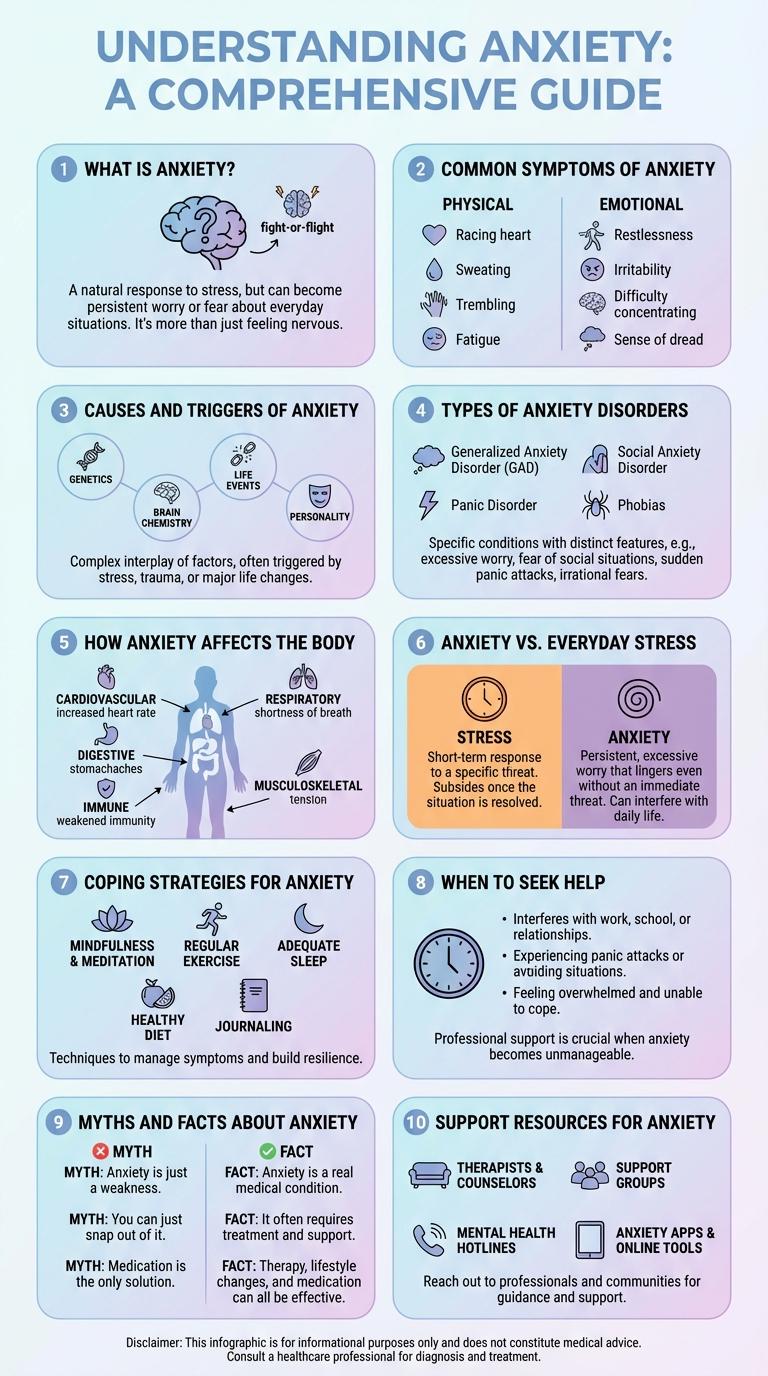
Understanding anxiety is crucial for recognizing its impact on daily life and mental health. This infographic highlights key symptoms, causes, and effective coping strategies to manage anxiety. Visualizing these aspects helps raise awareness and encourages proactive steps toward emotional well-being.
What Is Anxiety?
Anxiety is a natural emotional response to stress or perceived danger. It involves feelings of worry, nervousness, or unease about future events or uncertain outcomes.
- Normal Anxiety - A common reaction that helps individuals stay alert and prepared in challenging situations.
- Excessive Anxiety - Intense, persistent anxiety that interferes with daily activities and well-being.
- Physical Symptoms - Includes increased heart rate, sweating, and fatigue often accompanying anxiety episodes.
Common Symptoms of Anxiety
Anxiety affects millions worldwide, manifesting through various physical and emotional signs. Recognizing common symptoms helps in early identification and management.
- Excessive Worry - Persistent, uncontrollable worrying about everyday situations that interferes with daily activities.
- Restlessness - A feeling of being on edge or unable to relax, often accompanied by pacing or fidgeting.
- Rapid Heartbeat - An accelerated pulse rate triggered by stress or fear, often occurring unexpectedly.
Causes and Triggers of Anxiety
Anxiety is a complex emotional response influenced by various causes and triggers. Understanding these factors helps manage and reduce anxiety symptoms effectively.
- Genetic Predisposition - Family history of anxiety can increase the likelihood of developing anxiety disorders.
- Chronic Stress - Prolonged exposure to stressors such as work pressure or financial problems often triggers anxiety episodes.
- Traumatic Events - Experiencing or witnessing traumatic incidents can lead to persistent anxiety symptoms.
Identifying individual anxiety triggers is essential for tailored treatment and coping strategies.
Types of Anxiety Disorders
Anxiety disorders encompass a range of mental health conditions characterized by excessive fear or worry. These disorders affect millions globally, impacting daily life and overall well-being.
Common types of anxiety disorders include Generalized Anxiety Disorder (GAD), Panic Disorder, and Social Anxiety Disorder. Each type presents unique symptoms and challenges, requiring tailored treatment approaches for effective management.
How Anxiety Affects the Body
Anxiety triggers a cascade of physical reactions in the body, primarily activating the fight-or-flight response. This response floods the body with stress hormones like adrenaline and cortisol, preparing it to react to perceived threats.
Common physical effects include increased heart rate, rapid breathing, and muscle tension, which can cause discomfort and fatigue. Chronic anxiety may lead to digestive issues, headaches, and weakened immune function, impacting overall health.
Anxiety vs. Everyday Stress
| Anxiety | Everyday Stress |
|---|---|
| Intense, persistent feeling of fear or worry | Normal response to daily challenges |
| May cause physical symptoms like rapid heartbeat and sweating | Usually mild physical effects, such as muscle tension |
| Often interferes with daily activities and quality of life | Typically temporary and resolves after the stressor passes |
| Can lead to anxiety disorders if untreated | Considered a natural emotional reaction |
| May require professional treatment and coping strategies | Managed with relaxation techniques and time management |
Coping Strategies for Anxiety
Anxiety affects millions worldwide, causing persistent worry and physical symptoms. Effective coping strategies include deep breathing exercises, regular physical activity, and mindfulness meditation. Seeking professional help and maintaining a supportive social network also contribute significantly to managing anxiety symptoms.
When to Seek Help
Anxiety is a common mental health condition that can affect daily life and well-being. Recognizing when anxiety becomes overwhelming is crucial for timely intervention.
Seek professional help if anxiety causes persistent worry, interferes with work or relationships, or leads to physical symptoms such as chest pain or shortness of breath. Severe anxiety may result in panic attacks, sleep disturbances, or difficulty concentrating. Early support from a mental health specialist can improve coping strategies and overall quality of life.
Myths and Facts About Anxiety
Is anxiety just excessive worrying? Anxiety is a medical condition that involves more than simple worry, affecting both mind and body. It can interfere significantly with daily activities.
Does anxiety only affect adults? Anxiety disorders can impact individuals of all ages, including children and teenagers. Early diagnosis and treatment are crucial for better outcomes.
Can anxiety be controlled by willpower alone? Anxiety is a treatable disorder that often requires professional support, therapy, or medication. Self-control techniques help but usually aren't enough on their own.
Is anxiety the same as stress? Stress is a response to a specific situation, while anxiety is a persistent feeling of apprehension without immediate cause. Anxiety may occur even in the absence of stressors.
Can people with anxiety lead normal lives? With proper treatment, many individuals manage anxiety symptoms effectively. Lifestyle changes and professional care help maintain healthy daily functioning.