
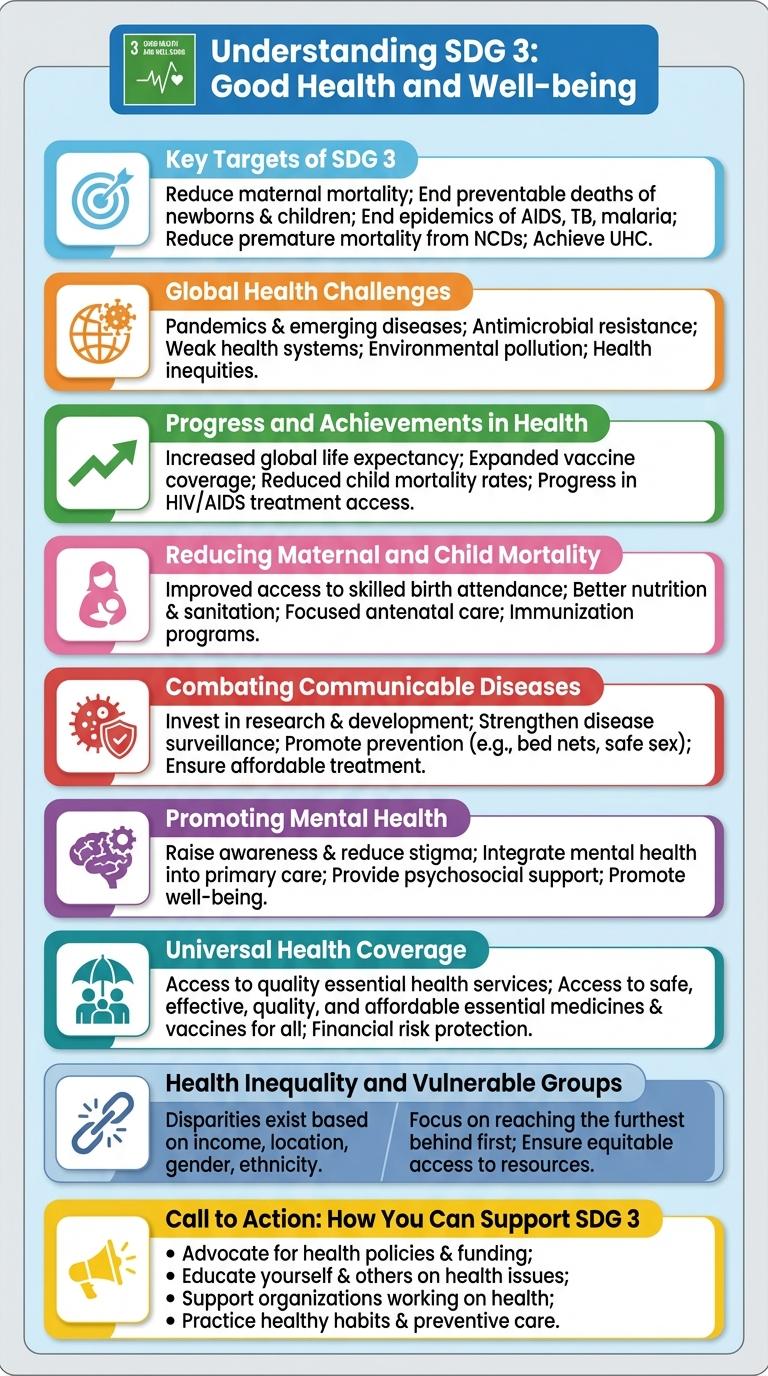
SDG 3 focuses on ensuring healthy lives and promoting well-being for all at all ages. The infographic highlights key targets such as reducing maternal mortality, ending epidemics of major diseases, and achieving universal health coverage. It visually presents progress, challenges, and essential actions required to meet these global health goals.
Understanding SDG 3: Good Health and Well-being
SDG 3 aims to ensure healthy lives and promote well-being for all ages. It targets reducing global maternal mortality, ending epidemics like AIDS and tuberculosis, and achieving universal health coverage. Investments in healthcare infrastructure and access to essential medicines are critical to meeting these goals by 2030.
Key Targets of SDG 3
| Key Target | Description |
|---|---|
| Reduce Maternal Mortality | Reduce the global maternal mortality ratio to less than 70 per 100,000 live births by 2030 |
| End Epidemics | End epidemics of AIDS, tuberculosis, malaria, and neglected tropical diseases by 2030 |
| Reduce Child Mortality | End preventable deaths of newborns and children under 5 years of age |
| Universal Health Coverage | Achieve universal health coverage including access to quality essential healthcare services |
| Reduce Substance Abuse | Strengthen the prevention and treatment of substance abuse including narcotic drug abuse and harmful use of alcohol |
Global Health Challenges
SDG 3 aims to ensure healthy lives and promote well-being for all ages worldwide. Addressing global health challenges is crucial to achieving this sustainable development goal.
Major global health challenges hinder progress towards equitable healthcare and wellbeing across countries.
- High burden of communicable diseases - Infectious diseases such as HIV/AIDS, tuberculosis, and malaria remain leading causes of mortality worldwide.
- Increasing prevalence of non-communicable diseases - Chronic illnesses like heart disease, diabetes, and cancer account for rising global deaths and disability.
- Limited access to quality healthcare - Millions lack essential health services due to inequalities in healthcare infrastructure and affordability.
Progress and Achievements in Health
How has global health improved under Sustainable Development Goal 3? Progress in SDG 3 has led to significant reductions in maternal and child mortality rates worldwide. Improvements in healthcare access and disease control have contributed to longer life expectancy and better overall health outcomes.
| Key Achievement | Impact |
| Maternal Mortality Reduction | Global maternal deaths decreased by 38% since 2000. |
| Child Mortality Decline | Under-5 mortality rate dropped by over 50% since 1990. |
| Control of Infectious Diseases | New HIV infections reduced by 30% in the last decade. |
| Vaccination Coverage | Immunization reached 85% of children globally, preventing millions of deaths. |
What are the main drivers behind health progress in SDG 3? Increased funding for health systems and targeted global partnerships have accelerated disease prevention and treatment. Innovations in medical technology and expanded healthcare infrastructure have improved service delivery and accessibility.
Reducing Maternal and Child Mortality
SDG 3 aims to ensure healthy lives and promote well-being for all at all ages, with a critical focus on reducing maternal and child mortality. Progress in this area is vital for sustainable development and improving global health outcomes.
- Maternal Mortality Ratio - The global maternal mortality ratio declined by 38% between 2000 and 2017, but approximately 295,000 women still died from pregnancy-related causes in 2017.
- Under-Five Mortality Rate - The under-five mortality rate decreased by 59% from 1990 to 2019, yet nearly 5.2 million children under five died in 2019, mostly from preventable causes.
- Access to Skilled Birth Attendants - Around 81% of births worldwide were assisted by skilled health personnel in 2017, improving safe childbirth and reducing complications.
Strengthening healthcare systems and increasing access to maternal and child health services remain essential for achieving SDG 3 targets.
Combating Communicable Diseases
Combating communicable diseases is a critical component of achieving Sustainable Development Goal 3 (SDG 3), which aims to ensure healthy lives and promote well-being for all at all ages. Effective prevention, treatment, and control strategies reduce the global burden of infectious diseases and improve public health outcomes.
- Reducing HIV/AIDS - Targeted interventions and access to antiretroviral therapy have significantly decreased new HIV infections and mortality rates worldwide.
- Eliminating Tuberculosis - Enhanced detection methods and antibiotic treatment protocols help in managing and eliminating tuberculosis in vulnerable populations.
- Combating Malaria - Distribution of insecticide-treated mosquito nets and effective antimalarial medications have lowered malaria incidence and death rates globally.
Promoting Mental Health
Sustainable Development Goal 3 aims to ensure healthy lives and promote well-being for all at all ages. A key focus is promoting mental health as an essential component of overall health.
Mental health disorders affect over 1 billion people globally, contributing significantly to the global disease burden. Early intervention and accessible mental health services are critical for reducing stigma and improving outcomes.
Universal Health Coverage
Universal Health Coverage (UHC) ensures all individuals have access to essential health services without financial hardship. It is a key target under Sustainable Development Goal 3 (SDG 3), which aims to promote well-being for all ages.
UHC includes access to quality health care, medicines, and vaccines, emphasizing equity and affordability. Governments and organizations worldwide strive to strengthen health systems to achieve this vital objective by 2030.
Health Inequality and Vulnerable Groups
SDG 3 aims to ensure healthy lives and promote well-being for all, addressing critical health inequalities faced by vulnerable groups. These groups include low-income populations, ethnic minorities, women, children, and people with disabilities who often experience limited access to quality healthcare services. Targeted interventions and inclusive policies are essential to reduce disparities and improve health outcomes for these marginalized communities.