
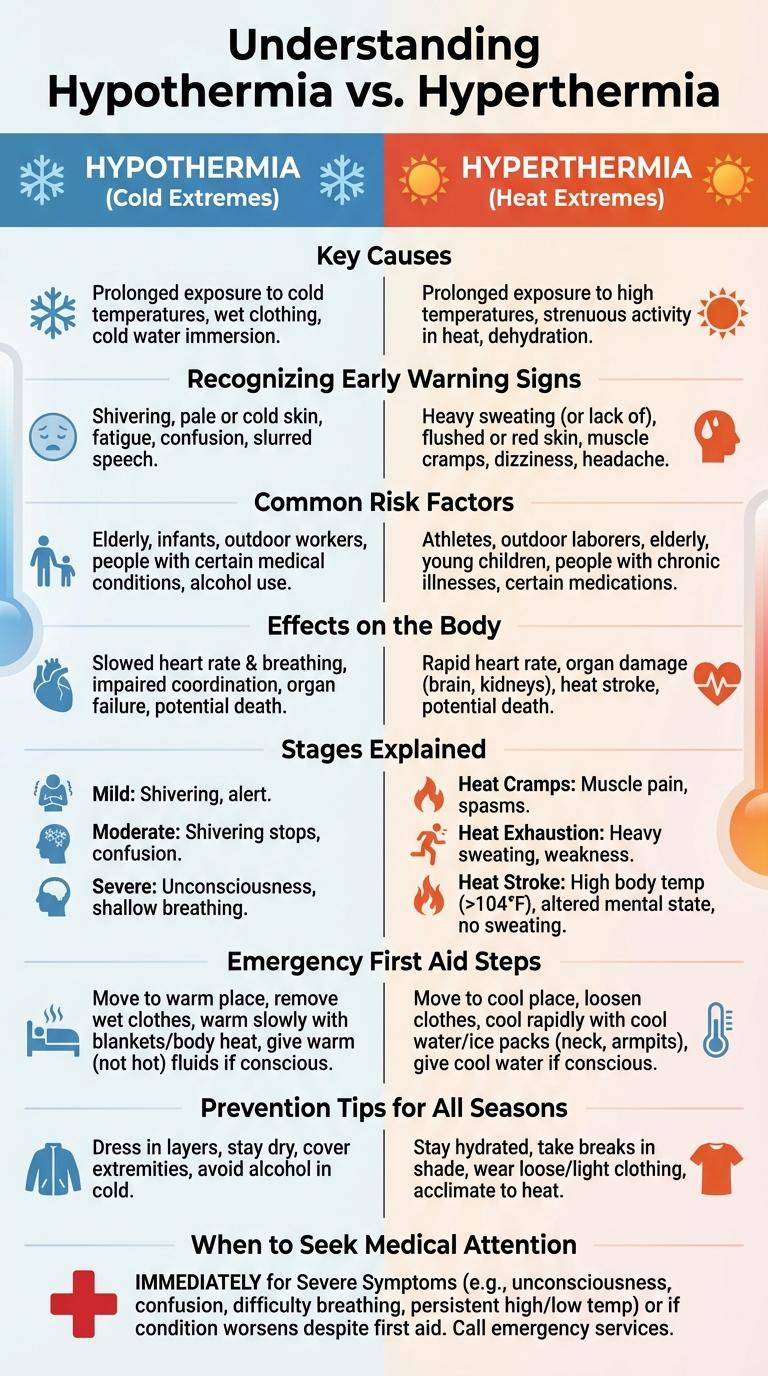
Hypothermia occurs when the body loses heat faster than it can produce, causing dangerously low body temperature, while hyperthermia results from the body overheating due to prolonged exposure to high temperatures. Recognizing the symptoms and understanding preventive measures are crucial for managing both conditions effectively. This infographic highlights key signs, risk factors, and treatment options for hypothermia and hyperthermia.
Understanding Hypothermia vs. Hyperthermia
What are hypothermia and hyperthermia? Hypothermia occurs when the body temperature drops below 95degF (35degC), causing dangerous effects on body functions. Hyperthermia happens when the body temperature rises above 100.4degF (38degC), leading to heat-related illnesses.
How does hypothermia affect the body? Low body temperature slows down the heart, nervous system, and other organs. This can cause confusion, slowed breathing, and loss of coordination.
How does hyperthermia impact health? Excessive heat overwhelms the body's ability to cool down through sweating. This results in symptoms such as heat exhaustion, heat stroke, and organ damage.
| Hypothermia | Hyperthermia |
|---|---|
| Body temp below 95degF (35degC) | Body temp above 100.4degF (38degC) |
| Symptoms: shivering, confusion | Symptoms: heavy sweating, dizziness |
| Causes: cold exposure, immersion | Causes: prolonged heat, dehydration |
| Risk groups: elderly, infants | Risk groups: athletes, outdoor workers |
| Treatment: warming, emergency care | Treatment: cooling, hydration |
Why is early detection essential? Recognizing early signs of hypothermia or hyperthermia can prevent severe complications or death. Proper first aid and medical treatment increase chances of recovery.
Key Causes of Body Temperature Extremes
Hypothermia and hyperthermia are dangerous conditions caused by extreme changes in body temperature. Understanding the key causes of these extremes helps in prevention and timely treatment.
- Exposure to Cold Environments - Prolonged exposure to low temperatures reduces body heat, leading to hypothermia.
- Heatwaves and High Humidity - Excessive heat combined with humidity impairs the body's ability to cool, causing hyperthermia.
- Impaired Thermoregulation - Medical conditions or medications can disrupt the body's temperature control, increasing risk for both hypothermia and hyperthermia.
Recognizing these causes is essential for maintaining safe body temperature levels and preventing life-threatening complications.
Recognizing Early Warning Signs
Hypothermia and hyperthermia are serious conditions caused by extreme body temperatures. Recognizing early warning signs is crucial for timely intervention and prevention of severe health complications.
Early signs of hypothermia include shivering, confusion, and slurred speech, indicating the body is losing heat rapidly. For hyperthermia, symptoms such as excessive sweating, dizziness, and rapid heartbeat suggest overheating. Immediate response to these signs can prevent progression to life-threatening stages.
Common Risk Factors for Each Condition
Hypothermia and hyperthermia are serious temperature-related medical conditions caused by extreme cold and heat exposure, respectively. Understanding common risk factors for each condition helps in prevention and early intervention.
Both hypothermia and hyperthermia have distinct risk factors tied to environmental and personal conditions affecting body temperature regulation.
- Age - Infants and elderly individuals have a reduced ability to regulate body temperature, increasing susceptibility to both hypothermia and hyperthermia.
- Environmental Exposure - Prolonged exposure to cold weather increases hypothermia risk, while extended heat exposure raises the chance of hyperthermia.
- Impaired Thermoregulation - Medical conditions like hypothyroidism or medications affecting sweating and circulation influence vulnerability to both conditions.
Effects on the Body: Hypothermia & Hyperthermia
Hypothermia occurs when the body loses heat faster than it can produce, causing the core temperature to drop below 95degF (35degC). Symptoms include shivering, confusion, and slurred speech, progressing to unconsciousness and potential organ failure if untreated. Severe hypothermia slows heart rate and breathing, leading to life-threatening conditions.
Hyperthermia happens when the body absorbs or produces more heat than it can dissipate, raising core temperature above 104degF (40degC). Effects include heat cramps, heat exhaustion, and heat stroke, which can cause dizziness, nausea, seizures, and irreversible brain damage. Prolonged hyperthermia stresses the cardiovascular system and can result in multi-organ failure.
Stages of Hypothermia Explained
Hypothermia occurs when the body temperature drops below 95degF (35degC), impairing normal bodily functions. It progresses through mild, moderate, and severe stages, each with distinct symptoms and dangers.
Mild hypothermia features shivering, confusion, and lack of coordination. Moderate hypothermia shows increased confusion, slurred speech, and slowed heart rate, while severe hypothermia can lead to unconsciousness and death without prompt treatment.
Stages of Hyperthermia Explained
Hyperthermia occurs when the body absorbs more heat than it dissipates, leading to dangerous increases in core temperature. Understanding the stages of hyperthermia helps in early recognition and effective treatment.
- Heat Cramps - Muscle spasms caused by excessive sweating and electrolyte imbalance during initial heat exposure.
- Heat Exhaustion - Symptoms include heavy sweating, weakness, and dizziness as the body's cooling systems become overwhelmed.
- Heat Stroke - Life-threatening condition marked by core body temperature above 104degF, confusion, and possible loss of consciousness.
Emergency First Aid Steps
Hypothermia and hyperthermia require immediate first aid to prevent severe complications. For hypothermia, move the person to a warm, dry place and gradually rewarm them using blankets or body heat. For hyperthermia, cool the person rapidly by moving them to shade, applying cool water, and providing hydration if conscious.
Prevention Tips for All Seasons
| Hypothermia Prevention | Hyperthermia Prevention |
|---|---|
| Wear layered clothing to maintain body heat during cold weather. | Stay hydrated by drinking plenty of water, especially in hot conditions. |
| Avoid prolonged exposure to cold and wet environments. | Wear lightweight, loose-fitting, and light-colored clothing to reflect heat. |
| Use insulated gloves, hats, and scarves to protect extremities. | Seek shade or air-conditioned places during peak heat hours. |
| Stay dry by changing wet clothes promptly to prevent heat loss. | Limit strenuous activities during high temperatures to reduce heat buildup. |
| Ensure proper nutrition and caloric intake to support body heat production. | Apply sunscreen to avoid heat-related skin damage and maintain hydration. |