
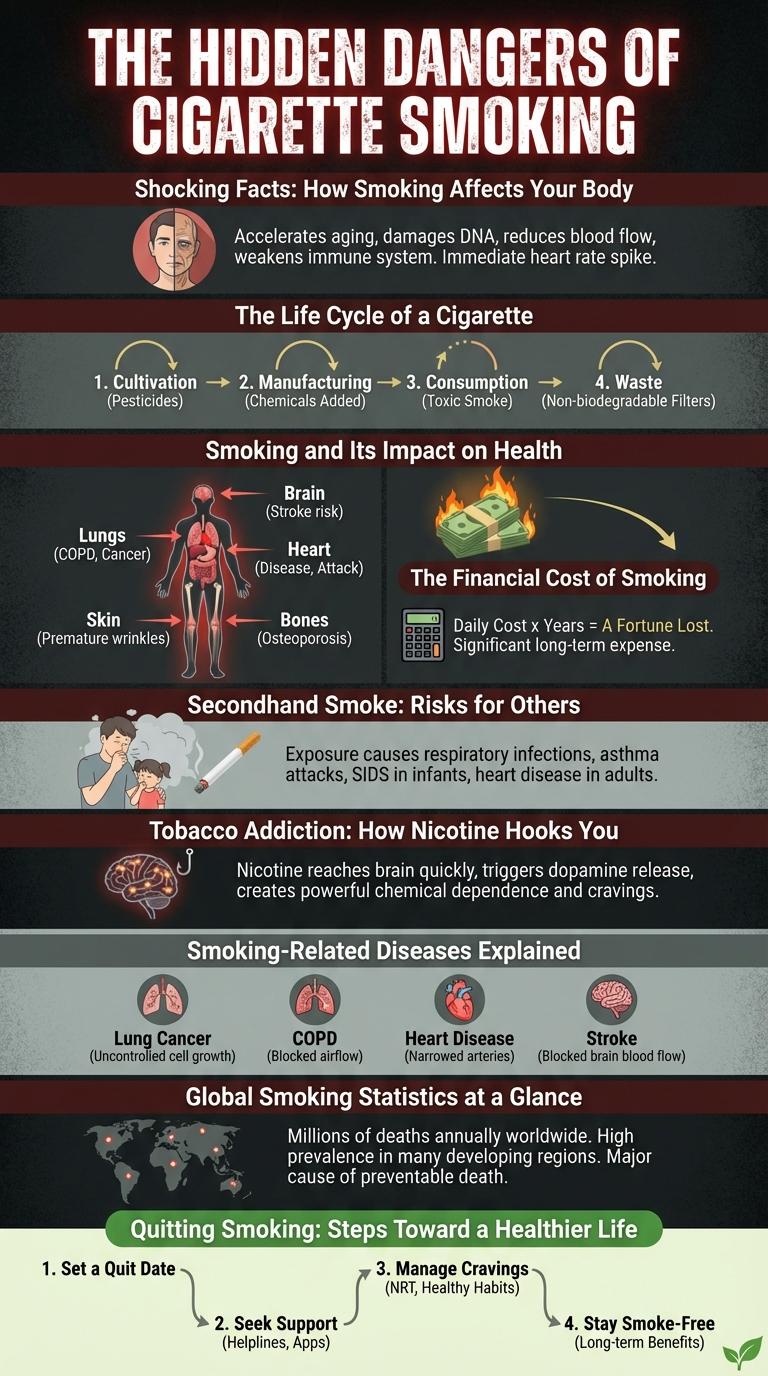
Cigarette smoking remains a leading cause of preventable diseases and premature death worldwide. This infographic presents crucial statistics, health risks, and the economic impact associated with tobacco use. Visualizing these facts highlights the urgent need for smoking cessation and stronger public health policies.
The Hidden Dangers of Cigarette Smoking
Cigarette smoking releases over 7,000 chemicals, many of which are toxic and carcinogenic. It significantly increases the risk of lung cancer, heart disease, and chronic respiratory conditions. Long-term exposure also harms nearly every organ, causing premature aging and reduced immune function.
Shocking Facts: How Smoking Affects Your Body
Smoking cigarettes introduces over 7,000 chemicals into the body, many of which are toxic and carcinogenic. These harmful substances damage nearly every organ, leading to severe health consequences.
Smoking causes reduced lung function by destroying air sacs and narrowing airways, resulting in chronic obstructive pulmonary disease (COPD) and emphysema. It also increases the risk of heart disease by damaging blood vessels and raising blood pressure.
The Life Cycle of a Cigarette
The life cycle of a cigarette outlines each stage from cultivation to disposal. Understanding this cycle reveals environmental and health impacts associated with cigarette production and consumption.
- Tobacco Cultivation - Tobacco plants are grown in nutrient-rich soil requiring extensive water and pesticide use.
- Manufacturing - Processed tobacco leaves are combined with additives before being rolled into cigarettes in factories.
- Distribution and Sale - Cigarettes are packaged and transported globally, becoming widely available in retail outlets.
- Consumption - Smoking releases harmful chemicals into the body and emits toxic secondhand smoke.
- Waste and Pollution - Cigarette butts constitute a major source of non-biodegradable litter, contaminating soil and water.
Each phase of the cigarette life cycle has significant social, environmental, and health consequences.
Smoking and Its Impact on Health
Cigarette smoking is a leading cause of preventable diseases worldwide, affecting nearly every organ in the body. It significantly increases the risk of developing chronic conditions such as heart disease, stroke, and lung cancer.
Nicotine and harmful chemicals in cigarettes damage the respiratory system, leading to chronic obstructive pulmonary disease (COPD) and reduced lung function. Smoking also weakens the immune system, making the body more vulnerable to infections and slower to heal.
The Financial Cost of Smoking
Smoking cigarettes poses a significant financial burden on individuals and society. The costs associated with smoking extend beyond the price of cigarettes, impacting healthcare and productivity.
- Average Annual Spending - Smokers spend approximately $2,000 per year on cigarette purchases, depending on location and consumption rate.
- Healthcare Costs - Smoking-related illnesses account for over $170 billion annually in direct medical expenses in the United States alone.
- Lost Productivity - Smoking causes productivity losses estimated at more than $150 billion each year due to missed workdays and reduced efficiency.
Secondhand Smoke: Risks for Others
Secondhand smoke contains harmful chemicals that pose serious health risks to non-smokers. Exposure to secondhand smoke can lead to respiratory problems, heart disease, and increased cancer risk in others.
- Children are especially vulnerable - Secondhand smoke increases the risk of asthma, sudden infant death syndrome (SIDS), and respiratory infections in children.
- Increased heart disease risk - Non-smokers exposed to secondhand smoke have a 25-30% higher risk of developing heart disease.
- Air quality is compromised - Secondhand smoke significantly reduces indoor air quality, contributing to harmful exposure for everyone nearby.
Tobacco Addiction: How Nicotine Hooks You
| Fact | Details |
|---|---|
| Nicotine Addiction | Nicotine is a highly addictive chemical found in tobacco that rapidly reaches the brain, creating dependency. |
| Brain Impact | Nicotine triggers the release of dopamine, a neurotransmitter linked to pleasure and reward, reinforcing tobacco use. |
| Withdrawal Symptoms | Users experience irritability, anxiety, and cravings when nicotine levels drop, making quitting difficult. |
| Physical Dependence | The body adapts to nicotine, requiring increasing amounts to achieve the same effects, leading to tolerance. |
| Long-term Effects | Chronic nicotine addiction increases risks of lung disease, heart disease, and various cancers. |
Smoking-Related Diseases Explained
Cigarette smoking is a leading cause of numerous serious health conditions affecting the lungs, heart, and other organs. Understanding these diseases highlights the critical importance of smoking cessation for improved public health outcomes.
Smoking introduces harmful chemicals that damage lung tissue, leading to chronic obstructive pulmonary disease (COPD) and lung cancer. The toxic substances also increase the risk of cardiovascular diseases such as heart attack and stroke by damaging blood vessels and promoting plaque buildup. Quitting smoking significantly reduces these risks and enhances overall life expectancy.
Global Smoking Statistics at a Glance
How widespread is cigarette smoking worldwide? Over 1.3 billion people are current tobacco smokers globally. This habit is a leading cause of preventable diseases and death across many countries.
| Statistic | Data |
|---|---|
| Global Smokers | 1.3 billion+ |
| Tobacco-Related Deaths/Year | Approximately 8 million |
| Adult Smoking Prevalence | 21% worldwide |
| Highest Smoking Rates | Eastern Europe, Southeast Asia |
| Smoking Decline Per Year | ~2% globally |