
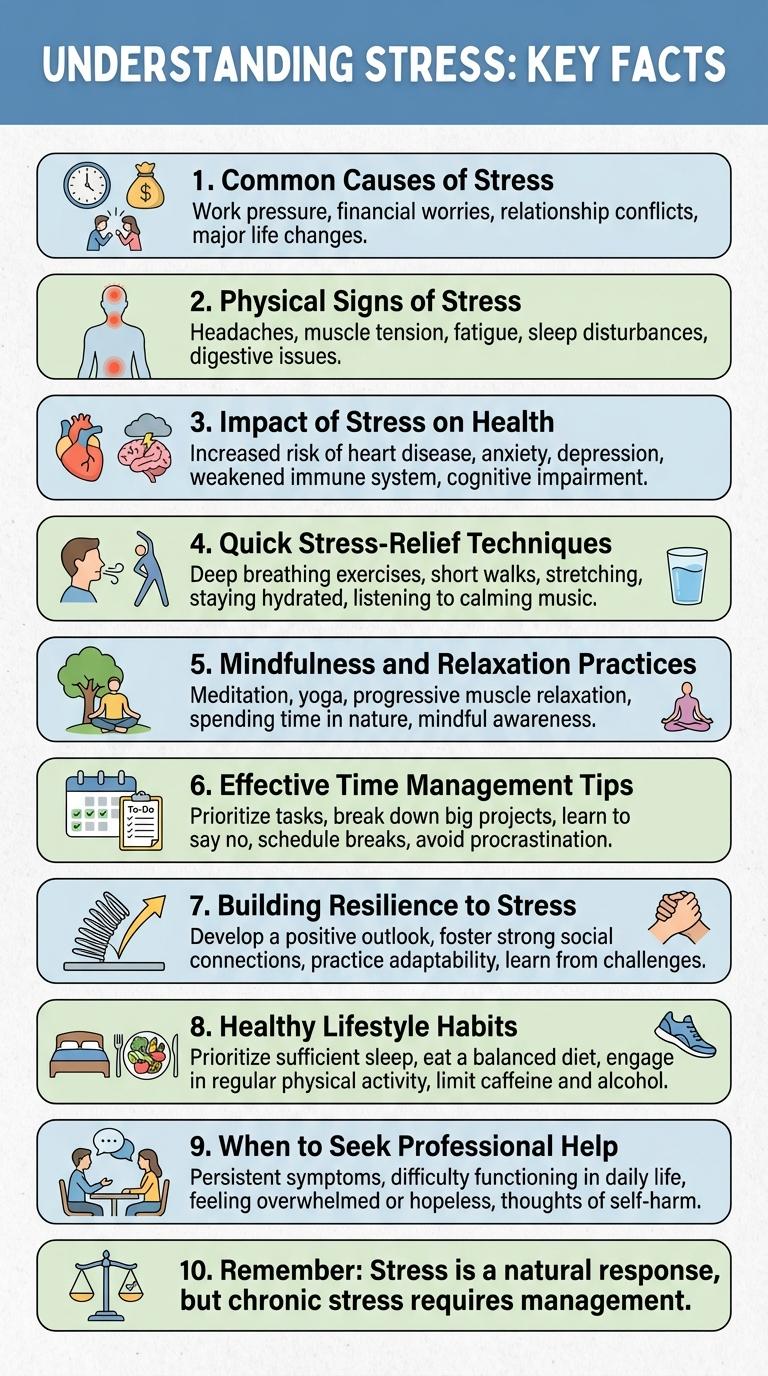
Effective stress management techniques enhance mental clarity and promote emotional balance. Visual infographics simplify complex information, making it easier to understand and implement stress reduction strategies. Practical tips such as deep breathing, exercise, and mindfulness are highlighted for quick reference and daily use.
Understanding Stress: Key Facts
Understanding stress is crucial for effective management and overall well-being. Recognizing its impact enables proactive strategies to maintain mental and physical health.
- Stress triggers - Stress arises from various sources including work, relationships, and environmental factors.
- Physiological response - The body releases hormones like cortisol and adrenaline during stress, affecting heart rate and energy levels.
- Short-term vs long-term stress - Acute stress can motivate action, while chronic stress may lead to health complications.
Awareness of these key facts lays the foundation for developing effective stress management techniques.
Common Causes of Stress
What are the common causes of stress in daily life? Stress often arises from work pressure, financial difficulties, and relationship problems. Health issues and major life changes also frequently trigger stress responses in individuals.
Physical Signs of Stress
Stress triggers various physical signs that signal the body's response to pressure. Recognizing these symptoms early helps in managing stress effectively.
Common physical signs include headaches, muscle tension, and rapid heartbeat. Identifying these indicators allows for timely intervention and stress relief.
Impact of Stress on Health
Stress significantly affects both mental and physical health. Understanding its impact is essential for effective stress management.
- Cardiovascular Issues - Chronic stress contributes to high blood pressure and increases the risk of heart disease.
- Immune System Suppression - Prolonged stress weakens immune response, making the body more vulnerable to infections.
- Mental Health Disorders - Excessive stress can lead to anxiety, depression, and other psychological conditions.
Quick Stress-Relief Techniques
Stress management is essential for maintaining mental and physical health. Quick stress-relief techniques like deep breathing, progressive muscle relaxation, and mindfulness can effectively reduce tension. Incorporating these methods into daily routines helps improve focus and emotional well-being.
| Technique | Benefit |
|---|---|
| Deep Breathing | Calms the nervous system and lowers heart rate |
| Progressive Muscle Relaxation | Releases muscle tension and promotes relaxation |
| Mindfulness | Enhances present-moment awareness and reduces anxiety |
| Quick Physical Activity | Boosts endorphins and reduces stress hormones |
| Visualization | Promotes mental calmness through positive imagery |
Mindfulness and Relaxation Practices
Mindfulness and relaxation practices play a crucial role in effective stress management by promoting mental clarity and emotional balance. Techniques such as deep breathing, meditation, and progressive muscle relaxation help reduce cortisol levels, enhancing overall well-being. Regular practice improves focus, decreases anxiety, and supports a healthier response to daily stressors.
Effective Time Management Tips
| Tip | Description |
|---|---|
| Prioritize Tasks | Identify and focus on high-impact activities to reduce overwhelm and improve productivity. |
| Set Realistic Deadlines | Establish achievable timeframes to maintain steady progress and avoid last-minute stress. |
| Use Time Blocks | Allocate specific time periods for focused work to enhance concentration and reduce distractions. |
| Limit Multitasking | Concentrate on one task at a time to improve efficiency and lower cognitive load. |
| Schedule Breaks | Incorporate regular short breaks to recharge mental energy and prevent burnout. |
Building Resilience to Stress
Building resilience to stress enhances your ability to cope with challenges effectively. It involves developing mental and emotional strength through consistent practice and healthy habits.
Techniques such as mindfulness, regular exercise, and balanced nutrition contribute to stronger stress resistance. Cultivating supportive relationships and positive thinking further boosts resilience.
Healthy Lifestyle Habits
Managing stress effectively involves adopting healthy lifestyle habits that promote mental and physical well-being. Implementing these habits can significantly reduce stress levels and improve overall quality of life.
- Regular Exercise - Engaging in physical activity releases endorphins that naturally diminish stress and boost mood.
- Balanced Nutrition - Consuming nutrient-rich foods supports brain function and stabilizes energy levels, reducing stress.
- Consistent Sleep Schedule - Maintaining regular sleep patterns enhances emotional resilience and stress recovery.