
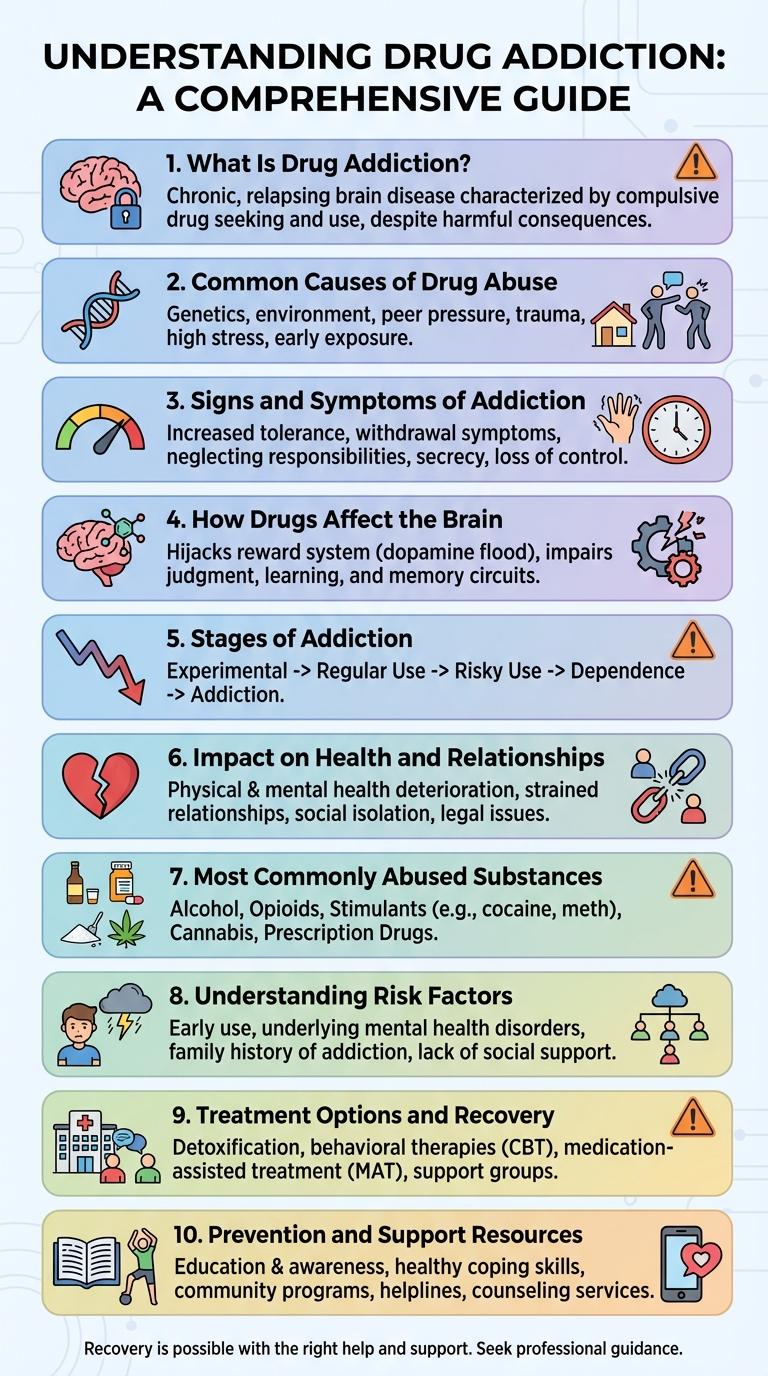
Drug addiction dramatically impacts individuals and communities, altering brain chemistry and behavior. Understanding the causes, effects, and treatment options is crucial for prevention and recovery efforts. This infographic highlights key statistics and essential information to raise awareness and support those affected.
What Is Drug Addiction?
Drug addiction is a chronic brain disorder characterized by compulsive drug seeking and use despite harmful consequences. It alters brain function, leading to physical and psychological dependence. This condition affects individuals' behavior, making recovery challenging without proper treatment.
Common Causes of Drug Abuse
Drug addiction is a complex condition influenced by multiple factors. Understanding the common causes of drug abuse helps in prevention and treatment strategies.
- Genetic Predisposition - Inherited traits can increase an individual's vulnerability to addiction by affecting brain chemistry.
- Environmental Factors - Exposure to drug use in family, peers, or community environments raises the risk of substance abuse.
- Mental Health Disorders - Conditions such as anxiety, depression, and trauma often lead to self-medication with drugs.
Addressing these causes is essential to reduce the incidence of drug addiction and support recovery efforts.
Signs and Symptoms of Addiction
Drug addiction manifests through various physical, emotional, and behavioral changes that signal dependency. Recognizing these signs early can aid in seeking timely help and support.
- Changes in Appearance - Noticeable neglect of personal hygiene and sudden weight fluctuations often occur.
- Behavioral Shifts - Increased secrecy, isolation from family and friends, and erratic mood swings are common indicators.
- Physical Symptoms - Persistent fatigue, bloodshot eyes, and frequent nosebleeds can suggest substance abuse.
How Drugs Affect the Brain
Drug addiction significantly alters brain function by disrupting the communication between neurons. These substances target the brain's reward system, releasing excessive amounts of dopamine, which reinforces drug-taking behavior.
Over time, the brain adapts to these changes, reducing its ability to experience pleasure from natural rewards. This adaptation leads to increased drug tolerance, dependence, and compulsive drug-seeking despite harmful consequences.
Stages of Addiction
Drug addiction progresses through distinct stages that affect brain function and behavior. Understanding these stages helps in identifying the severity and planning effective treatment.
The first stage is Experimentation, where individuals try drugs out of curiosity or social pressure. This can lead to the second stage, Regular Use, characterized by routine consumption without immediate negative consequences.
Impact on Health and Relationships
How does drug addiction affect physical health? Drug addiction often leads to severe health issues including heart disease, liver damage, and respiratory problems. Chronic substance abuse weakens the immune system, making individuals more susceptible to infections.
What mental health problems are linked to drug addiction? Drug abuse frequently causes anxiety, depression, and cognitive impairments. Long-term addiction can alter brain chemistry, leading to mood disorders and increased risk of mental illness.
In what ways does drug addiction harm personal relationships? Addiction creates trust issues, communication breakdowns, and emotional distance between individuals and their loved ones. Family and friendships often suffer due to erratic behavior and neglect caused by substance dependence.
How does addiction impact professional and social life? Drug addiction reduces productivity and increases absenteeism at work or school. It also leads to social isolation as users withdraw from social activities and support networks.
What are common physical symptoms visible to others? Individuals struggling with addiction may show signs like weight loss, poor hygiene, and unusual injuries. These symptoms often serve as warning signs to friends and healthcare providers.
Most Commonly Abused Substances
Drug addiction affects millions worldwide, with certain substances being more commonly abused due to their accessibility and effects. Understanding the most frequently abused drugs helps in addressing prevention and treatment strategies.
The following list highlights the most commonly abused substances and their impact on users:
- Alcohol - A legal and widely consumed depressant linked to liver damage and impaired judgment.
- Marijuana - The most commonly used illicit drug, known for its psychoactive and relaxing effects.
- Opioids - Prescription painkillers and heroin, highly addictive and associated with overdose risks.
Understanding Risk Factors
Drug addiction results from complex interactions between genetic, environmental, and psychological factors. Understanding these risk factors is crucial for prevention and early intervention.
Genetic predisposition increases susceptibility to substance dependence, with family history being a significant indicator. Environmental influences like peer pressure, stress, and trauma contribute to the likelihood of addiction. Mental health disorders such as depression and anxiety also elevate the risk of drug misuse.
Treatment Options and Recovery
| Treatment Option | Description |
|---|---|
| Detoxification | Medical process to safely manage withdrawal symptoms and clear drugs from the body. |
| Behavioral Therapy | Cognitive-behavioral therapy (CBT) helps patients recognize and change harmful drug-use behaviors. |
| Medications | Approved drugs like Methadone and Buprenorphine reduce cravings and prevent relapse. |
| Support Groups | Programs such as Narcotics Anonymous provide peer support and accountability. |
| Aftercare Planning | Ongoing counseling and relapse prevention strategies support long-term recovery. |