
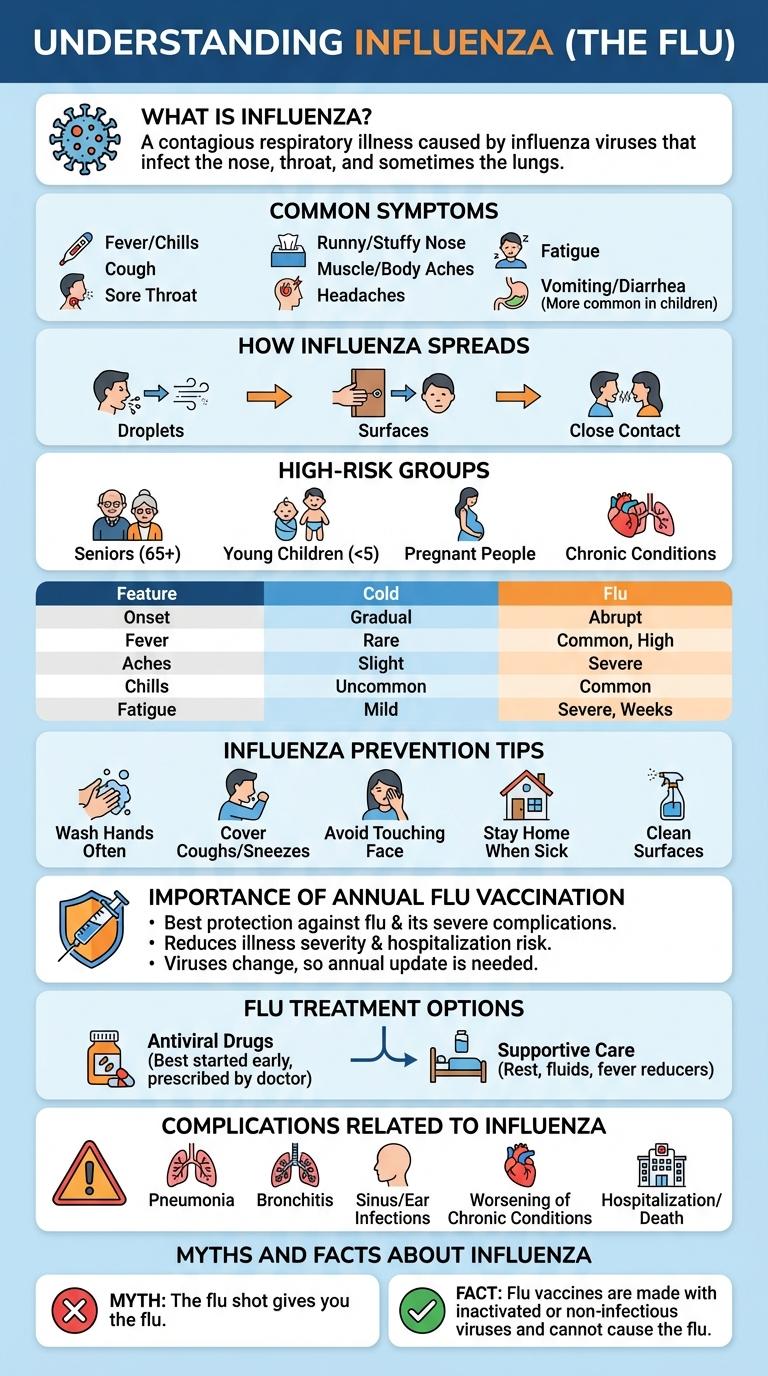
Influenza is a highly contagious respiratory illness caused by influenza viruses, affecting millions worldwide each year. Symptoms range from mild fever and cough to severe complications like pneumonia, emphasizing the importance of awareness and prevention. Understanding key facts about flu transmission, vaccination, and treatment can help reduce its impact on public health.
What is Influenza?
Influenza, commonly known as the flu, is a contagious respiratory illness caused by influenza viruses. It affects the nose, throat, and sometimes the lungs, leading to symptoms like fever, cough, sore throat, and body aches. Seasonal influenza outbreaks occur annually, impacting millions worldwide and causing significant health and economic burdens.
Common Symptoms of the Flu
Influenza, commonly known as the flu, is a contagious respiratory illness caused by influenza viruses. It spreads easily through coughs, sneezes, and close contact with infected individuals.
The most common symptoms of the flu include fever, chills, cough, sore throat, runny or stuffy nose, muscle or body aches, headaches, and fatigue. These symptoms typically appear 1 to 4 days after exposure and can range from mild to severe.
How Influenza Spreads
Influenza is a contagious respiratory illness caused by influenza viruses. It spreads easily among people, especially in crowded environments.
- Airborne Transmission - Influenza viruses spread through droplets released when an infected person coughs, sneezes, or talks.
- Contact with Contaminated Surfaces - Touching surfaces with virus particles and then touching the mouth, nose, or eyes can lead to infection.
- Close Personal Contact - Shaking hands, hugging, or being near someone infected increases the risk of transmission.
Understanding how influenza spreads helps in adopting preventive measures like vaccination and proper hygiene.
High-Risk Groups for Influenza
Differences Between Cold and Flu
Influenza and the common cold are respiratory illnesses with overlapping symptoms but distinct causes and severity levels. Understanding their differences helps in accurate diagnosis and treatment.
- Cause - Influenza is caused by influenza viruses, while the common cold results from various viruses, primarily rhinoviruses.
- Symptom Severity - Flu symptoms are usually more intense, including high fever, body aches, and fatigue, whereas cold symptoms are milder with a runny nose and sore throat.
- Onset Speed - Flu symptoms appear suddenly and escalate quickly, while cold symptoms develop gradually.
Influenza Prevention Tips
Influenza is a contagious respiratory illness caused by influenza viruses. Preventing the spread of influenza is essential to reduce illness and complications.
Effective influenza prevention involves vaccination and good hygiene practices.
- Get Vaccinated Annually - Annual flu vaccines help build immunity against the most common influenza strains each season.
- Practice Hand Hygiene - Regularly washing hands with soap and water reduces the transmission of influenza viruses.
- Avoid Close Contact - Staying away from sick individuals and crowded places limits exposure to influenza viruses.
Importance of Annual Flu Vaccination
Why is the annual flu vaccination crucial for public health?
The flu vaccine helps protect against the influenza virus strains predicted to be most common each season. Annual vaccination reduces the risk of flu-related complications, hospitalizations, and deaths across all age groups.
Flu Treatment Options
Influenza, commonly known as the flu, is a contagious respiratory illness caused by influenza viruses. Effective treatment options can help reduce symptoms and shorten the duration of the illness.
Antiviral medications like oseltamivir and zanamivir are most effective when started within 48 hours of symptom onset. Over-the-counter remedies such as acetaminophen and ibuprofen help relieve fever and body aches.
Complications Related to Influenza
Influenza, commonly known as the flu, can lead to severe complications beyond typical respiratory symptoms. These complications often result in increased hospitalizations and mortality, especially among vulnerable populations.
Complications related to influenza include pneumonia, which is a serious lung infection causing difficulty breathing and hospitalization. Secondary bacterial infections can occur after the initial flu infection, exacerbating symptoms and delaying recovery. Other risks involve worsening of chronic health conditions such as asthma, diabetes, and heart disease, which complicate overall patient outcomes.