
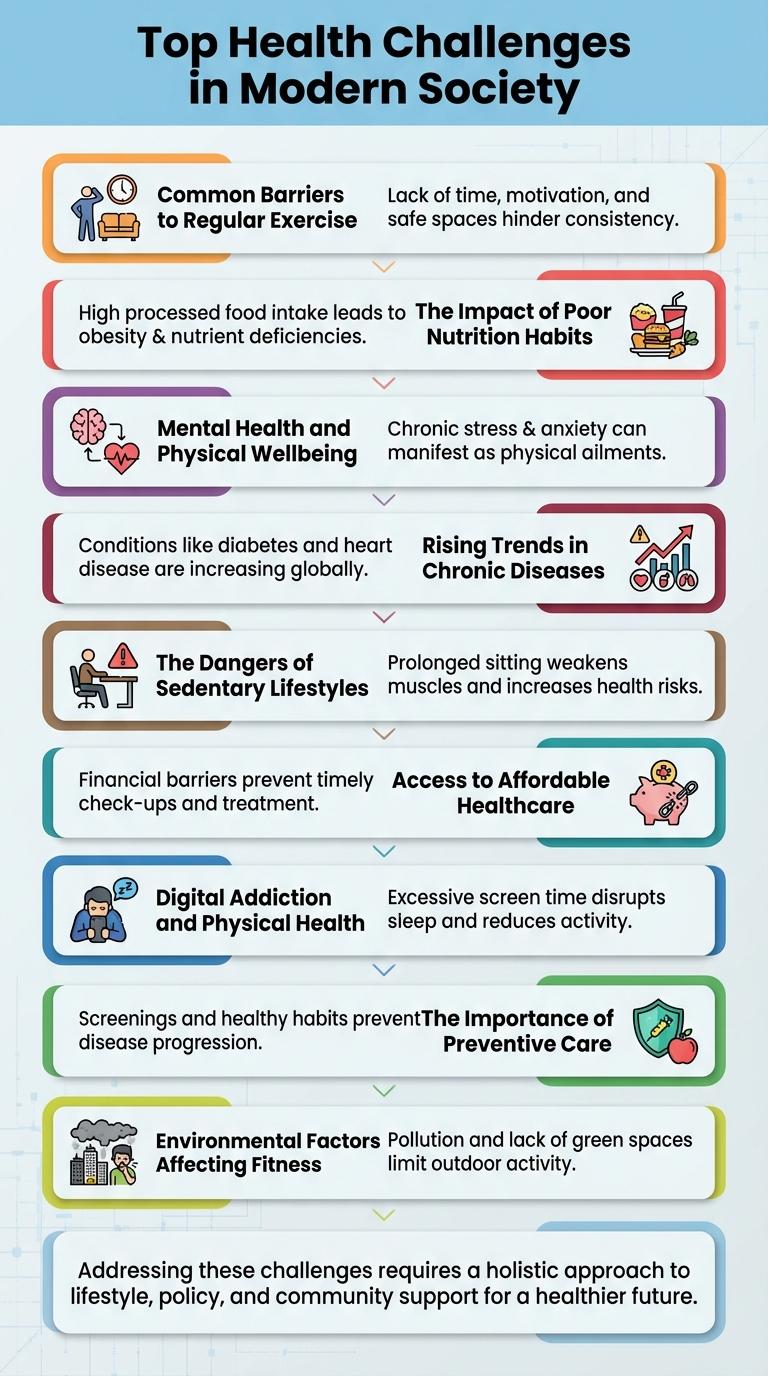
Understanding common challenges in health and fitness is essential for effective lifestyle improvements. This infographic highlights key issues such as poor nutrition, lack of physical activity, and mental health struggles that hinder overall well-being. Addressing these factors can lead to better health outcomes and a more balanced approach to fitness.
Top Health Challenges in Modern Society
Modern society faces numerous health challenges that impact overall well-being and quality of life. Rising rates of chronic diseases, mental health disorders, and sedentary lifestyles are major concerns.
Obesity affects over 42% of adults in the United States, increasing risks of diabetes, heart disease, and stroke. Mental health issues, including anxiety and depression, affect nearly 1 in 5 adults globally. Sedentary behavior contributes to decreased physical fitness and increased risk of cardiovascular problems.
Common Barriers to Regular Exercise
Common barriers to regular exercise include lack of time, physical limitations, and lack of motivation. Many individuals struggle to balance work, family, and fitness, making consistent workouts challenging. Physical pain or health conditions can prevent exercise, while lack of clear goals reduces motivation and commitment.
| Barrier | Impact |
|---|---|
| Lack of Time | Limits opportunity for workouts |
| Physical Limitations | Causes discomfort or injury risks |
| Lack of Motivation | Results in inconsistent exercise habits |
| Access to Facilities | Restricts workout options |
| Environmental Factors | Includes weather and safety concerns |
The Impact of Poor Nutrition Habits
| Issue | Impact on Health and Fitness |
|---|---|
| Weight Gain | Excess calorie consumption leads to increased body fat and obesity. |
| Nutrient Deficiency | Inadequate vitamins and minerals cause fatigue, weakened immunity, and poor muscle function. |
| Chronic Diseases | Poor diet increases risk of diabetes, heart disease, and hypertension. |
| Low Energy Levels | Unbalanced meals result in decreased physical performance and motivation. |
| Digestive Issues | High intake of processed foods causes bloating, constipation, and poor gut health. |
Mental Health and Physical Wellbeing
Mental health and physical wellbeing are deeply interconnected, influencing overall health outcomes. Poor mental health can lead to physical issues such as fatigue, weakened immunity, and chronic conditions. Regular exercise and mindfulness practices enhance mood, reduce stress, and strengthen the body's resilience.
Rising Trends in Chronic Diseases
Chronic diseases such as diabetes, heart disease, and obesity are rapidly increasing worldwide, impacting millions of people. These conditions pose significant challenges to health and fitness efforts globally.
- Diabetes Prevalence - Over 537 million adults are living with diabetes, with numbers expected to rise significantly by 2030.
- Heart Disease Risks - Cardiovascular diseases are the leading cause of death, responsible for 32% of global deaths annually.
- Obesity Epidemic - Nearly 40% of adults worldwide are classified as overweight or obese, elevating risks for multiple chronic conditions.
The Dangers of Sedentary Lifestyles
A sedentary lifestyle significantly increases the risk of chronic diseases such as heart disease, diabetes, and obesity. Prolonged inactivity negatively impacts cardiovascular health and metabolic function.
Physical inactivity also contributes to mental health issues including anxiety and depression. Regular movement and exercise are essential to maintaining overall well-being and preventing these health risks.
Access to Affordable Healthcare
How does limited access to affordable healthcare impact overall health and fitness? Lack of affordable healthcare restricts timely medical evaluations and preventive care, leading to untreated conditions and chronic illnesses. This gap reduces opportunities for individuals to maintain optimal physical health and fitness levels.
Digital Addiction and Physical Health
Digital addiction increasingly impacts physical health, presenting challenges to maintaining fitness. Excessive screen time correlates with sedentary behavior and related health risks.
- Reduced Physical Activity - Prolonged use of digital devices limits time spent on exercise and active movement.
- Poor Posture - Continuous screen exposure leads to neck, back, and shoulder pain due to improper ergonomic habits.
- Sleep Disruption - Blue light from screens interferes with circadian rhythms, reducing sleep quality and recovery.
Addressing digital addiction is crucial for improving overall physical health and promoting sustainable fitness habits.
The Importance of Preventive Care
Preventive care is essential for maintaining long-term health and avoiding chronic diseases. Early detection and lifestyle changes can significantly reduce healthcare costs and improve quality of life.
- Reduces Risk of Chronic Diseases - Regular screenings and check-ups help identify risks before they develop into serious conditions like diabetes or heart disease.
- Enhances Early Detection - Preventive tests and exams catch health issues in their initial stages, allowing for timely treatment and better outcomes.
- Promotes Healthy Lifestyle Choices - Guidance from healthcare professionals encourages exercise, balanced diet, and habits that prevent illness and improve fitness.