
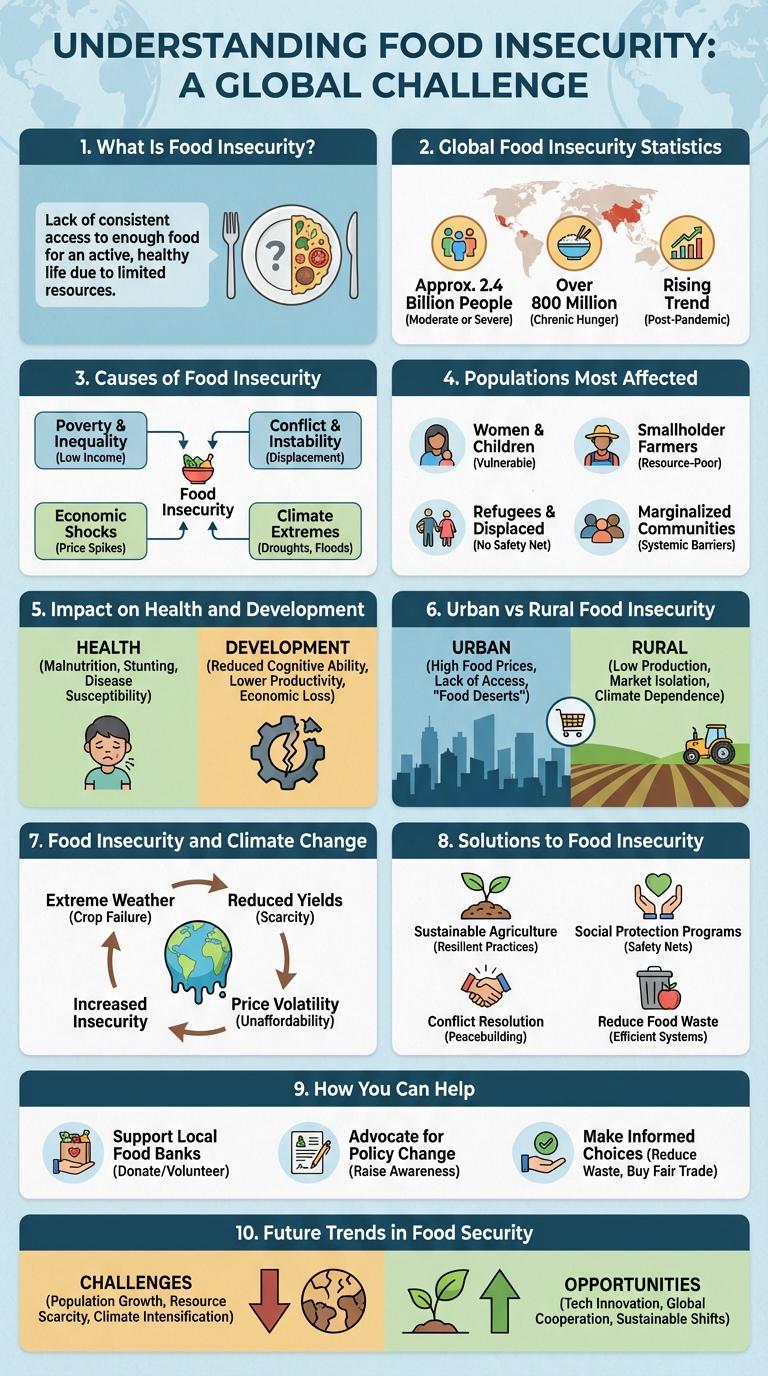
Food insecurity affects millions globally, limiting consistent access to nutritious meals. This infographic highlights key statistics, causes, and impacts of food insecurity on health and communities. Understanding these factors is essential for developing effective solutions to combat hunger.
What Is Food Insecurity?
Food insecurity refers to the lack of consistent access to enough nutritious food for an active, healthy life. It affects millions of people worldwide, leading to hunger, malnutrition, and adverse health outcomes. Understanding food insecurity is essential to address its root causes and implement effective solutions.
Global Food Insecurity Statistics
What is the current state of global food insecurity? Over 820 million people worldwide suffer from chronic hunger, facing daily challenges to access sufficient nutrition. Food insecurity affects nearly 10% of the global population, disrupting health and economic development.
| Region | Percentage of Population Food Insecure |
|---|---|
| Sub-Saharan Africa | 22% |
| South Asia | 15% |
| Latin America & Caribbean | 8% |
| Middle East & North Africa | 10% |
| East Asia & Pacific | 7% |
How does food insecurity impact children's development globally? Malnutrition caused by inadequate food access stunts growth and cognitive abilities in millions of children under five. Early-life food insecurity can lead to long-term health problems and reduced educational outcomes.
What factors contribute most to global food insecurity today? Conflict, climate change, and economic instability are leading drivers of food shortage and unequal access worldwide. These factors disrupt food production, supply chains, and affordability for vulnerable populations.
Causes of Food Insecurity
Food insecurity affects millions worldwide due to various underlying causes. Understanding these causes helps in developing effective solutions to ensure food access for all.
- Economic Instability - Unemployment and low income limit the ability to purchase sufficient nutritious food.
- Climate Change - Extreme weather events and changing conditions reduce crop yields and food availability.
- Conflict and Displacement - Wars and forced migration disrupt food production and supply chains.
Populations Most Affected
Food insecurity disproportionately affects vulnerable populations, including children, elderly individuals, and low-income families. These groups often face limited access to nutritious food, increasing their risk of adverse health outcomes.
Rural communities and minority populations experience higher rates of food insecurity due to economic disparities and lack of nearby grocery stores. Addressing these challenges requires targeted policies and community-based support programs.
Impact on Health and Development
Food insecurity significantly affects both health and developmental outcomes across all age groups. Its impacts extend from immediate nutritional deficits to long-term chronic conditions and cognitive impairments.
- Malnutrition increases illness risk - Lack of consistent access to nutritious food weakens the immune system, raising susceptibility to infections.
- Impaired cognitive development - Children facing food insecurity exhibit delayed brain development, impacting learning and memory skills.
- Chronic disease prevalence - Food insecurity correlates with higher rates of diabetes, hypertension, and obesity due to poor diet quality.
Addressing food insecurity is crucial for improving public health and fostering healthy development in vulnerable populations.
Urban vs Rural Food Insecurity
Food insecurity affects both urban and rural populations but manifests differently due to varying access to resources and infrastructure. Understanding these differences is crucial to addressing hunger effectively across diverse communities.
- Urban Food Insecurity - Higher population density limits affordable food availability despite proximity to markets.
- Rural Food Insecurity - Limited transportation and fewer grocery stores reduce access to nutritious food.
- Resource Disparities - Urban areas benefit from food assistance programs while rural communities often face service gaps.
Food Insecurity and Climate Change
| Aspect | Details |
|---|---|
| Food Insecurity Definition | Limited or uncertain access to sufficient, safe, and nutritious food to maintain a healthy life. |
| Climate Change Impact | Rising temperatures, extreme weather, and altered rainfall disrupt crop yields and food supply. |
| Affected Regions | Sub-Saharan Africa, South Asia, and parts of Latin America face heightened food insecurity due to climate extremes. |
| Crop Production Risks | Droughts reduce soil moisture, floods destroy crops, and heat stress lowers productivity of staple grains. |
| Long-term Consequences | Increased malnutrition, economic instability, and displacement of vulnerable populations. |
Solutions to Food Insecurity
Food insecurity affects millions globally, but targeted solutions can mitigate its impact effectively. Enhancing local food production, improving supply chain efficiency, and expanding social safety nets are critical strategies. Community gardens, food banks, and nutrition education programs play vital roles in ensuring sustainable access to nutritious food.
How You Can Help
Food insecurity affects millions worldwide, leaving families unsure of their next meal. Community efforts and individual actions can make a significant difference.
Volunteering at local food banks helps distribute essential resources to those in need. Donating non-perishable items ensures shelves remain stocked and accessible.