
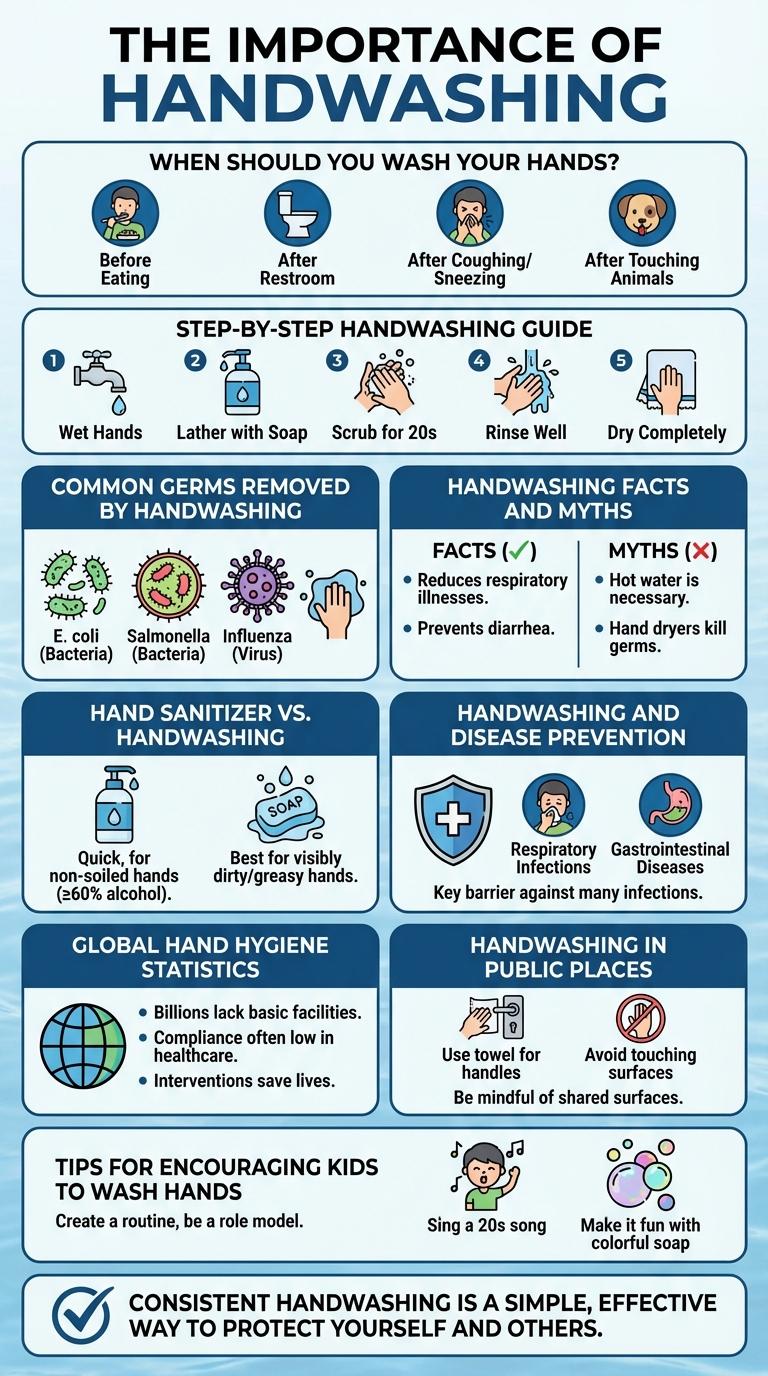
Proper handwashing is essential for preventing the spread of germs and maintaining overall health. Following effective handwashing techniques removes bacteria and viruses, reducing the risk of infections. Visual guides in the infographic highlight key steps to ensure thorough and safe hand hygiene practices.
The Importance of Handwashing
Handwashing is a simple yet effective way to prevent the spread of infectious diseases. Proper hand hygiene reduces the transmission of germs that cause illnesses.
- Reduces Illness - Regular handwashing lowers the risk of respiratory and diarrheal infections.
- Prevents Food Contamination - Clean hands minimize the transfer of bacteria to food, preventing foodborne illnesses.
- Protects Vulnerable Populations - Hand hygiene is critical in protecting children, elderly, and immunocompromised individuals from infections.
When Should You Wash Your Hands?
Washing your hands is essential to prevent the spread of germs and infections. You should wash your hands at key moments throughout the day to maintain hygiene and protect health.
Wash your hands before eating, after using the restroom, and after coughing or sneezing. Also, wash them after touching garbage, handling pets, or caring for someone who is sick.
Step-by-Step Handwashing Guide
Proper handwashing is essential to prevent the spread of germs and maintain good hygiene. This step-by-step guide ensures effective cleaning of hands.
Start by wetting hands with clean, running water. Apply enough soap to cover all hand surfaces and rub hands palm to palm. Scrub between fingers, under nails, and up to wrists for at least 20 seconds before rinsing thoroughly and drying with a clean towel.
Common Germs Removed by Handwashing
What common germs can handwashing remove? Handwashing effectively eliminates bacteria such as Staphylococcus aureus and Escherichia coli. It also removes viruses including influenza and norovirus, helping to prevent illness.
Handwashing Facts and Myths
Handwashing is a crucial practice for preventing the spread of infections. Many common beliefs about handwashing can be misleading.
- Handwashing kills germs - Proper handwashing with soap removes and kills most harmful bacteria and viruses.
- Hot water is necessary - Water temperature does not significantly affect germ removal; soap and scrubbing matter most.
- Hand sanitizer is a replacement - Hand sanitizers are effective but do not eliminate all types of germs like soap and water can.
Effective handwashing involves scrubbing hands for at least 20 seconds, covering all surfaces thoroughly.
Hand Sanitizer vs. Handwashing
| Hand Sanitizer | Handwashing |
|---|---|
| Contains at least 60% alcohol to effectively kill most germs. | Uses soap and water to physically remove dirt, grease, and microbes. |
| Effective when hands are not visibly dirty or greasy. | Necessary when hands are visibly soiled or contaminated with chemicals. |
| Quick and convenient, typically requires 20 seconds to apply and rub. | Requires at least 20 seconds of scrubbing for thorough cleaning. |
| Does not eliminate all types of germs, such as norovirus and Clostridium difficile. | Can reduce a wider range of pathogens, including certain resistant bacteria. |
| Portable and useful when soap and water are unavailable. | Recommended for routine hand hygiene whenever possible to prevent illness. |
Handwashing and Disease Prevention
Handwashing is a crucial practice for preventing the spread of infectious diseases. Proper hand hygiene reduces the transmission of bacteria, viruses, and other pathogens.
- Reduces Respiratory Illnesses - Regular handwashing decreases the incidence of respiratory infections such as colds and flu.
- Prevents Gastrointestinal Infections - Effective hand hygiene lowers the risk of diarrheal diseases caused by contaminated hands.
- Limits Spread of COVID-19 - Handwashing disrupts the transmission of the coronavirus by removing viral particles from the skin.
Global Hand Hygiene Statistics
Handwashing is a crucial practice for preventing the spread of infectious diseases worldwide. Studies reveal that only 19% of people globally wash their hands with soap after contact with excreta.
The World Health Organization reports that hand hygiene compliance in healthcare averages 40% to 60%. Proper handwashing can reduce respiratory infections by up to 21% and diarrheal diseases by 31%.
Handwashing in Public Places
Handwashing in public places is crucial for preventing the spread of infectious diseases. Proper handwashing with soap and water for at least 20 seconds removes harmful bacteria and viruses effectively. Public facilities with accessible handwashing stations promote better hygiene and reduce community health risks.