
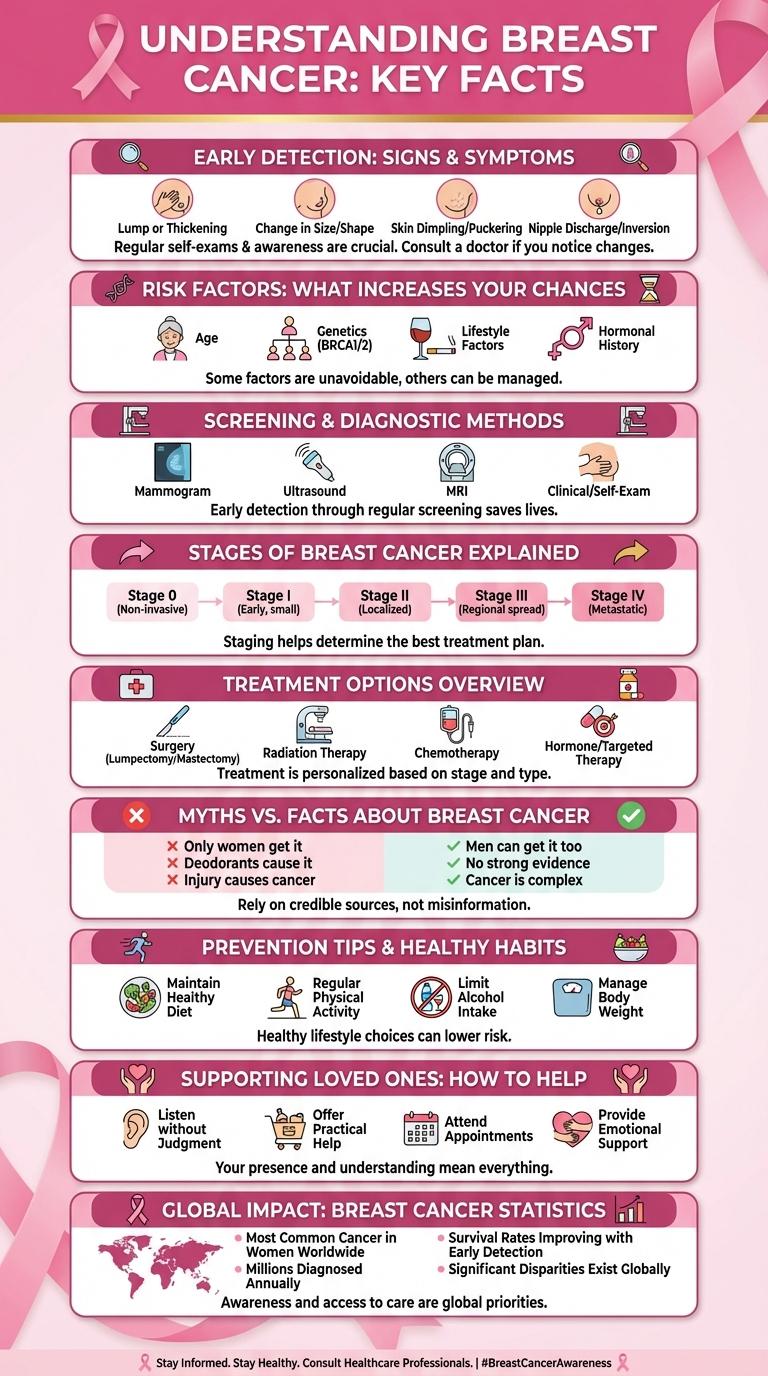
Breast cancer awareness is crucial for early detection and effective treatment outcomes. Understanding the risk factors, symptoms, and screening methods empowers individuals to take proactive steps toward health. This infographic provides clear, concise information to promote knowledge and encourage regular check-ups.
Understanding Breast Cancer: Key Facts
What is breast cancer and how does it develop?
Breast cancer originates from uncontrolled cell growth in breast tissue. It can form tumors that may spread to other body parts if untreated.
Who is at risk for developing breast cancer?
Risk factors include age, genetic mutations like BRCA1/BRCA2, family history, and lifestyle factors such as alcohol consumption and obesity.
What are the common signs and symptoms of breast cancer?
Signs include lumps in the breast or underarm, changes in breast shape, skin dimpling, and nipple discharge. Early detection is crucial for successful treatment.
How is breast cancer diagnosed?
Diagnosis involves mammograms, ultrasound, MRI, and biopsy procedures to confirm the presence and type of cancer cells.
What are the primary treatment options for breast cancer?
Treatment methods include surgery, radiation therapy, chemotherapy, hormone therapy, and targeted therapy depending on the cancer stage and type.
Early Detection: Signs & Symptoms
Breast cancer early detection improves treatment success and survival rates. Recognizing common signs and symptoms is crucial for timely medical consultation.
Look for unusual lumps, changes in breast size or shape, and skin dimpling. Pay attention to nipple discharge, inversion, or persistent breast pain.
Risk Factors: What Increases Your Chances
Breast cancer risk factors influence the likelihood of developing the disease. Understanding these factors empowers individuals to make informed health decisions.
- Age - The risk of breast cancer increases as a woman gets older, especially after age 50.
- Genetic Mutations - Inherited changes in BRCA1 and BRCA2 genes significantly raise breast cancer risk.
- Hormone Exposure - Prolonged exposure to estrogen and progesterone, such as early menstruation or late menopause, raises risk.
- Family History - Having close relatives with breast cancer increases personal risk due to shared genetics and environment.
- Lifestyle Factors - Obesity, alcohol consumption, and lack of physical activity contribute to higher breast cancer risk.
Recognizing these risk factors enables proactive screening and lifestyle adjustments to reduce breast cancer chances.
Screening & Diagnostic Methods
Breast cancer screening and diagnostic methods play a crucial role in early detection and effective treatment. Regular screenings increase the chance of identifying cancer before symptoms develop.
Mammography is the most common screening tool, recommended annually for women over 40. Ultrasound and MRI provide additional imaging options, especially for high-risk patients. Biopsy confirms diagnosis by examining suspicious tissue samples under a microscope.
Stages of Breast Cancer Explained
Understanding the stages of breast cancer is crucial for early detection and effective treatment. Each stage indicates the extent of cancer growth and spread within the body.
- Stage 0 (Carcinoma in situ) - Cancer cells are confined to the milk ducts or lobules and have not spread to surrounding tissue.
- Stage I - Tumor measures up to 2 cm and cancer has not spread outside the breast.
- Stage II - Tumor is between 2 cm and 5 cm or cancer has spread to nearby lymph nodes.
Treatment Options Overview
Breast cancer treatment options vary based on cancer type, stage, and patient health. Common treatments include surgery, radiation therapy, chemotherapy, hormone therapy, and targeted therapy. Early diagnosis improves treatment effectiveness and survival rates.
Myths vs. Facts About Breast Cancer
Breast cancer is surrounded by many myths that can prevent early detection and proper treatment. Understanding the facts is crucial for effective awareness and prevention.
Myth: Only women with a family history of breast cancer are at risk. Fact: Most breast cancer cases occur in women with no family history.
Myth: Breast cancer always causes a noticeable lump. Fact: Some breast cancers may not cause lumps and can be detected through screening.
Myth: Mammograms cause harmful radiation exposure. Fact: Mammograms use low doses of radiation and are safe for routine screening.
Myth: Men cannot get breast cancer. Fact: Although rare, men can develop breast cancer and should be aware of symptoms.
Myth: Breast cancer treatments always lead to loss of a breast. Fact: Many treatment options allow breast conservation or reconstruction.
Prevention Tips & Healthy Habits
Breast cancer awareness emphasizes the importance of regular self-examinations and early screening methods such as mammograms. Preventive measures include maintaining a healthy weight, engaging in consistent physical activity, and limiting alcohol consumption. Adopting a balanced diet rich in fruits and vegetables supports overall breast health and reduces cancer risks.
Supporting Loved Ones: How to Help
| Ways to Support | Details |
|---|---|
| Active Listening | Provide a safe space for sharing feelings without judgment or interruption. |
| Practical Help | Assist with daily tasks like cooking, cleaning, and transportation to appointments. |
| Educate Yourself | Learn about breast cancer stages, treatments, and side effects to offer informed support. |
| Encourage Routine | Promote maintaining normal activities and hobbies to boost emotional well-being. |
| Emotional Positivity | Offer hope and reassurance while respecting the loved one's emotional journey. |