
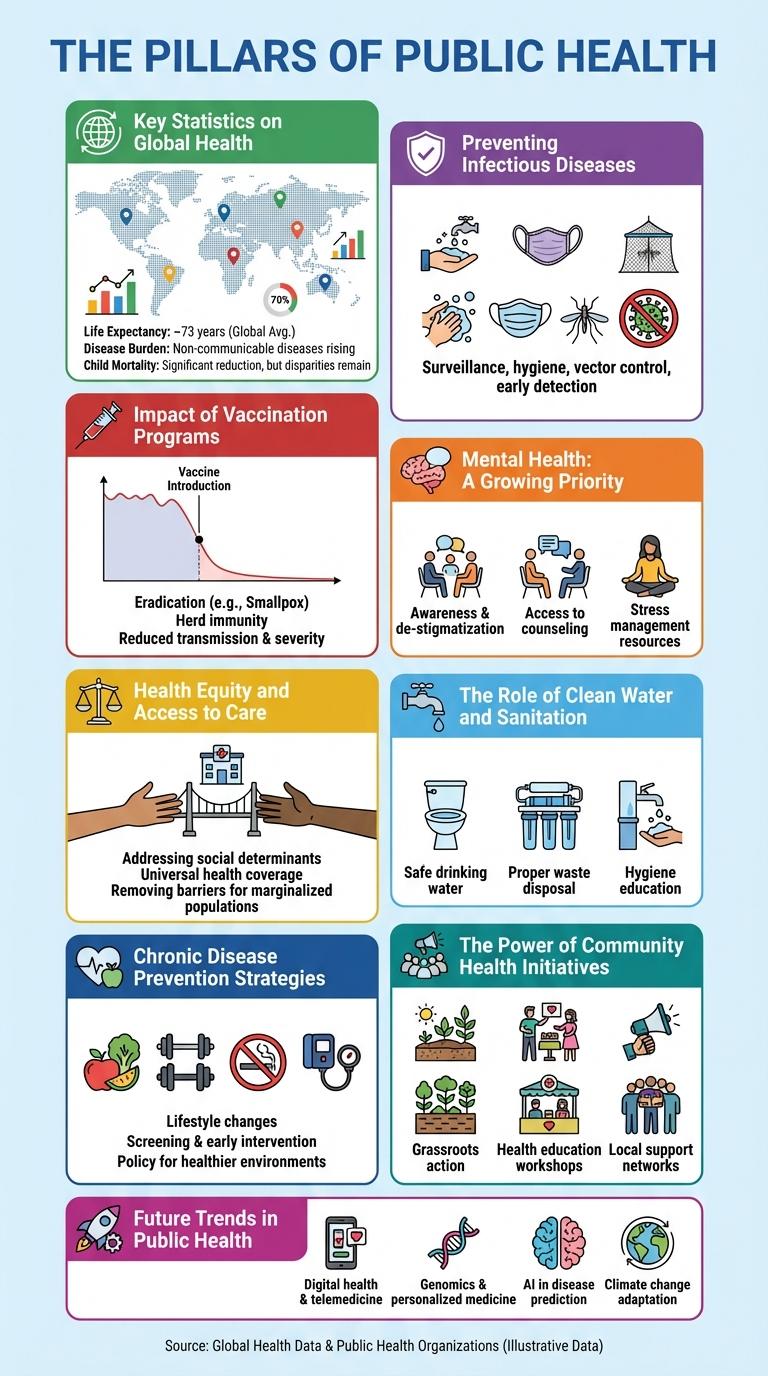
Public health infographics visually communicate vital data on disease prevention, health trends, and community wellness. They simplify complex statistics to enhance understanding and promote informed decision-making among diverse audiences. Effective infographics highlight key health priorities and encourage proactive measures for healthier populations.
The Pillars of Public Health
| Pillar | Description |
|---|---|
| Disease Prevention | Efforts to reduce the incidence and spread of illnesses through vaccinations, screenings, and health education. |
| Health Promotion | Strategies to encourage healthy behaviors and lifestyle choices, including nutrition, physical activity, and tobacco cessation. |
| Health Protection | Regulations and policies aimed at safeguarding the population from environmental hazards and infectious diseases. |
| Surveillance and Monitoring | Continuous data collection and analysis to identify and respond to public health threats and trends. |
| Emergency Preparedness | Planning and response systems to manage health crises such as pandemics, natural disasters, and bioterrorism. |
Key Statistics on Global Health
Global health indicators reveal critical insights into public health challenges worldwide. These statistics highlight areas requiring urgent attention and resource allocation.
Understanding key data points aids in shaping effective health policies and improving population well-being.
- Life Expectancy - The average global life expectancy is approximately 72.6 years, reflecting improvements in health care and living conditions.
- Infant Mortality Rate - Globally, the infant mortality rate is about 28 deaths per 1,000 live births, signaling progress yet continued disparities.
- Prevalence of Non-communicable Diseases - Non-communicable diseases account for over 70% of global deaths, emphasizing the need for preventive health measures.
Preventing Infectious Diseases
Preventing infectious diseases is essential to safeguarding public health worldwide. Effective strategies reduce transmission rates and protect vulnerable populations.
- Vaccination - Immunization programs prevent outbreaks by building herd immunity against contagious diseases.
- Hand Hygiene - Regular handwashing with soap eliminates pathogens and lowers infection risk.
- Sanitation - Clean water and proper waste disposal minimize exposure to disease-causing microbes.
Implementing these measures systematically helps control infectious diseases and promotes healthier communities.
Impact of Vaccination Programs
Vaccination programs have significantly reduced the incidence of infectious diseases worldwide, preventing millions of deaths annually. Immunization helps achieve herd immunity, protecting vulnerable populations such as infants and the elderly. Comprehensive vaccination campaigns contribute to lower healthcare costs and reduced disease burden on public health systems.
Mental Health: A Growing Priority
Mental health has become a critical public health priority worldwide, affecting one in four people annually. Increased awareness and improved resources are essential to address the growing prevalence of anxiety, depression, and other mental disorders. Public health initiatives now emphasize early intervention, community support, and reducing stigma to enhance overall well-being.
Health Equity and Access to Care
Health equity ensures that everyone has a fair opportunity to attain their highest level of health. Access to care is a crucial factor in reducing disparities and improving health outcomes across populations.
Unequal access to healthcare services often leads to significant differences in health status among various demographic groups. Social determinants such as income, education, and geographic location affect access and quality of care. Promoting health equity requires addressing these barriers and improving healthcare availability for underserved communities.
The Role of Clean Water and Sanitation
Clean water and sanitation are essential components of public health, directly impacting disease prevention and overall well-being. Access to safe drinking water reduces the spread of waterborne illnesses such as cholera and dysentery.
Improved sanitation facilities help control infectious diseases by preventing contamination of the environment. Investing in clean water infrastructure enhances community health, boosts economic productivity, and supports sustainable development.
Chronic Disease Prevention Strategies
Chronic disease prevention strategies aim to reduce the incidence and impact of long-term health conditions such as diabetes, heart disease, and cancer. Effective prevention focuses on lifestyle changes, early detection, and community health initiatives.
Key strategies include promoting healthy eating, increasing physical activity, and reducing tobacco and alcohol use. Public health programs also emphasize regular health screenings and education to empower individuals to manage their health proactively.
The Power of Community Health Initiatives
How do community health initiatives improve public health outcomes? Community health initiatives mobilize local resources to address specific health challenges effectively. These programs foster collaboration, education, and preventive care to enhance overall well-being.
What key benefits do community health initiatives offer? They increase access to healthcare services, reduce health disparities, and promote healthier lifestyles. By engaging residents, these initiatives create sustainable health improvements tailored to community needs.
Which strategies are most effective in community health initiatives? Focused health education, vaccination drives, and chronic disease management are proven strategies. Such approaches empower individuals and support public health infrastructure.
How does community involvement impact health promotion? Active participation leads to higher compliance with health recommendations and stronger social support networks. Community engagement boosts awareness and encourages proactive health behaviors.