
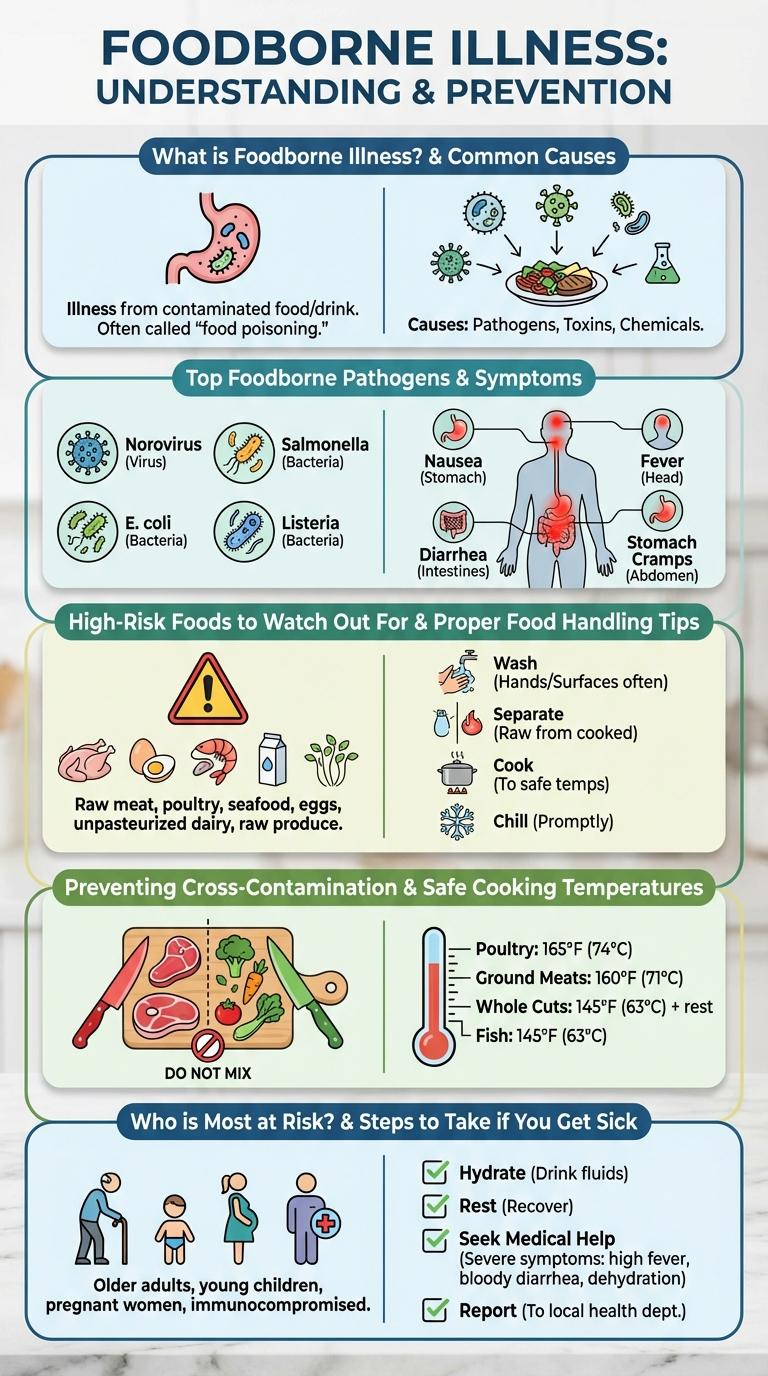
Foodborne illness poses serious health risks worldwide, affecting millions each year through contaminated food and beverages. Understanding common causes, symptoms, and prevention methods is essential to reduce outbreaks and protect public health. Infographics visually present critical data, making it easier to grasp the impact and necessary safety measures.
What is Foodborne Illness?
Foodborne illness refers to diseases caused by consuming contaminated food or beverages. It presents a significant public health challenge worldwide.
- Definition - Foodborne illness results from ingesting harmful bacteria, viruses, parasites, or toxins in contaminated food.
- Common Causes - Pathogens such as Salmonella, E. coli, and Norovirus are primary drivers of foodborne illnesses.
- Symptoms - Typical symptoms include nausea, vomiting, diarrhea, abdominal pain, and fever.
Common Causes of Foodborne Illness
Foodborne illnesses are caused by consuming contaminated food or beverages. These illnesses affect millions of people worldwide each year, leading to various symptoms and sometimes severe health complications.
Common causes include bacteria such as Salmonella and E. coli, viruses like Norovirus, and parasites. Improper food handling, inadequate cooking, and cross-contamination are key factors that increase the risk. Preventive measures include proper hygiene, thorough cooking, and safe food storage practices to reduce contamination.
Top Foodborne Pathogens
| Pathogen | Common Sources |
|---|---|
| Salmonella | Raw poultry, eggs, unpasteurized milk |
| Campylobacter | Undercooked poultry, raw milk, contaminated water |
| Clostridium perfringens | Improperly cooked or stored meats, gravies |
| Escherichia coli (E. coli) O157:H7 | Undercooked ground beef, raw vegetables, unpasteurized juice |
| Listeria monocytogenes | Ready-to-eat deli meats, unpasteurized dairy, smoked seafood |
Symptoms of Food Poisoning
Foodborne illness occurs when contaminated food is ingested, leading to various health issues. Recognizing the symptoms early can help in seeking prompt medical attention and preventing complications.
- Nausea - A common reaction causing an uneasy stomach sensation often preceding vomiting.
- Diarrhea - Frequent, watery bowel movements result from the body's attempt to expel toxins.
- Abdominal Cramps - Sharp or dull pains in the stomach area caused by inflammation and irritation.
- Fever - A rise in body temperature as the immune system responds to infection.
- Vomiting - The forceful expulsion of stomach contents to remove harmful substances quickly.
Timely identification of these symptoms is crucial for effective treatment and recovery from food poisoning.
High-Risk Foods to Watch Out For
Foodborne illnesses often stem from consuming contaminated high-risk foods. These foods provide an ideal environment for bacteria, viruses, and parasites to thrive, increasing the likelihood of infection.
Common high-risk foods include raw or undercooked meat, poultry, and seafood, as well as unpasteurized dairy products. Ready-to-eat foods like deli meats and fresh produce can also harbor harmful pathogens if not handled correctly.
Proper Food Handling Tips
Foodborne illness affects millions each year, often caused by improper food handling. Understanding key practices can prevent contamination and ensure meal safety.
Always wash hands thoroughly before and after handling food to eliminate harmful bacteria. Use separate cutting boards for raw meat and vegetables to avoid cross-contamination.
Preventing Cross-Contamination
Preventing cross-contamination is essential to reduce the risk of foodborne illness. Use separate cutting boards and utensils for raw meats and ready-to-eat foods. Always wash hands, surfaces, and equipment thoroughly after handling raw food to avoid spreading harmful bacteria.
Safe Cooking Temperatures
Foodborne illnesses affect millions annually, making safe cooking temperatures essential to reduce risks. Proper internal temperatures kill harmful bacteria such as Salmonella, E. coli, and Listeria. Using a food thermometer ensures meats and poultry reach safe temperatures, preventing contamination and ensuring food safety.
| Food Type | Safe Cooking Temperature (degF) |
|---|---|
| Chicken and Turkey | 165degF (74degC) |
| Beef, Pork, Lamb (steaks, roasts) | 145degF (63degC) |
| Ground Meats (beef, pork, lamb) | 160degF (71degC) |
| Fish and Shellfish | 145degF (63degC) |
| Eggs | 160degF (71degC) |
Who is Most at Risk?
Foodborne illness affects millions globally, but certain groups face higher risks of severe complications. Understanding who is most vulnerable helps in targeting prevention efforts effectively.
- Young children - Children under five have developing immune systems that increase their susceptibility to infection.
- Elderly adults - People over 65 experience weakened immunity making it harder to fight off harmful pathogens.
- Pregnant women - Pregnancy alters immune responses, increasing risks of severe food poisoning for both mother and fetus.
- Immunocompromised individuals - Those with conditions like HIV or undergoing chemotherapy are less able to combat foodborne pathogens.
- People with chronic illnesses - Individuals with diabetes or kidney disease face higher chances of serious complications from infections.