
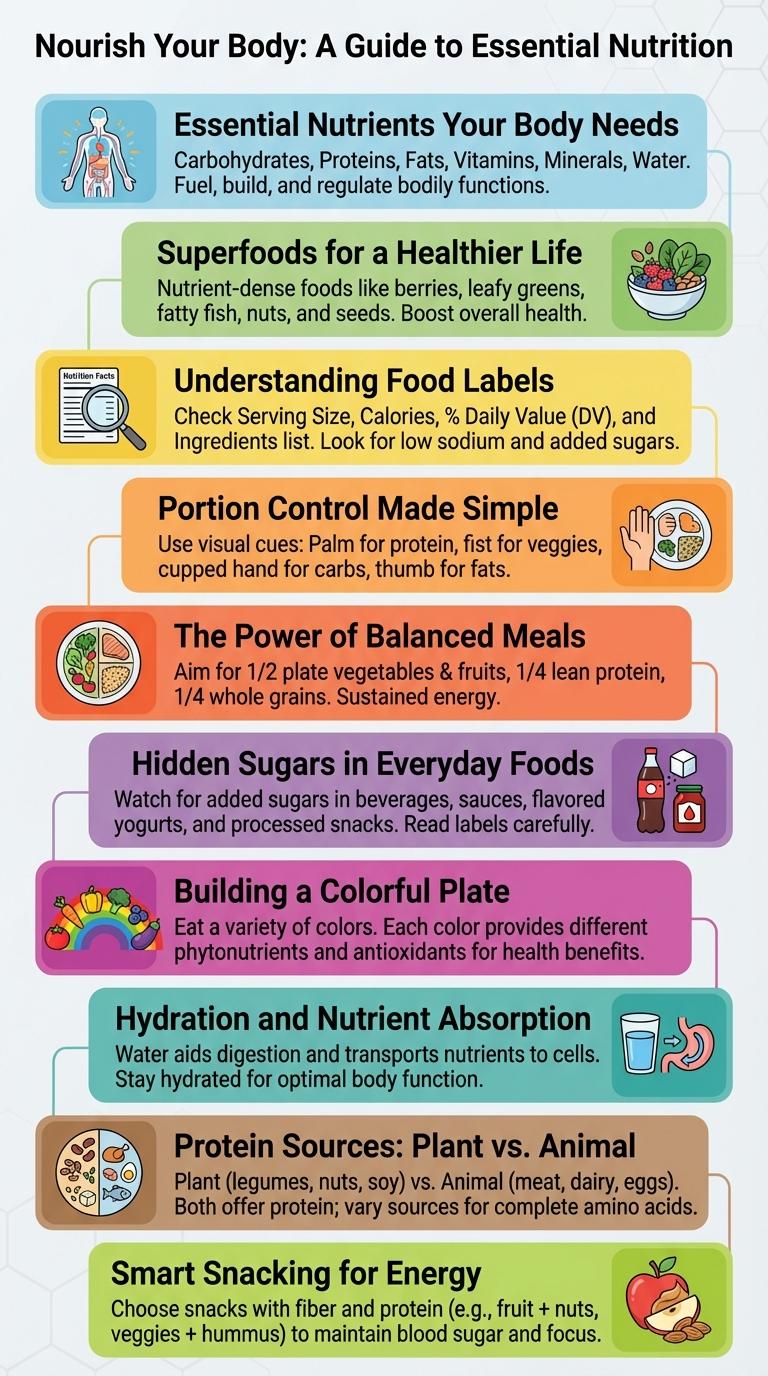
Infographics about food and nutrition clearly display essential information on balanced diets, nutrient sources, and healthy eating habits. Visual representations make complex data more accessible and encourage informed dietary choices. These tools promote awareness of the relationship between nutrition and overall health, aiding individuals in maintaining well-being.
Essential Nutrients Your Body Needs
| Essential Nutrient | Key Benefits |
|---|---|
| Proteins | Builds and repairs tissues, supports immune function |
| Carbohydrates | Primary energy source for the body and brain |
| Fats | Provides long-term energy, protects organs, supports cell growth |
| Vitamins | Regulates body processes and boosts immune health |
| Minerals | Maintains bone health, nerve function, and fluid balance |
Superfoods for a Healthier Life
Superfoods offer a powerful way to enhance overall health through nutrient-rich ingredients. Incorporating these foods into your diet supports vital bodily functions and disease prevention.
- Blueberries - Packed with antioxidants, they help combat oxidative stress and improve brain health.
- Kale - A nutrient-dense green loaded with vitamins A, C, and K that boost immune function.
- Quinoa - A complete protein source containing essential amino acids for muscle repair and energy.
Understanding Food Labels
What information can you find on food labels to make healthier choices? Food labels provide essential details about nutritional content, ingredients, and allergens. Understanding serving sizes and % Daily Values helps consumers manage calorie intake and nutrient consumption effectively.
Portion Control Made Simple
Portion control is essential for maintaining a balanced diet and managing weight effectively. Using smaller plates and measuring servings can help prevent overeating and improve nutritional intake. Understanding portion sizes for different food groups supports healthier eating habits and boosts overall well-being.
The Power of Balanced Meals
Balanced meals provide essential nutrients that fuel the body and support overall health. Combining proteins, carbohydrates, fats, vitamins, and minerals optimizes energy levels and bodily functions.
- Enhances Energy - Balanced meals supply steady energy by maintaining blood sugar levels throughout the day.
- Supports Immunity - Proper nutrient intake strengthens the immune system, helping to fight infections and illnesses.
- Promotes Weight Management - Nutrient-rich foods in balanced portions help control appetite and support healthy body weight.
Incorporating diverse food groups in each meal maximizes nutritional benefits and promotes long-term wellness.
Hidden Sugars in Everyday Foods
Hidden sugars are commonly found in everyday foods, often listed under various names like sucrose, high fructose corn syrup, and maltose. These sugars contribute to excess calorie intake without providing nutritional benefits.
Processed foods such as flavored yogurts, sauces, and cereals frequently contain unexpected amounts of added sugars. Being aware of these hidden sugars helps in making healthier dietary choices and managing sugar consumption effectively.
Building a Colorful Plate
Building a colorful plate is a simple strategy to ensure a diverse intake of essential nutrients. Including a variety of fruits and vegetables in different colors provides vitamins, minerals, and antioxidants vital for health.
Green vegetables like spinach and broccoli are rich in iron and calcium. Red and orange fruits such as tomatoes and carrots offer high levels of vitamin C and beta-carotene.
Hydration and Nutrient Absorption
Proper hydration is essential for optimal nutrient absorption and overall digestive health. Water facilitates the breakdown and transport of nutrients throughout the body.
- Hydration aids digestion - Water supports the production of saliva and gastric juices that help break down food for nutrient extraction.
- Improves nutrient transport - Adequate fluid intake ensures vitamins and minerals reach cells efficiently via the bloodstream.
- Prevents nutrient loss - Staying hydrated helps maintain intestinal health, reducing the risk of nutrient malabsorption.
Protein Sources: Plant vs. Animal
Protein is essential for muscle repair, immune function, and overall body maintenance. Plant-based protein sources include beans, lentils, tofu, quinoa, and nuts, offering fiber and antioxidants along with protein. Animal-based sources such as chicken, beef, eggs, fish, and dairy provide complete proteins with a rich supply of essential amino acids and vitamins like B12.