
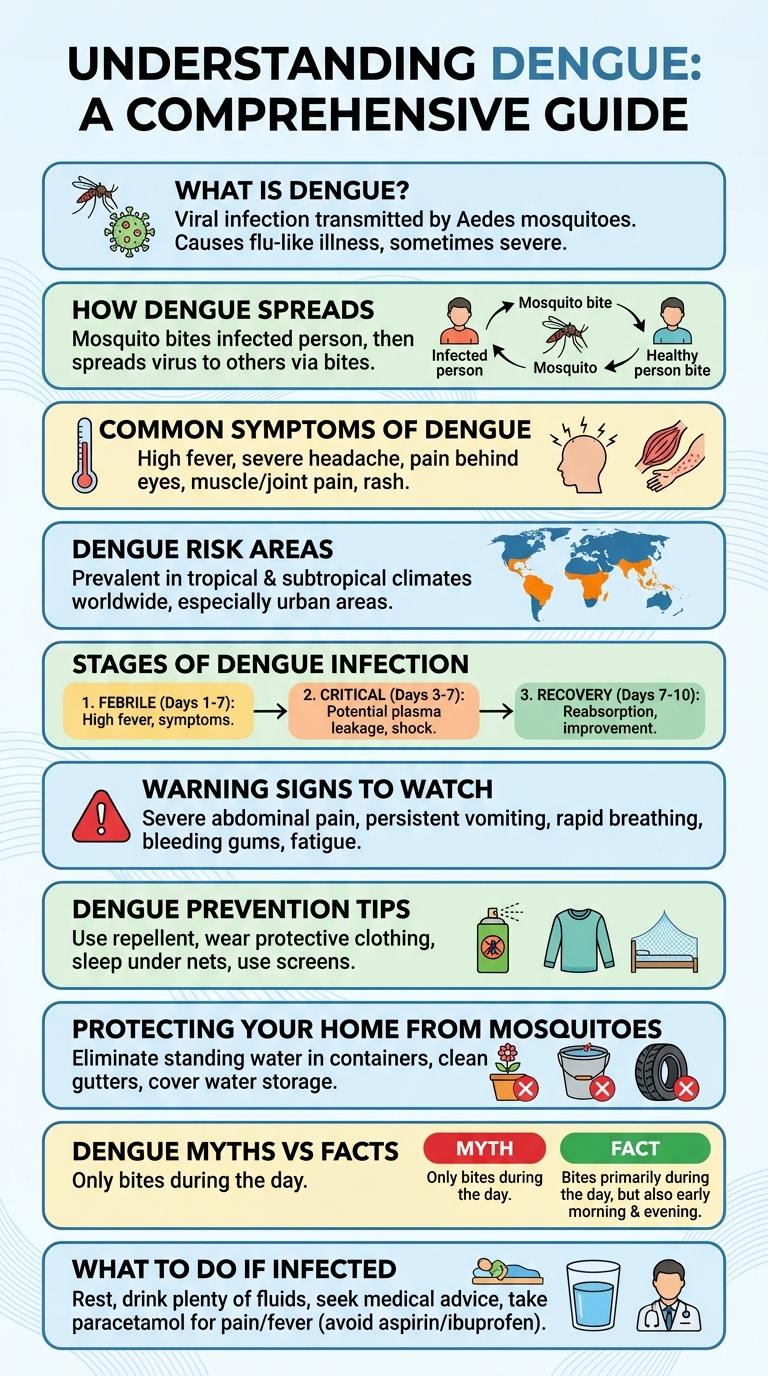
Dengue is a mosquito-borne viral infection causing flu-like symptoms and severe complications in some cases. Understanding its transmission, symptoms, and prevention methods is crucial for reducing outbreaks and protecting communities. Infographics provide clear, visual insights that help raise awareness and promote effective control measures.
What is Dengue?
What is Dengue?
Dengue is a viral infection transmitted by Aedes mosquitoes, primarily Aedes aegypti. It causes flu-like symptoms and can develop into severe dengue, leading to serious health complications.
How Dengue Spreads
Dengue spreads primarily through the bites of infected Aedes mosquitoes, especially Aedes aegypti and Aedes albopictus. These mosquitoes become carriers after biting a person already infected with the dengue virus. The virus then multiplies inside the mosquito and is transmitted to other humans through subsequent bites.
Common Symptoms of Dengue
Dengue fever is a mosquito-borne viral infection prevalent in tropical and subtropical regions. Early recognition of symptoms is crucial for timely treatment and prevention of severe complications.
Common symptoms of dengue include high fever, intense headache, and severe joint and muscle pain. Patients often experience rash and mild bleeding, such as nose or gum bleeding. These symptoms typically appear 4 to 10 days after the mosquito bite.
Dengue Risk Areas
Dengue fever is most prevalent in tropical and subtropical regions around the world. These areas provide ideal breeding conditions for the Aedes mosquitoes that transmit the virus.
High-risk regions include Southeast Asia, the Western Pacific, the Americas, and parts of Africa. Urban and semi-urban environments with stagnant water sources increase the likelihood of dengue outbreaks.
Stages of Dengue Infection
| Stage | Description |
|---|---|
| Incubation Period | Lasts 4-10 days after the bite of an infected Aedes mosquito; the virus begins to multiply silently in the body. |
| Febrile Stage | High fever (up to 40degC), severe headache, muscle and joint pain, rash, and nausea occur; this stage typically lasts 2-7 days. |
| Critical Stage | Occurs around the time fever subsides; plasma leakage, bleeding, or organ impairment may develop, requiring close medical monitoring. |
| Recovery Stage | Fluid is reabsorbed; symptoms improve, and appetite returns; recovery may last 2-3 days with gradual regain of strength. |
| Severe Dengue (Dengue Hemorrhagic Fever) | Potential complication marked by severe bleeding, plasma leakage, or organ failure; immediate medical intervention is critical. |
Warning Signs to Watch
Dengue fever is a mosquito-borne illness that requires immediate medical attention when certain warning signs appear. Recognizing these symptoms early can prevent severe complications and save lives.
- Severe abdominal pain - Persistent stomach pain indicates potential internal bleeding or organ involvement.
- Rapid breathing - Difficulty breathing may signal plasma leakage and respiratory distress.
- Bleeding gums or nose - Unexplained bleeding suggests platelet count drop and increased hemorrhage risk.
Dengue Prevention Tips
Dengue is a mosquito-borne viral infection causing severe flu-like illness. Preventing mosquito bites and reducing breeding sites are key to controlling dengue transmission.
- Use mosquito repellents - Apply EPA-approved insect repellents on exposed skin to avoid mosquito bites.
- Wear protective clothing - Long-sleeved shirts and pants reduce skin exposure and protect against mosquito bites.
- Eliminate standing water - Remove stagnant water from containers, tires, and gutters to stop mosquito breeding.
- Install window and door screens - Keep mosquitoes out of indoor areas by using fine mesh screens on windows and doors.
- Use mosquito nets - Sleep under insecticide-treated nets especially during peak mosquito activity times.
Consistent application of these preventive measures significantly reduces dengue infection risks.
Protecting Your Home from Mosquitoes
Protecting your home from mosquitoes is essential in the fight against dengue. Mosquitoes thrive in stagnant water, so eliminating breeding sites around your home is crucial.
Regularly empty and clean containers that collect water, such as flower pots, buckets, and birdbaths. Use screens on windows and doors to prevent mosquitoes from entering indoor spaces.
Dengue Myths vs Facts
Dengue fever is often misunderstood, leading to myths that can hinder prevention and treatment. Common misconceptions include the belief that dengue is only spread by dirty water or that it cannot be contracted multiple times. Accurate knowledge about mosquito transmission and varying serotypes is essential for effective dengue control.