
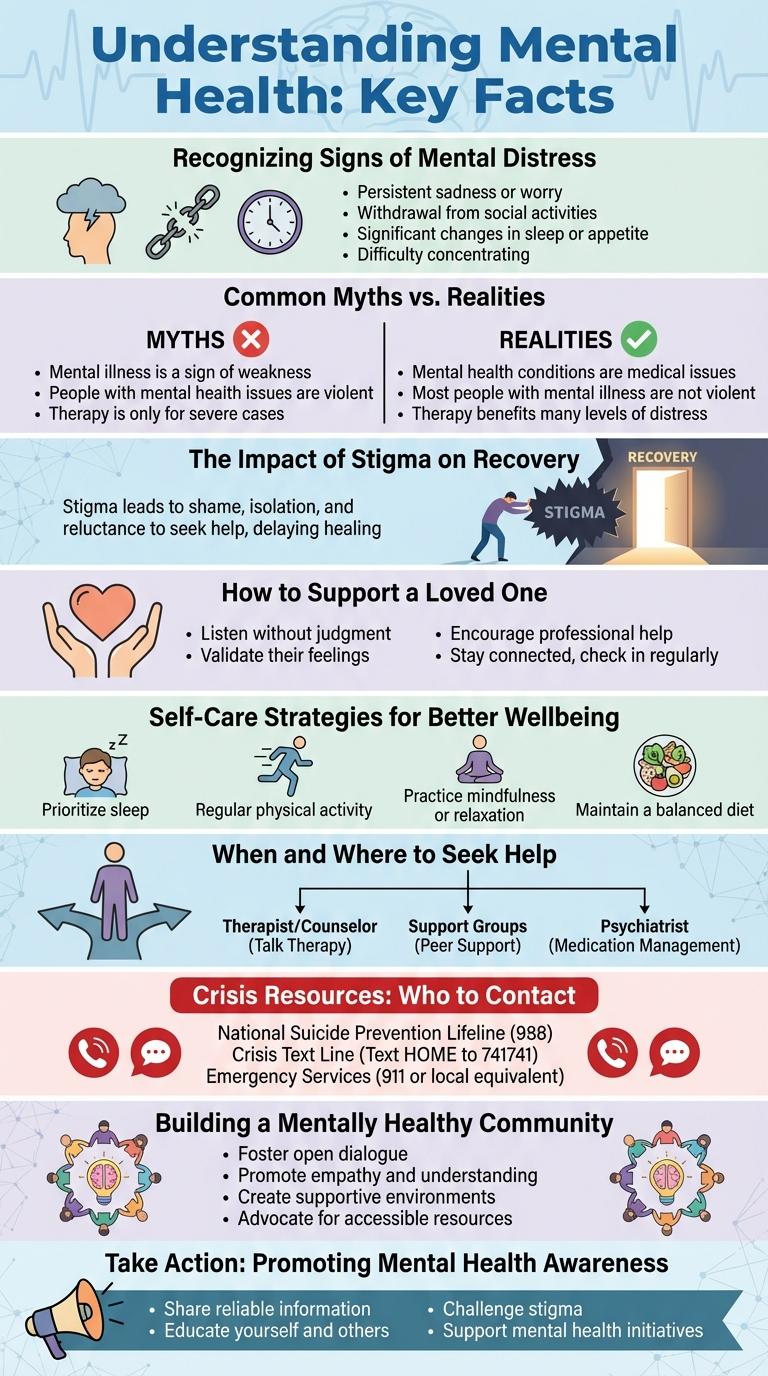
Public service announcements about mental health raise awareness and reduce stigma by delivering clear, concise information. Infographics effectively communicate key messages through visuals, making complex data easily understandable. This approach supports mental wellness by encouraging open conversations and promoting available resources.
Understanding Mental Health: Key Facts
| Key Fact | Description |
|---|---|
| Mental Health Definition | State of well-being where individuals realize their abilities, cope with stress, work productively, and contribute to community. |
| Prevalence | One in four people globally experiences mental health issues at some point in life. |
| Common Disorders | Includes anxiety, depression, bipolar disorder, and schizophrenia among others. |
| Impact | Mental illness affects daily functioning, relationships, and overall quality of life. |
| Help and Support | Early intervention, therapy, medication, and community support improve outcomes significantly. |
Recognizing Signs of Mental Distress
Mental health awareness is crucial for early detection and support. Recognizing signs of mental distress helps in providing timely assistance to those in need.
- Persistent Sadness - Feeling overwhelmingly sad or hopeless for weeks can indicate depression.
- Changes in Sleep - Insomnia or excessive sleeping may signal underlying mental health issues.
- Social Withdrawal - Avoiding friends and activities can be a sign of emotional distress.
Early identification of these signs encourages seeking professional help and improves mental wellness outcomes.
Common Myths vs. Realities
Is mental illness a sign of weakness? Mental health conditions are medical issues that affect anyone regardless of strength. They require understanding and proper care like any physical illness.
Can people just "snap out" of depression? Depression is a complex condition involving brain chemistry and life circumstances. Effective treatments include therapy, medication, and support over time.
Are mental health problems rare? Mental illnesses affect millions globally, with 1 in 5 adults experiencing a mental health issue each year. Awareness helps reduce stigma and promotes treatment.
Do only adults suffer from mental health issues? Mental health conditions can affect all ages, including children and adolescents. Early intervention improves long-term outcomes for young people.
Is therapy only for "crazy" people? Therapy is a valuable resource for handling stress, trauma, and emotional challenges. Many successful individuals use therapy for personal growth and mental well-being.
The Impact of Stigma on Recovery
Stigma surrounding mental health significantly hinders recovery by fostering discrimination and social isolation. Negative stereotypes prevent individuals from seeking timely help and support.
People facing mental health challenges often encounter judgment, which increases feelings of shame and reduces self-esteem. This stigma delays treatment, worsening symptoms and prolonging recovery. Promoting awareness and empathy is essential to break down these barriers and encourage healing.
How to Support a Loved One
Supporting a loved one struggling with mental health requires understanding and patience. This infographic highlights key ways to provide meaningful support.
- Listen Actively - Offer your full attention and avoid interrupting to help them feel heard and valued.
- Encourage Professional Help - Suggest consulting mental health professionals for appropriate treatment and guidance.
- Be Patient and Nonjudgmental - Maintain a supportive attitude without rushing recovery or expressing criticism.
Self-Care Strategies for Better Wellbeing
Mental health is crucial for overall well-being, and practicing self-care strategies can significantly improve mental resilience. Regular activities such as mindfulness, exercise, and adequate sleep help reduce stress and enhance emotional balance. Prioritizing self-care enables individuals to maintain positive mental health and prevent burnout.
When and Where to Seek Help
Mental health challenges can affect anyone, making it crucial to recognize when professional help is needed. Seek support promptly to improve well-being and prevent worsening symptoms.
Contact a mental health professional if you experience persistent feelings of sadness, anxiety, or difficulty functioning in daily life. Services are available at local clinics, hospitals, community centers, and through online therapy platforms.
Crisis Resources: Who to Contact
Mental health crises require immediate support from qualified professionals. Knowing who to contact can save lives and provide critical assistance.
Crisis hotlines and emergency services offer 24/7 help for those in need. Reach out to local mental health organizations or national helplines for confidential support.
Building a Mentally Healthy Community
Mental health is a crucial part of overall well-being and community strength. Building a mentally healthy community involves awareness, support, and accessible resources.
- Promote Open Conversations - Encouraging dialogue about mental health reduces stigma and fosters understanding.
- Provide Accessible Resources - Ensuring availability of counseling and support services helps individuals receive timely care.
- Foster Social Connections - Strengthening relationships within the community enhances emotional resilience and support networks.