
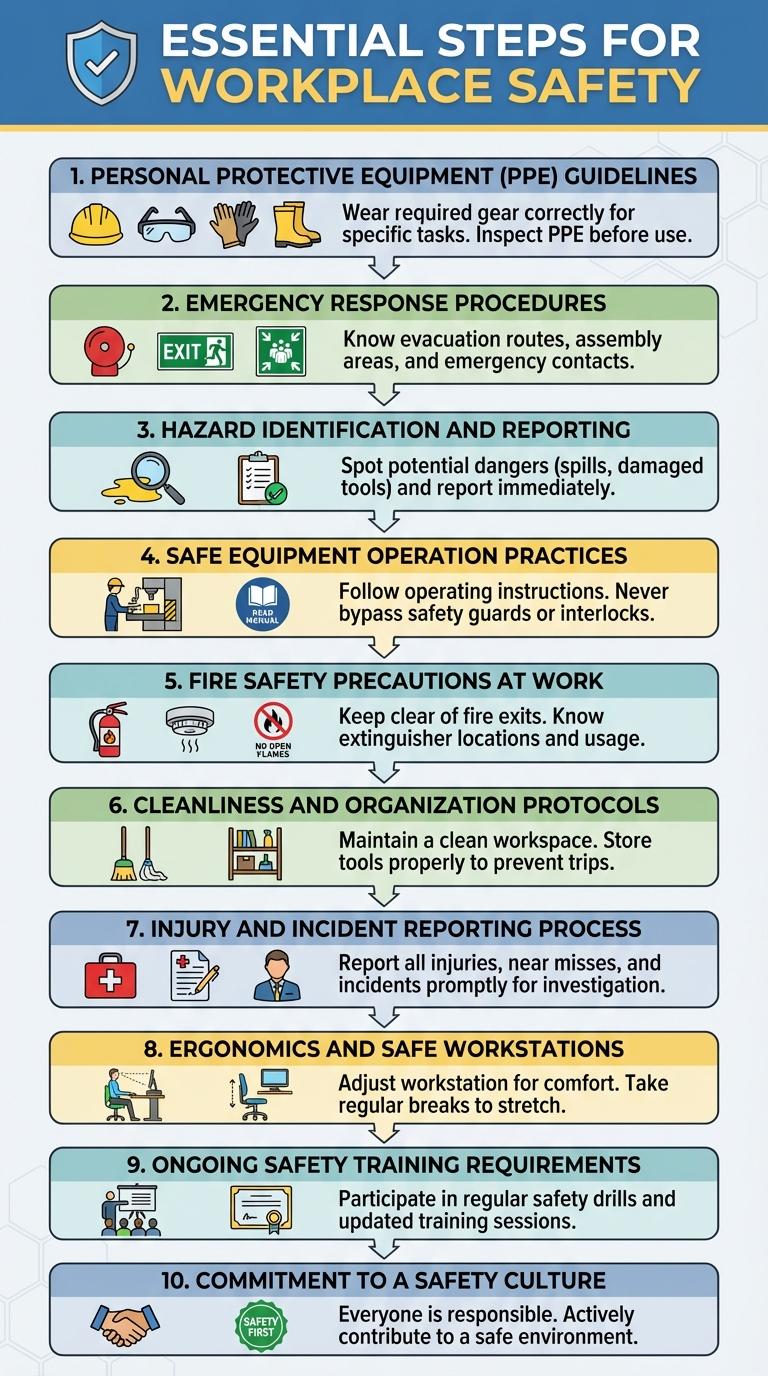
Workplace safety procedures are essential for preventing accidents and ensuring a secure environment for employees. Clear guidelines and protocols help minimize risks and promote a culture of awareness. Infographics simplify complex safety information, making it easier to understand and follow.
Essential Steps for Workplace Safety
Workplace safety procedures are vital to protect employees and reduce the risk of accidents. Essential steps include conducting regular risk assessments, providing proper safety training, and ensuring the use of personal protective equipment (PPE). These measures foster a secure environment, promote compliance with regulations, and minimize workplace hazards.
Personal Protective Equipment (PPE) Guidelines
Personal Protective Equipment (PPE) is essential for minimizing workplace injuries and ensuring employee safety. Proper usage of PPE reduces exposure to hazards significantly.
Employees must wear appropriate PPE based on the specific risks in their work environment. Common types include helmets, gloves, safety glasses, and protective footwear. Regular inspection and maintenance of PPE are crucial for optimal protection.
Emergency Response Procedures
Emergency response procedures are critical for ensuring workplace safety during unexpected incidents. These procedures include clear steps for evacuation, communication, and immediate medical assistance.
Employees should be trained to recognize emergency signals and understand their specific roles in an emergency. Proper implementation reduces injury risks and protects lives.
Hazard Identification and Reporting
Workplace safety begins with hazard identification, a critical step to prevent accidents and injuries. Employees must be trained to recognize potential hazards in their environment promptly.
Reporting identified hazards immediately ensures timely corrective actions and maintains a safe work environment. Clear procedures for communication and follow-up inspections strengthen overall safety protocols.
Safe Equipment Operation Practices
Workplace safety is critical for preventing accidents and ensuring efficient operations. Proper equipment operation reduces the risk of injury and extends machinery lifespan.
- Use Personal Protective Equipment (PPE) - Always wear the necessary PPE such as gloves, helmets, and safety glasses when operating machinery.
- Follow Manufacturer Guidelines - Adhere strictly to the equipment's user manual and maintenance schedules to avoid malfunctions.
- Perform Regular Inspections - Conduct pre-operation checks to identify any defects or hazards before using the equipment.
Fire Safety Precautions at Work
Fire safety precautions are essential to protect employees and minimize damage during emergencies. Understanding and following workplace fire safety procedures can save lives and property.
- Identify Fire Exits - Locate and keep fire exits clear at all times to ensure quick evacuation if needed.
- Use Fire Extinguishers Properly - Know the type and operation of fire extinguishers available in your workplace.
- Conduct Regular Fire Drills - Participate in scheduled fire drills to practice evacuation routes and response actions.
Maintaining fire safety awareness reduces the risk of accidents and improves overall workplace safety.
Cleanliness and Organization Protocols
How does maintaining cleanliness improve workplace safety? Clean and organized workspaces reduce the risk of accidents by minimizing hazards like spills and clutter. Proper cleanliness protocols ensure a healthier environment, preventing illnesses and boosting overall employee well-being.
Why is organization crucial in workplace safety procedures? Organized work areas enable quick access to tools and emergency equipment, reducing response time during incidents. Clear labeling and designated storage minimize confusion and prevent injuries caused by misplaced items.
| Key Cleanliness Protocols | Benefits |
|---|---|
| Regular cleaning schedules | Prevents buildup of dirt and reduces contamination |
| Proper waste disposal | Avoids hazards from sharp or toxic materials |
| Spill cleanup procedures | Reduces slip and fall accidents |
| Sanitizing shared equipment | Limits spread of germs and infections |
| Clear labeling of cleaning supplies | Ensures safe and correct usage |
Injury and Incident Reporting Process
Workplace safety requires an efficient injury and incident reporting process to ensure timely response and prevention of future accidents. Employees must report any injuries or unsafe conditions immediately to their supervisor or safety officer. Proper documentation and investigation follow to address causes and implement corrective actions.
Ergonomics and Safe Workstations
| Aspect | Key Points |
|---|---|
| Ergonomics | Adjust chair height to keep feet flat on the floor. Maintain a neutral wrist position while typing. Position monitor at eye level, about 20 inches away. Take short breaks to reduce muscle strain. |
| Safe Workstations | Ensure sufficient lighting to reduce eye strain. Keep work area clutter-free to avoid trips and falls. Use anti-fatigue mats when standing for long periods. Arrange equipment within easy reach to minimize excessive stretching. |