
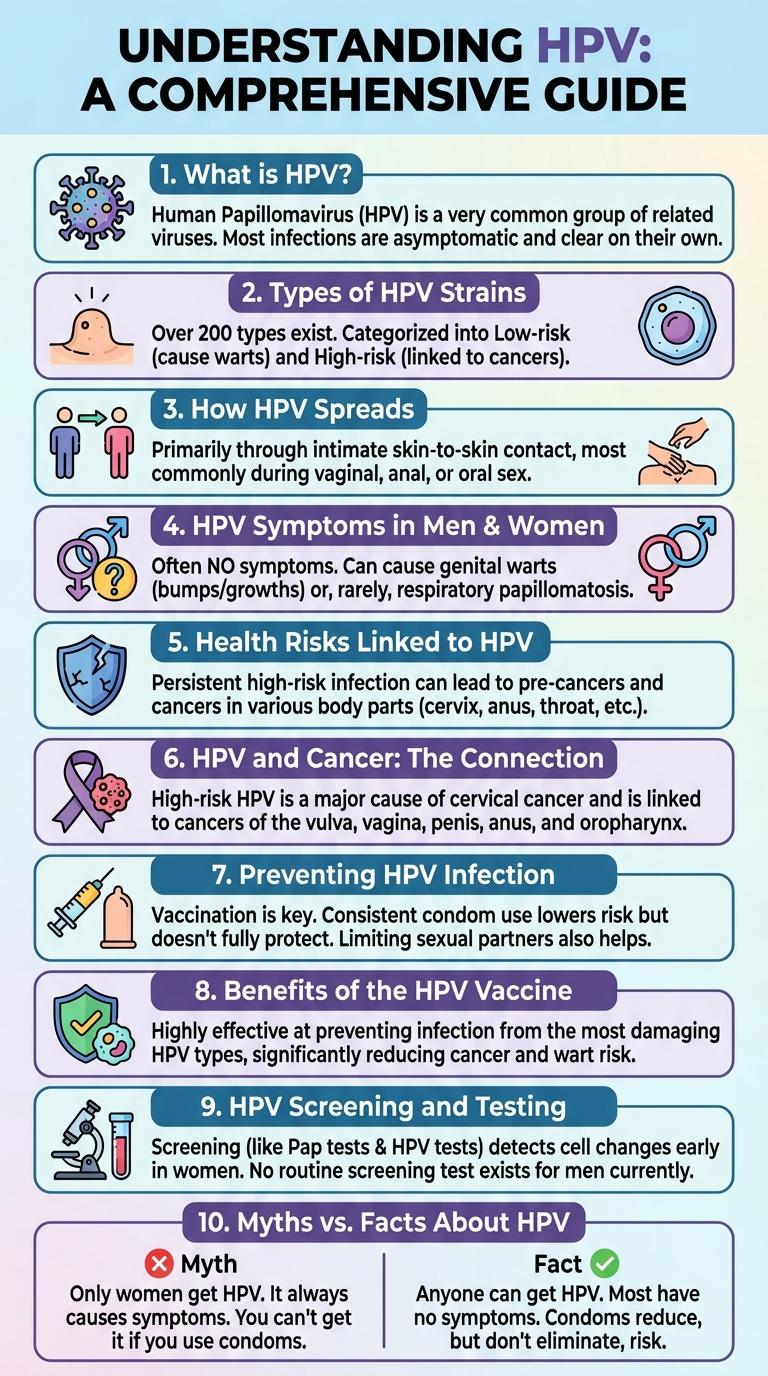
Human papillomavirus (HPV) is a widespread viral infection that affects millions worldwide, with certain strains linked to various cancers and genital warts. Understanding HPV transmission, prevention through vaccines, and early detection methods is crucial for maintaining public health. This infographic presents key facts and actionable information to raise awareness and promote proactive healthcare decisions.
What is HPV?
Human Papillomavirus (HPV) is a group of more than 200 related viruses, some of which are sexually transmitted. It is one of the most common viruses affecting skin and mucous membranes worldwide.
- Types of HPV - HPV includes both low-risk and high-risk types, some causing warts while others are linked to cancers.
- Transmission - HPV is primarily spread through intimate skin-to-skin contact, including sexual activity.
- Prevalence - Most sexually active people are exposed to HPV at some point in their lives.
HPV infection often shows no symptoms but can lead to serious health issues if left undetected and untreated.
Types of HPV Strains
Human Papillomavirus (HPV) includes over 200 identified strains, categorized into low-risk and high-risk types based on their potential to cause health issues. Low-risk strains typically lead to warts, while high-risk strains are linked to various cancers.
High-risk HPV types 16 and 18 are responsible for approximately 70% of cervical cancer cases worldwide. Understanding HPV strain types is essential for effective vaccination and cancer prevention strategies.
How HPV Spreads
| Mode of HPV Transmission | Description |
|---|---|
| Sexual Contact | Direct skin-to-skin contact during vaginal, anal, or oral sex with an infected person. |
| Genital Skin Contact | Touching infected genital areas without penetration, allowing the virus to transfer. |
| Mother to Child | Transmission during childbirth if the mother is HPV-positive. |
| Shared Objects | Rare transmission through personal items like towels or undergarments contaminated with HPV-infected cells. |
| Multiple Partners | Increased risk of acquiring HPV with a higher number of sexual partners. |
HPV Symptoms in Men and Women
Human Papillomavirus (HPV) affects both men and women, often without visible symptoms. Recognizing HPV symptoms can facilitate early detection and treatment.
- Genital Warts in Men - Small, flesh-colored growths that may appear on the penis, scrotum, or around the anus.
- Genital Warts in Women - Soft, raised lesions found on the vulva, vagina, cervix, or around the anus.
- Asymptomatic Infections - Many individuals carry HPV without symptoms, increasing the risk of unknowingly spreading the virus.
Health Risks Linked to HPV
What health risks are linked to HPV? Human Papillomavirus (HPV) is associated with several serious health conditions. It is a leading cause of cervical cancer and contributes to other cancers and genital warts.
| Health Risk | Description |
|---|---|
| Cervical Cancer | HPV infection causes nearly all cases of cervical cancer worldwide. |
| Other Cancers | HPV is linked to cancers of the anus, penis, throat, and mouth. |
| Genital Warts | Low-risk HPV types cause benign but uncomfortable genital warts. |
| Respiratory Papillomatosis | Rare growths in the airways can develop from HPV infection. |
| Increased Risk of Other STIs | HPV infection can make individuals more susceptible to other sexually transmitted infections. |
HPV and Cancer: The Connection
Human papillomavirus (HPV) is a common virus linked to several types of cancer. Understanding the connection between HPV and cancer is crucial for prevention and early detection.
- HPV Causes Cervical Cancer - Persistent infection with high-risk HPV types can lead to cervical cancer in women.
- HPV Also Leads to Other Cancers - HPV is associated with cancers of the anus, oropharynx, penis, vulva, and vagina.
- Vaccination Prevents HPV-Related Cancers - HPV vaccines reduce the risk of infections that cause cancer by targeting high-risk HPV strains.
Preventing HPV Infection
Human Papillomavirus (HPV) infection can be effectively prevented through vaccination, which protects against the most common high-risk virus strains. Consistent use of barrier methods like condoms reduces the risk of transmission during sexual activity. Regular screening and avoiding high-risk behaviors further decrease the likelihood of HPV infection and related complications.
Benefits of the HPV Vaccine
The HPV vaccine significantly reduces the risk of cervical, anal, and other HPV-related cancers. It effectively prevents the high-risk HPV strains responsible for most cases of genital warts and cancer. Widespread vaccination contributes to herd immunity, lowering HPV transmission rates in the population.
HPV Screening and Testing
Human Papillomavirus (HPV) screening is essential for early detection of high-risk HPV types linked to cervical cancer. Regular testing helps identify infections before symptoms appear, enabling timely medical intervention.
HPV screening methods include Pap smears and HPV DNA tests, which detect abnormal cells and high-risk virus strains, respectively. Women aged 21 to 65 should undergo routine screening according to medical guidelines to reduce cancer risk.