
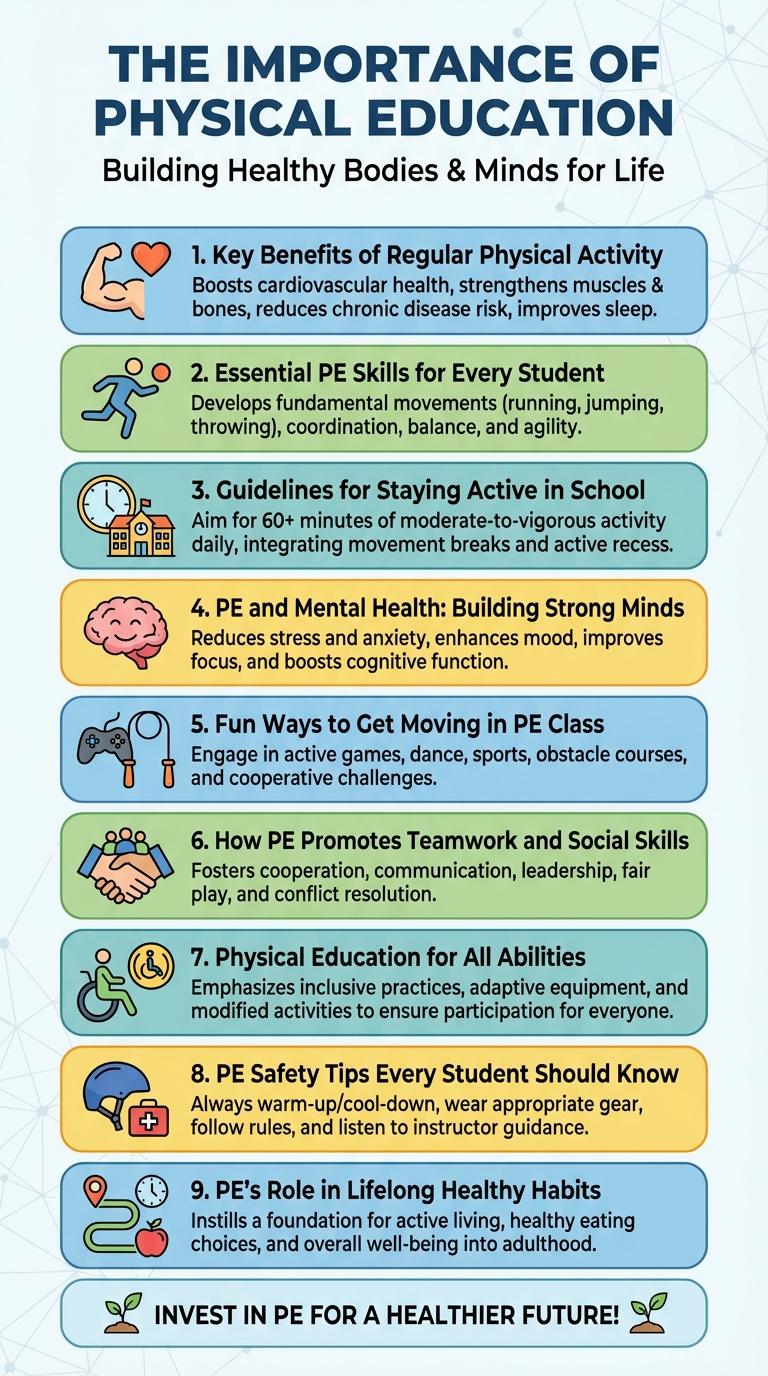
Physical education (PE) promotes overall health by encouraging regular exercise and active lifestyles. It enhances motor skills, coordination, and teamwork through diverse physical activities. PE also supports mental well-being by reducing stress and improving focus in students.
The Importance of Physical Education
| Aspect | Details |
|---|---|
| Physical Health Benefits | Improves cardiovascular fitness, strengthens muscles, enhances flexibility, and reduces obesity risk. |
| Mental Health Impact | Reduces stress and anxiety, boosts mood through endorphin release, and improves concentration and memory. |
| Social Skills Development | Encourages teamwork, communication, leadership, and conflict resolution through group activities and sports. |
| Academic Performance | Regular physical activity is linked to better academic results by enhancing cognitive function and classroom behavior. |
| Lifetime Healthy Habits | Promotes awareness of nutrition, exercise routines, and healthy lifestyle choices for long-term well-being. |
Key Benefits of Regular Physical Activity
Engaging in regular physical activity enhances overall health and boosts energy levels. Consistent exercise supports mental well-being and strengthens the immune system.
Regular physical activity reduces the risk of chronic diseases such as heart disease, diabetes, and obesity. It improves cardiovascular fitness and promotes better sleep quality. Exercise also enhances muscle strength, flexibility, and bone density.
Essential PE Skills for Every Student
Physical Education (PE) fosters essential skills like coordination, teamwork, and endurance that benefit every student. Developing these skills enhances physical health, social interaction, and mental well-being throughout life. Mastery in PE encourages lifelong active habits and self-confidence in various physical activities.
Guidelines for Staying Active in School
Physical education (PE) plays a crucial role in promoting health and fitness among students. Following structured guidelines helps maintain consistent physical activity throughout the school day.
Schools should encourage at least 60 minutes of moderate to vigorous physical activity daily. Activities can include team sports, aerobic exercises, and strength training tailored to different age groups.
PE and Mental Health: Building Strong Minds
Physical Education (PE) plays a vital role in enhancing mental health by promoting physical activity and emotional well-being. Engaging in regular PE activities helps build strong minds through improved mood, reduced anxiety, and increased self-esteem.
- Exercise Releases Endorphins - Physical activity during PE boosts endorphin levels, which act as natural mood elevators.
- Reduces Stress and Anxiety - Participation in PE activities reduces cortisol production, helping to manage stress effectively.
- Enhances Cognitive Function - Regular physical exercise improves brain function, leading to better focus and memory retention.
Incorporating PE in daily routines fosters resilience and promotes long-term mental health benefits for individuals of all ages.
Fun Ways to Get Moving in PE Class
Physical Education classes offer various fun ways to get moving, including relay races, dance routines, and obstacle courses. These activities encourage teamwork, improve cardiovascular health, and enhance coordination. Engaging students with diverse games promotes lifelong fitness habits in an enjoyable environment.
How PE Promotes Teamwork and Social Skills
How does physical education (PE) promote teamwork and social skills? PE activities require students to collaborate and communicate effectively to achieve common goals. These interactions help develop essential social skills such as cooperation, empathy, and conflict resolution.
What types of PE activities enhance teamwork? Team sports like soccer, basketball, and volleyball demand coordination and strategic planning among players. These activities teach students to trust teammates and work together under various circumstances.
How does PE improve communication skills? Students must clearly express ideas and listen to others during group exercises and games. This practice fosters verbal and non-verbal communication skills that are vital for social interaction.
Why is teamwork in PE important for overall student development? Team-based PE experiences contribute to building leadership qualities and emotional intelligence. These skills translate into better relationships both inside and outside of school.
| PE Activity | Social Skill Promoted |
|---|---|
| Team Sports | Cooperation and Trust |
| Group Exercises | Communication and Support |
| Partner Drills | Empathy and Encouragement |
| Relay Races | Collaboration and Timing |
| Problem-Solving Games | Conflict Resolution |
Physical Education for All Abilities
Physical Education (PE) promotes health and fitness for individuals of all abilities. Inclusive PE programs ensure adaptations to meet diverse physical, cognitive, and sensory needs.
Adaptive activities foster skill development, confidence, and social interaction among participants. Schools and communities can implement tailored resources to support every learner's participation.
PE Safety Tips Every Student Should Know
Physical Education (PE) activities promote fitness and teamwork among students. Following safety tips helps prevent injuries and ensures a positive experience for everyone involved.
- Warm Up Properly - Prepare your muscles and joints with stretching and light exercise to reduce the risk of injury.
- Wear Appropriate Gear - Use suitable footwear and protective equipment for each activity to stay safe during PE lessons.
- Stay Hydrated - Drink water before, during, and after exercise to maintain optimal hydration levels.
- Listen to Your Body - Stop exercising if you feel pain, dizziness, or fatigue to avoid serious health issues.
- Follow Rules and Instructions - Adhere to PE guidelines and teacher directions to create a safe environment for all students.