
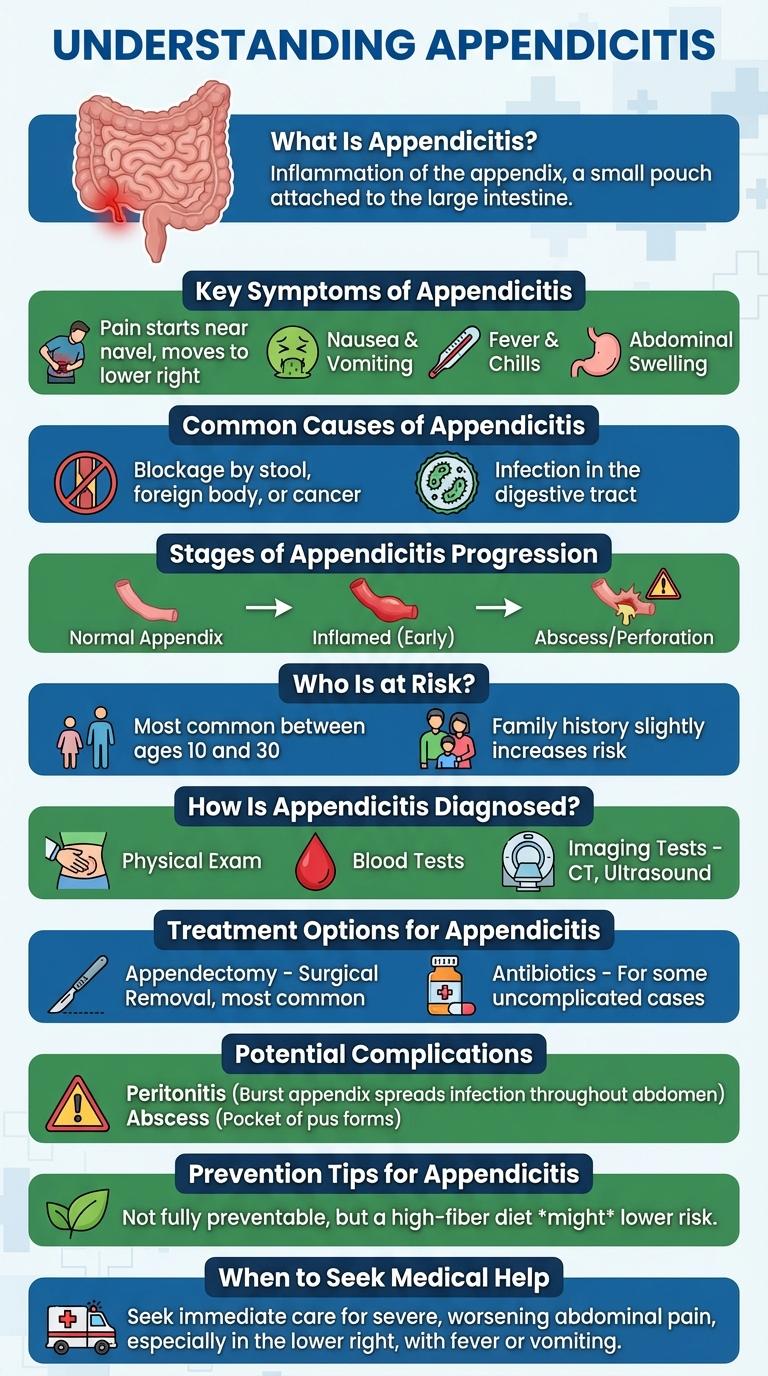
Appendicitis is a common medical emergency characterized by inflammation of the appendix, often requiring prompt diagnosis and treatment to prevent complications. Understanding its symptoms, causes, and treatment options is crucial for early detection and effective management. This infographic visually presents key information to help recognize appendicitis and seek timely medical care.
What Is Appendicitis?
Appendicitis is the inflammation of the appendix, a small tube-shaped pouch attached to the large intestine. This condition can cause severe abdominal pain and requires prompt medical attention.
The most common cause is blockage of the appendix by stool, infection, or swelling of lymphatic tissue. If untreated, appendicitis can lead to rupture, causing serious complications like peritonitis.
Key Symptoms of Appendicitis
Appendicitis is an inflammation of the appendix, a small pouch attached to the large intestine. Key symptoms include sharp pain in the lower right abdomen, nausea, and loss of appetite. Recognizing these symptoms early is crucial for prompt medical treatment and preventing complications.
Common Causes of Appendicitis
Appendicitis is primarily caused by obstruction of the appendix lumen, often due to fecaliths, lymphoid hyperplasia, or foreign bodies. Infection and inflammation can result from the trapped bacteria, leading to swelling and pain. Early diagnosis and treatment are crucial to prevent complications like rupture and peritonitis.
Stages of Appendicitis Progression
Appendicitis is an inflammation of the appendix that progresses through distinct stages. Early detection and treatment are crucial to prevent serious complications.
- Stage 1: Early Inflammation - The appendix begins to swell and fill with mucus, causing mild abdominal pain and discomfort.
- Stage 2: Suppuration - Pus forms inside the appendix, increasing pain and risk of infection spreading.
- Stage 3: Gangrene - Tissue death occurs due to lack of blood flow, heightening the chance of rupture.
- Stage 4: Perforation - The appendix ruptures, releasing bacteria into the abdominal cavity and causing peritonitis.
- Stage 5: Abscess Formation - A localized pocket of infection forms to contain the spread, often requiring drainage.
Who Is at Risk?
Appendicitis most commonly affects individuals between 10 and 30 years old. It can occur in people of all ages but is rare in infants and elderly adults.
Risk factors include a family history of appendicitis and certain infections in the digestive tract. Males have a slightly higher risk compared to females.
How Is Appendicitis Diagnosed?
How is appendicitis diagnosed? Diagnosis of appendicitis involves a combination of physical examination, medical history, and imaging tests. Doctors often perform an abdominal exam and may order blood tests, ultrasound, or CT scans to confirm the diagnosis.
Treatment Options for Appendicitis
Appendicitis requires prompt medical attention to prevent complications. Treatment options vary based on the severity and stage of the condition.
Surgical removal of the appendix, known as an appendectomy, is the most common and effective treatment. Laparoscopic surgery offers a minimally invasive approach with faster recovery times. In some cases, antibiotics may be used as an initial treatment for uncomplicated appendicitis.
Potential Complications
Appendicitis is a common medical emergency with risks of serious complications if untreated. Recognizing potential complications ensures prompt intervention and better outcomes.
Complications from appendicitis may lead to severe health issues that require immediate medical attention.
- Perforation - The appendix can rupture, releasing infectious material into the abdominal cavity.
- Abscess Formation - Pus-filled pockets may develop around the appendix, causing localized infection.
- Peritonitis - Inflammation of the abdominal lining may occur, leading to widespread infection.
Prevention Tips for Appendicitis
| Prevention Tips | Description |
|---|---|
| High-Fiber Diet | Consume fruits, vegetables, and whole grains to promote healthy digestion and reduce the risk of blockages in the appendix. |
| Stay Hydrated | Drink plenty of water daily to maintain regular bowel movements and prevent constipation. |
| Regular Exercise | Engage in physical activity to support digestive health and reduce inflammation. |
| Avoid Processed Foods | Limit intake of high-fat and low-fiber processed foods that can increase the risk of appendicitis. |
| Prompt Medical Attention | Seek timely medical evaluation for abdominal pain to detect and treat early signs of appendicitis. |