
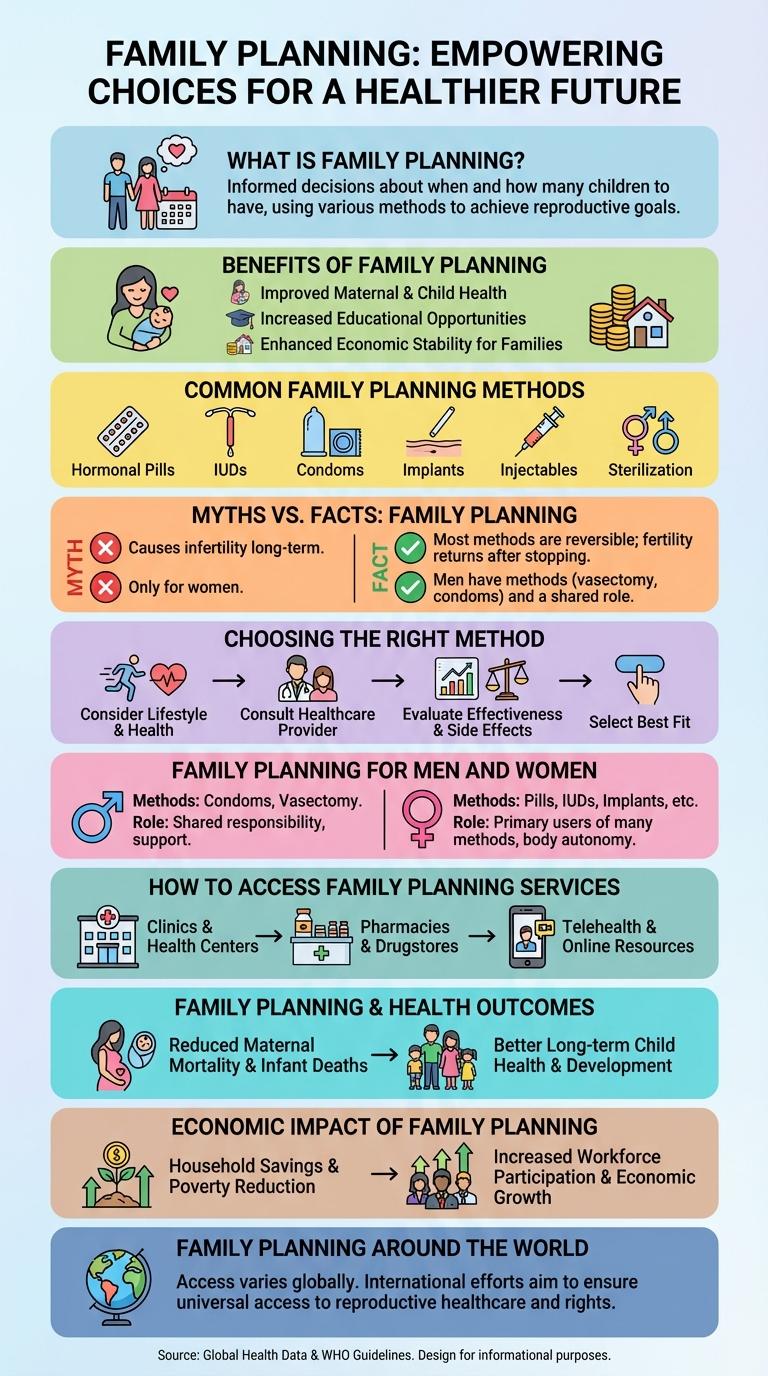
Effective family planning empowers individuals and couples to make informed decisions about the number and timing of their children, promoting healthier families and communities. By understanding methods such as contraception, fertility awareness, and reproductive healthcare, families can better manage their reproductive goals. This infographic highlights key statistics, benefits, and options to help guide responsible family planning choices.
What is Family Planning?
Family planning refers to the practice of controlling the number and timing of children in a family. It involves the use of contraceptive methods and the treatment of involuntary infertility.
- Definition - Family planning enables individuals or couples to anticipate and attain their desired number of children through effective birth control methods.
- Methods - Common methods include hormonal contraceptives, barrier devices, intrauterine devices, and natural family planning techniques.
- Benefits - Family planning promotes the health of mothers and children, supports economic stability, and empowers decision-making in reproductive health.
Benefits of Family Planning
Family planning empowers individuals and couples to decide the number and spacing of their children, enhancing overall well-being. It plays a crucial role in improving maternal and child health by reducing high-risk pregnancies.
Access to family planning methods supports economic stability by allowing families to allocate resources more effectively. It also contributes to sustainable development by managing population growth and conserving resources.
Common Family Planning Methods
Family planning is essential for managing reproductive health and ensuring the well-being of families. It involves various methods that help individuals or couples decide the number and spacing of their children.
Common family planning methods include natural, barrier, hormonal, and long-acting reversible contraceptives. Each method offers different levels of effectiveness, convenience, and side effects.
| Method | Description |
|---|---|
| Condoms | Barrier method preventing sperm from reaching the egg; also reduces STD risk. |
| Oral Contraceptives | Hormonal pills that prevent ovulation and require daily intake. |
| IUD (Intrauterine Device) | Long-acting, reversible device placed in the uterus providing years of protection. |
| Natural Family Planning | Tracking fertility signs to avoid or target pregnancy without medical products. |
| Injectable Contraceptives | Hormonal shots administered every few months for effective pregnancy prevention. |
Myths vs. Facts: Family Planning
| Myths | Facts |
|---|---|
| Family planning leads to infertility. | Modern contraceptives are safe and reversible; they do not cause permanent infertility. |
| Using contraception causes serious health problems. | Approved family planning methods have been tested for safety and are monitored by health professionals. |
| Only women are responsible for family planning. | Family planning is a shared responsibility between partners for better reproductive health outcomes. |
| Natural methods are ineffective for family planning. | When used correctly and consistently, natural family planning methods can be effective. |
| Family planning is only about stopping pregnancy. | It includes spacing births, improving maternal health, and planning for desired family size. |
Choosing the Right Method
Choosing the right family planning method ensures effective reproduction control and supports individual health needs. Understanding various options helps in making informed decisions tailored to lifestyle and medical conditions.
- Effectiveness - Evaluate each method's success rate to select the most reliable option.
- Health Compatibility - Consider personal health conditions and consult healthcare providers before choosing a method.
- Ease of Use - Opt for methods that fit comfortably into daily routines to improve consistency and effectiveness.
Family Planning for Men and Women
Family planning empowers individuals and couples to decide the number and spacing of their children. Effective family planning improves health outcomes for both men and women globally.
- Access to contraceptives - Availability of diverse contraceptive methods supports shared responsibility in family planning.
- Men's involvement - Engaging men promotes equitable decision-making and reduces unintended pregnancies.
- Health benefits - Proper family planning reduces maternal and infant mortality by preventing high-risk pregnancies.
Comprehensive family planning services foster healthier families and stronger communities worldwide.
How to Access Family Planning Services
Accessing family planning services is essential for managing reproductive health and planning your family's future. Visit local health clinics, community centers, or authorized pharmacies to find a variety of contraceptive methods and counseling services. Many regions also offer online platforms and hotlines for confidential advice and appointment scheduling.
Family Planning & Health Outcomes
Family planning improves health outcomes by reducing unintended pregnancies and lowering risks associated with childbirth. Access to contraceptives enables individuals to space births, promoting maternal and child health. Effective family planning contributes to decreased maternal mortality and better overall well-being for families.
Economic Impact of Family Planning
Family planning plays a crucial role in improving economic stability for households and communities. By enabling individuals to control the timing and number of children, families can allocate resources more effectively.
Investing in family planning reduces healthcare costs by preventing unintended pregnancies and lowering maternal and infant mortality rates. It also enhances women's participation in the workforce, leading to increased household income and national economic growth. Countries with accessible family planning services often experience higher productivity and greater economic development.