
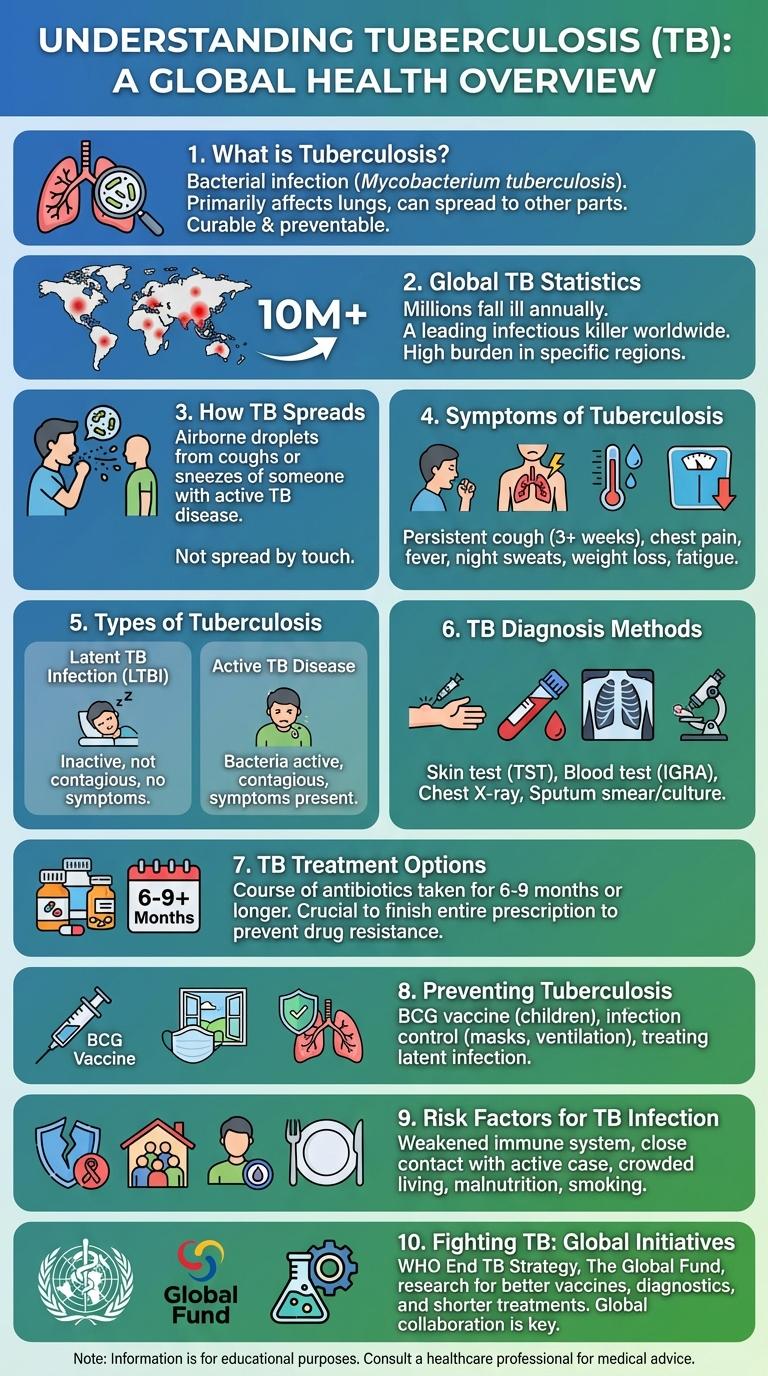
Tuberculosis is a contagious disease caused by Mycobacterium tuberculosis that primarily affects the lungs but can target other organs. Understanding its transmission, symptoms, and prevention methods is crucial for controlling its spread and improving public health outcomes. Infographics offer a clear and concise way to visualize important facts and statistics about tuberculosis for better awareness and education.
What is Tuberculosis?
Tuberculosis (TB) is a contagious bacterial infection caused by Mycobacterium tuberculosis, primarily affecting the lungs. It spreads through airborne droplets when an infected person coughs or sneezes.
TB can be latent or active, with active TB causing symptoms like cough, fever, and weight loss. Early diagnosis and treatment are crucial to prevent severe complications and transmission.
Global TB Statistics
Tuberculosis (TB) remains one of the top infectious disease killers worldwide, with millions affected annually. Global efforts focus on diagnosis, treatment, and prevention to reduce the TB burden.
- Annual TB Cases - Approximately 10 million people contracted TB in 2022 globally, reflecting a slight rise compared to previous years.
- TB Mortality - TB caused 1.5 million deaths in 2022, making it a leading cause of death among infectious diseases.
- Drug-Resistant TB - Around 450,000 new cases of multidrug-resistant TB were reported in 2022, posing challenges to treatment protocols.
How TB Spreads
Tuberculosis (TB) spreads through the air when a person with active TB coughs, sneezes, or speaks, releasing infectious droplets. These droplets can be inhaled by others, leading to infection in the lungs. Close and prolonged contact with an infected individual increases the risk of transmission.
Symptoms of Tuberculosis
Tuberculosis (TB) primarily affects the lungs and spreads through airborne droplets. Early detection of symptoms is crucial for effective treatment and preventing transmission.
Common symptoms include a persistent cough lasting more than three weeks, sometimes accompanied by blood. Other symptoms are chest pain, fatigue, weight loss, fever, and night sweats.
Types of Tuberculosis
Tuberculosis (TB) is a contagious infection primarily affecting the lungs but can impact other body parts. Understanding the different types of tuberculosis helps in diagnosis and treatment planning.
- Pulmonary Tuberculosis - This type affects the lungs and is the most common form of TB, responsible for most transmission cases.
- Extrapulmonary Tuberculosis - Occurs outside the lungs, impacting organs like lymph nodes, bones, or the brain, often harder to detect.
- Latent Tuberculosis Infection (LTBI) - The bacteria remain inactive in the body without symptoms, but can develop into active TB if untreated.
Effective treatment varies depending on the type of tuberculosis diagnosed.
TB Diagnosis Methods
Tuberculosis (TB) diagnosis primarily involves the Mantoux tuberculin skin test (TST) and interferon-gamma release assays (IGRAs), which detect immune response to Mycobacterium tuberculosis. Sputum smear microscopy and culture remain essential for identifying active pulmonary TB, with culture providing drug susceptibility results. Molecular tests such as GeneXpert MTB/RIF offer rapid, accurate detection and rifampicin resistance screening, improving diagnosis and treatment outcomes.
TB Treatment Options
Tuberculosis (TB) treatment requires a combination of antibiotics taken over several months to ensure complete eradication of the bacteria. Proper adherence to the treatment regimen is crucial to prevent drug resistance and achieve cure.
- First-line Treatment - A standard 6-month course using isoniazid, rifampicin, ethambutol, and pyrazinamide targets active TB infections effectively.
- Multidrug-Resistant TB (MDR-TB) Therapy - Involves longer, specialized regimens with second-line drugs such as fluoroquinolones and injectable agents to combat resistant TB strains.
- Latent TB Infection Treatment - Usually involves a shorter course of isoniazid or rifampicin to prevent progression to active disease.
Preventing Tuberculosis
Tuberculosis (TB) is a contagious bacterial infection that primarily affects the lungs. Preventing TB involves breaking the chain of transmission through effective measures.
Vaccination with the Bacillus Calmette-Guerin (BCG) vaccine provides immunity against severe forms of TB in children. Early detection and treatment of active cases reduce the spread of the disease. Wearing masks and ensuring proper ventilation in crowded spaces help minimize airborne transmission.
Risk Factors for TB Infection
What increases the risk of tuberculosis infection? Tuberculosis (TB) spreads through airborne droplets when an infected person coughs or sneezes. Individuals with compromised immune systems or close contact with TB patients are at higher risk.
| Risk Factor | Description |
|---|---|
| HIV Infection | Weakens immune defenses, increasing vulnerability to TB. |
| Crowded Living Conditions | Enhances airborne transmission due to close proximity. |
| Malnutrition | Reduces the body's ability to fight off infection. |
| Substance Abuse | Impairs immune function and increases exposure risk. |
| Age | Very young and elderly individuals have weaker immunity. |