
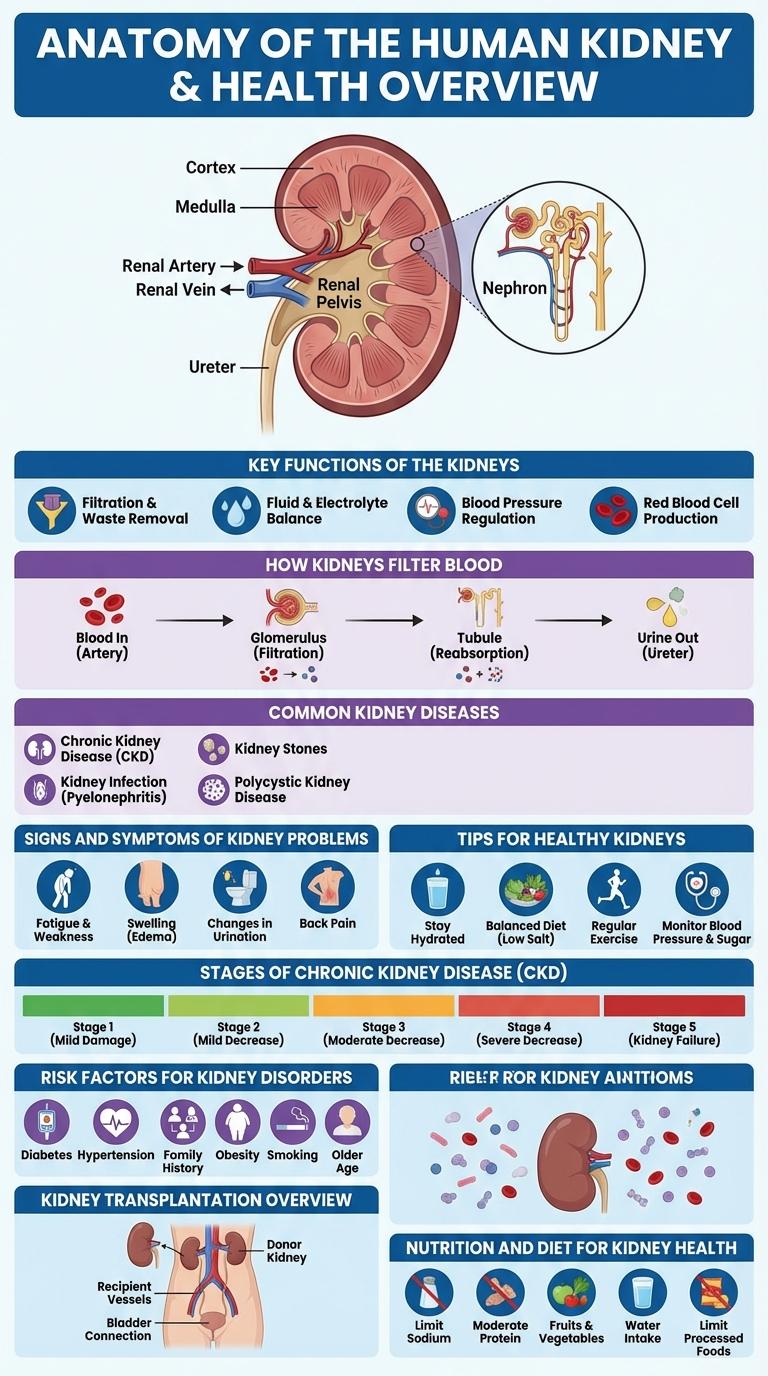
The infographic visually presents essential information about kidney anatomy, function, and health. It highlights the kidney's role in filtering blood, balancing fluids, and regulating electrolytes crucial for overall well-being. Key statistics on kidney disease prevalence and prevention tips are also featured to raise awareness and promote kidney health.
Anatomy of the Human Kidney
The human kidney is a vital organ responsible for filtering blood and producing urine. Its complex structure includes distinct anatomical regions essential for maintaining body fluid balance and removing waste.
- Cortex - The outer layer of the kidney containing nephrons that filter blood.
- Medulla - The inner region composed of renal pyramids that concentrate urine.
- Renal Pelvis - The funnel-shaped cavity collecting urine before it passes to the ureter.
Key Functions of the Kidneys
What are the key functions of the kidneys?
The kidneys filter waste products and excess fluids from the blood, forming urine. They also regulate blood pressure, electrolyte balance, and red blood cell production.
How Kidneys Filter Blood
The kidneys play a crucial role in filtering blood to remove waste and excess substances. Each kidney contains about one million nephrons, which are the functional units responsible for this filtration.
Blood enters the kidneys through the renal arteries and passes into the nephrons. Within each nephron, the glomerulus filters blood by allowing water, ions, and small molecules to pass while retaining blood cells and larger proteins. The filtered fluid then moves through the tubules, where essential substances are reabsorbed back into the bloodstream and waste products are concentrated into urine.
Common Kidney Diseases
The kidneys are vital organs responsible for filtering waste and excess fluids from the blood. Understanding common kidney diseases helps in early diagnosis and effective treatment.
- Chronic Kidney Disease (CKD) - Gradual loss of kidney function over time, often caused by diabetes and hypertension.
- Kidney Stones - Hard deposits of minerals and salts that form in the kidneys, causing severe pain and urinary issues.
- Glomerulonephritis - Inflammation of the kidney's filtering units, which can lead to kidney failure if untreated.
Signs and Symptoms of Kidney Problems
Kidney problems often present subtle signs such as persistent fatigue, swelling in the ankles or face, and changes in urination patterns including frequency and color. Early symptoms may include foamy urine, blood in urine, or difficulty concentrating due to toxin buildup. Recognizing these signs promptly is crucial for effective diagnosis and treatment of kidney-related conditions.
Tips for Healthy Kidneys
| Tip | Description |
|---|---|
| Stay Hydrated | Drink adequate water daily to help kidneys filter waste efficiently. |
| Maintain Healthy Blood Pressure | Keep blood pressure within normal limits to reduce kidney strain and damage. |
| Eat a Balanced Diet | Consume foods low in salt, sugar, and unhealthy fats to support kidney health. |
| Exercise Regularly | Engage in physical activity to improve circulation and kidney function. |
| Avoid Overuse of Painkillers | Limit NSAIDs and other medications that can harm kidney tissue over time. |
Stages of Chronic Kidney Disease
Chronic Kidney Disease (CKD) progresses through five distinct stages, each defined by the declining function of the kidneys. Early detection is crucial to slow down disease progression and prevent kidney failure.
Stage 1 involves normal kidney function with slight damage, characterized by a glomerular filtration rate (GFR) of 90 or above. Stage 5, also known as end-stage renal disease, occurs when GFR falls below 15, requiring dialysis or kidney transplantation.
Risk Factors for Kidney Disorders
Kidney disorders affect millions worldwide and can lead to serious health complications. Identifying risk factors helps in early prevention and effective management.
Common risk factors include diabetes, high blood pressure, and family history of kidney disease. Lifestyle choices such as smoking and excessive alcohol consumption also increase the risk of kidney disorders.
Kidney Transplantation Overview
Kidney transplantation is a surgical procedure to replace a damaged kidney with a healthy one from a donor. It is a common treatment for end-stage kidney disease, improving patient survival and quality of life.
- Eligibility Criteria - Patients undergo thorough evaluation to determine suitability for transplantation based on medical and psychological factors.
- Donor Types - Transplants can come from living donors or deceased donors, each with specific advantages and risks.
- Immunosuppressive Therapy - Post-transplant patients require lifelong medication to prevent organ rejection and maintain kidney function.
Kidney transplantation offers a viable alternative to dialysis, leading to better long-term outcomes and enhanced life expectancy.