
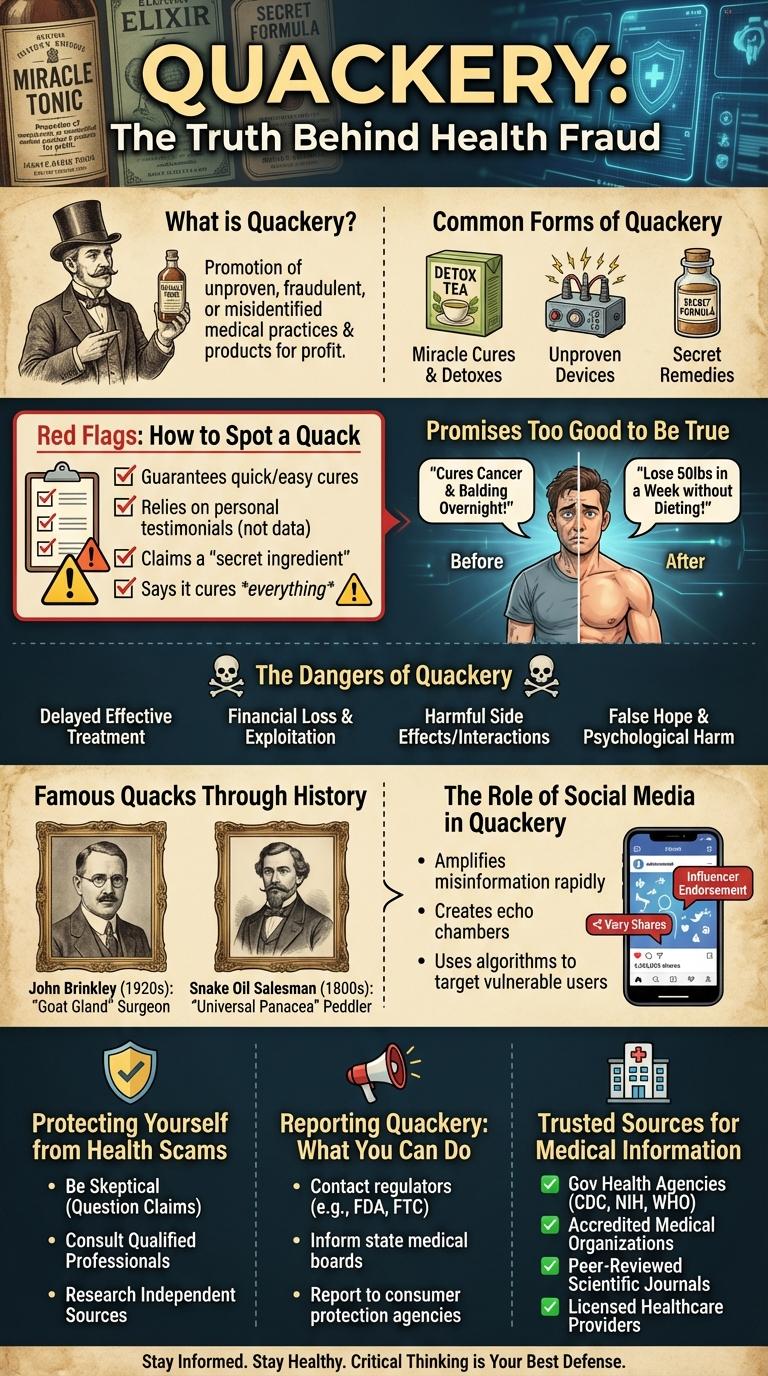
Quackery involves the promotion of fraudulent or unproven medical treatments that lack scientific support. This infographic highlights common signs of quackery, helping readers identify misleading health claims and avoid potentially harmful remedies. Understanding these red flags is crucial for making informed healthcare decisions and protecting personal well-being.
What is Quackery?
Quackery refers to the promotion of fraudulent or unproven medical practices and treatments. It often involves false claims that lack scientific evidence or regulatory approval.
Quackery can pose serious health risks by delaying proper diagnosis and effective treatment. Consumers should rely on licensed healthcare professionals and validated therapies for safe medical care.
Common Forms of Quackery
Quackery involves the promotion of fraudulent or unproven medical treatments. It often exploits vulnerable individuals seeking quick health solutions.
Common forms of quackery include miracle cures, fake cancer treatments, and herbal remedies without scientific backing. These treatments lack credible evidence and regulatory approval, posing serious health risks.
Red Flags: How to Spot a Quack
Quackery involves fraudulent medical practices that promise quick cures without scientific evidence. Common red flags include exaggerated claims, lack of credentials, and pressure to buy expensive treatments. Always verify the legitimacy of health advice through trusted medical sources and professional certifications.
The Dangers of Quackery
Quackery poses significant risks to public health by promoting unproven and often dangerous treatments. Understanding the dangers helps individuals make informed decisions and avoid harmful practices.
- Health Risks - Quack treatments can lead to worsening conditions, delayed proper diagnosis, or severe side effects.
- Financial Loss - Patients often spend large sums on ineffective remedies with no guaranteed results.
- False Hope - Quackery exploits vulnerable individuals with promises of cures unsupported by scientific evidence.
Promises Too Good to Be True
Quackery involves fraudulent health claims promising miraculous cures or instant results. These promises are often too good to be true and lack scientific validation.
Claims such as curing chronic diseases overnight or guaranteeing weight loss without effort are common in quackery. These deceptive promises exploit hope and desperation, misleading vulnerable individuals. Always verify health claims through trusted medical sources and evidence-based research.
Famous Quacks Through History
Quackery refers to the fraudulent or ignorant practice of medicine, often involving false claims and deceptive treatments. Throughout history, several famous quacks gained notoriety for promoting ineffective or harmful remedies. These figures left a lasting impact on medical ethics and public awareness of health fraud.
| Name | Notable Practice |
|---|---|
| Johann Georg Faust | Traveling alchemist and magician claiming to cure ailments |
| John R. Brinkley | Promoted goat gland transplantation as a cure for impotence |
| Mary Baker Eddy | Founder of Christian Science, advocating healing through prayer |
| Elisha Perkins | Inventor of "Perkins Tractors," metallic rods claimed to draw out disease |
| William Radam | Promoted "Microbe Killer," a toxic red mixture as an all-purpose cure |
The Role of Social Media in Quackery
Social media platforms play a significant role in spreading quackery by enabling rapid dissemination of false medical claims. These platforms often prioritize engagement over accuracy, contributing to misinformation's viral nature.
- Wide Reach - Social media reaches billions, allowing quackery to spread quickly across diverse populations.
- Algorithmic Amplification - Algorithms promote sensational content, often boosting unverified health claims over factual information.
- User-Generated Content - Individuals share personal testimonials and advice, which can perpetuate false health practices.
- Lack of Regulation - Many platforms lack strict controls to filter out misleading medical content effectively.
- Influencer Impact - Influencers with large followings can inadvertently or intentionally promote quack remedies, influencing public behavior.
Addressing quackery on social media requires enhanced digital literacy, platform accountability, and proactive fact-checking measures.
Protecting Yourself from Health Scams
What are health scams and how can you protect yourself from quackery?
Health scams often involve false claims about miracle cures or treatments without scientific backing. Protecting yourself requires verifying information through trusted medical sources and consulting healthcare professionals before trying new remedies.
How do you recognize misleading health claims?
Misleading claims often promise quick fixes or guaranteed results and lack credible evidence. Be cautious of products that claim to cure multiple unrelated diseases or use testimonials instead of clinical data.
Why is it important to consult licensed healthcare providers?
Licensed providers base their treatments on scientific research and medical standards. Consulting them ensures you receive safe advice tailored to your health needs, avoiding harmful or ineffective products.
What role does scientific evidence play in evaluating health products?
Scientific evidence validates the safety and effectiveness of treatments through rigorous testing. Choose products and therapies supported by peer-reviewed research and approved by regulatory agencies.
Where can you report suspected health scams?
Report suspicious health products or practices to consumer protection agencies and health authorities. Early reporting helps protect others from falling victim to quackery and supports enforcement actions.
Reporting Quackery: What You Can Do
| Action | Details |
|---|---|
| Identify Quackery | Recognize false health claims, miracle cures, and unproven treatments. |
| Gather Evidence | Collect advertisements, product labels, and witness statements supporting your report. |
| Contact Authorities | Report to consumer protection agencies, health departments, or medical boards. |
| Use Online Platforms | File complaints through official websites or submit reviews exposing fraudulent practices. |
| Educate Others | Share reliable information to help prevent others from falling victim to quackery. |