
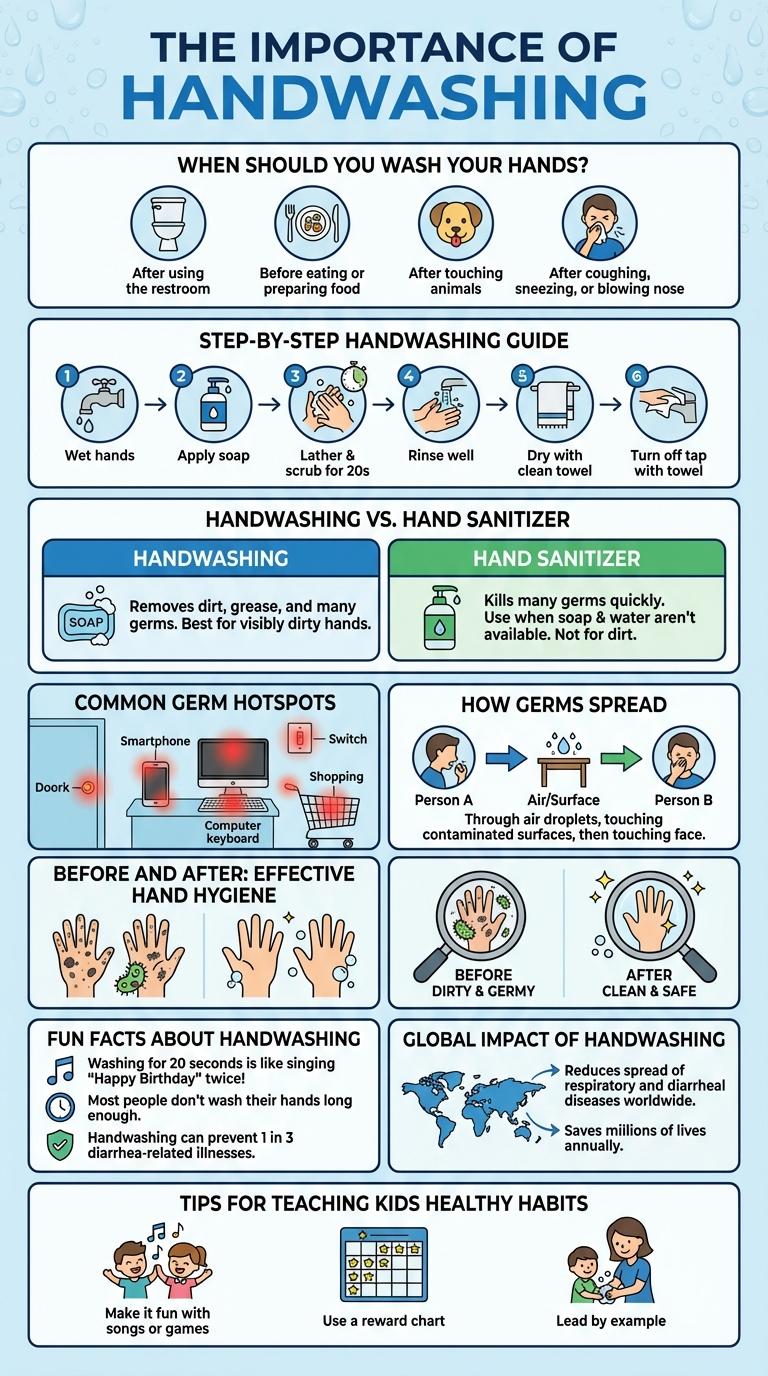
Effective handwashing is essential for preventing the spread of germs and maintaining good hygiene. Following proper techniques ensures the removal of dirt and harmful bacteria, reducing the risk of infections. Visual guides like infographics simplify these steps, promoting healthier habits across all age groups.
The Importance of Handwashing
Handwashing is a crucial practice to prevent the spread of infectious diseases. Proper hand hygiene reduces the transmission of harmful bacteria and viruses effectively.
Regular handwashing with soap and water removes dirt, germs, and chemicals from the skin. It is especially important after using the restroom, before eating, and after coughing or sneezing. Consistent hand hygiene helps protect individuals and communities from illnesses like the flu, common cold, and COVID-19.
When Should You Wash Your Hands?
Washing your hands is essential after using the restroom, before eating, and after coughing or sneezing to prevent the spread of germs. It is important to wash hands after touching surfaces in public places or handling garbage. Regular handwashing reduces the risk of infections and keeps you and others healthy.
Step-by-Step Handwashing Guide
Proper handwashing is essential to prevent the spread of germs and maintain hygiene. Follow these steps to ensure thorough hand cleaning.
- Wet Hands - Use clean, running water to wet your hands before applying soap.
- Apply Soap - Rub soap over all hand surfaces to create a lather.
- Scrub Thoroughly - Scrub for at least 20 seconds, covering backs, between fingers, and under nails.
- Rinse Hands - Rinse under clean, running water to remove all soap residue.
- Dry Hands - Use a clean towel or air dry your hands completely.
Regular handwashing reduces the risk of infections and promotes overall health.
Handwashing vs. Hand Sanitizer
Handwashing with soap and water removes dirt, germs, and viruses effectively from the skin surface. Hand sanitizer with at least 60% alcohol kills many types of bacteria and viruses but may not eliminate all harmful substances. Proper handwashing is recommended especially when hands are visibly dirty, while hand sanitizer is useful for quick disinfection when soap and water are unavailable.
Common Germ Hotspots
Handwashing is essential to reduce the spread of germs and prevent infections. Certain surfaces harbor more germs, increasing contamination risk when touched frequently.
- Doorknobs - High-touch surfaces with frequent contact accumulate bacteria and viruses rapidly.
- Cell Phones - Devices held constantly collect germs from hands and the environment throughout the day.
- Kitchen Sponges - Damp and porous, sponges are breeding grounds for harmful microbes.
- Light Switches - Touched multiple times daily, these switches harbor diverse pathogens.
- Remote Controls - Shared among family members, remotes carry germs passed from person to person.
How Germs Spread
Handwashing is a crucial practice to prevent the spread of germs that cause illnesses. Understanding how germs spread helps emphasize the importance of regular and effective hand hygiene.
- Direct Contact - Germs transfer from one person to another through handshakes or touching contaminated skin.
- Surface Contamination - Germs linger on frequently touched objects like doorknobs and smartphones, spreading when touched.
- Airborne Droplets - Coughing or sneezing releases droplets carrying germs that settle on hands and surfaces.
Before and After: Effective Hand Hygiene
Effective hand hygiene is crucial for preventing the spread of germs and infections. Washing hands at key moments, such as before eating and after using the restroom, significantly reduces contamination risks.
Before washing, hands often carry harmful bacteria and viruses picked up from surfaces. After thorough handwashing with soap and water for at least 20 seconds, the number of pathogens decreases dramatically, promoting better health.
Fun Facts About Handwashing
Did you know handwashing can reduce respiratory infections by up to 21%? Regular handwashing with soap removes germs effectively, preventing illness transmission.
How much bacteria can live on your hands? Studies show hands can carry over 150 types of bacteria at any time, highlighting the need for thorough cleaning.
Can handwashing save lives during pandemics? Proper hand hygiene is one of the most cost-effective ways to reduce the spread of viruses like COVID-19.
Why is handwashing recommended for at least 20 seconds? Soap takes time to break down germs; 20 seconds ensures a deep clean for better protection.
What percentage of people wash their hands correctly? Research indicates only about 5% to 30% of people follow effective handwashing techniques, emphasizing education importance.
Global Impact of Handwashing
| Statistic | Global Impact |
|---|---|
| Reduction in Diarrheal Diseases | Handwashing with soap can reduce diarrheal diseases by up to 40% |
| Respiratory Infection Prevention | Reduces respiratory infections by approximately 20% |
| Child Mortality | Handwashing prevents millions of child deaths annually worldwide |
| Economic Benefits | Improves productivity by reducing illness-related work absences |
| Global Health Targets | Hand hygiene is a key factor in achieving Sustainable Development Goals (SDG 3: Good Health and Well-being) |