
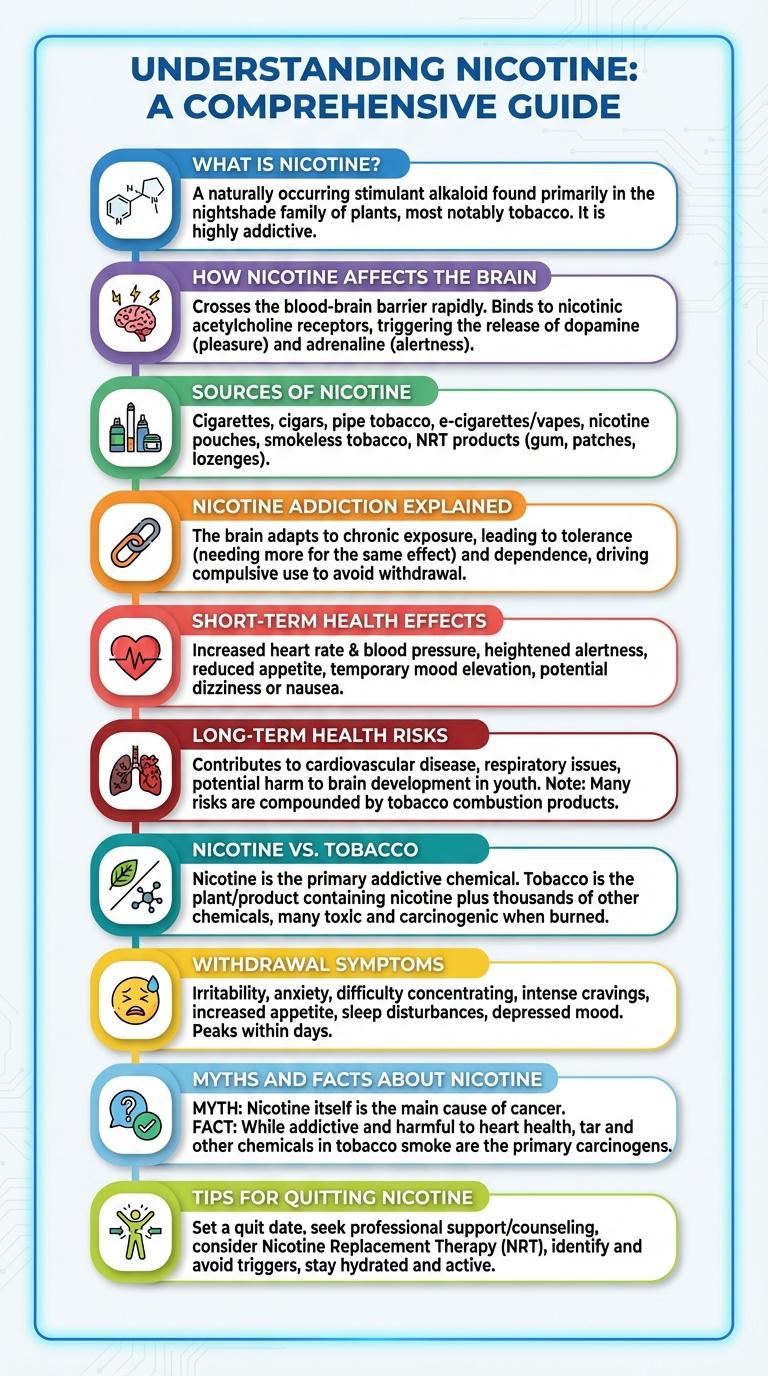
Nicotine is a highly addictive chemical found primarily in tobacco products, influencing brain function and behavior. Its impact extends beyond addiction, affecting cardiovascular health and respiratory systems. Understanding nicotine's effects helps in making informed decisions about tobacco use and cessation strategies.
What is Nicotine?
What is nicotine?
Nicotine is a natural alkaloid found in tobacco plants, acting as a stimulant in humans. It is the primary compound responsible for the addictive properties of tobacco products.
How Nicotine Affects the Brain
Nicotine is a highly addictive substance found in tobacco products that directly impacts the brain's communication system. It rapidly reaches the brain, altering normal functions and triggering the release of various neurotransmitters.
Nicotine stimulates the release of dopamine, which creates feelings of pleasure and reward, reinforcing tobacco use. It also affects acetylcholine receptors, influencing attention, learning, and memory. Long-term exposure can lead to changes in brain structure and function, increasing the risk of addiction and cognitive impairments.
Sources of Nicotine
Nicotine is a naturally occurring alkaloid found primarily in tobacco plants. It is responsible for the addictive properties of tobacco products and can also be present in other sources.
- Tobacco Plants - The main natural source of nicotine, found in leaves used for cigarettes and other tobacco products.
- Nicotine Replacement Therapies - Products like patches, gums, and lozenges that contain controlled amounts of nicotine for cessation aid.
- Electronic Cigarettes - Devices that vaporize liquid containing nicotine, often derived from tobacco extracts, to simulate smoking.
Nicotine Addiction Explained
Nicotine is a highly addictive substance found in tobacco products that stimulates the release of dopamine, creating pleasurable sensations in the brain. Prolonged exposure to nicotine leads to physical dependence and withdrawal symptoms, making quitting challenging. Understanding the mechanisms of nicotine addiction aids in developing effective cessation strategies and treatments.
Short-term Health Effects
Nicotine rapidly affects the body by increasing heart rate and blood pressure shortly after consumption. These changes can cause dizziness and nausea in some users.
Exposure to nicotine also stimulates the release of adrenaline, which constricts blood vessels and reduces oxygen flow to the heart. This immediate impact raises the risk of cardiovascular issues even in healthy individuals.
Long-term Health Risks
| Long-term Health Risk | Description |
|---|---|
| Cardiovascular Disease | Nicotine increases heart rate and blood pressure, leading to higher risk of heart attacks and stroke. |
| Respiratory Issues | Chronic exposure damages lung tissue, contributing to chronic bronchitis and reduced lung function. |
| Cancer | Nicotine promotes tumor growth and is linked to cancers of the lung, mouth, throat, and esophagus. |
| Reproductive Harm | Long-term use can cause fertility problems and complications during pregnancy. |
| Neurological Effects | Nicotine addiction alters brain chemistry, affecting memory, attention, and increasing risk of mental health disorders. |
Nicotine vs. Tobacco
Nicotine is a highly addictive chemical compound naturally found in tobacco plants. It primarily affects the brain, leading to dependence and withdrawal symptoms.
Tobacco refers to the plant material that contains nicotine along with thousands of other chemicals, many of which are harmful and carcinogenic. Smoking or consuming tobacco products exposes users to these toxic substances beyond just nicotine.
Withdrawal Symptoms
Nicotine withdrawal triggers a variety of physical and psychological symptoms when a person stops using tobacco or nicotine products. These symptoms can vary in intensity and duration depending on the individual's level of dependence.
- Irritability and Anxiety - Common emotional responses caused by the brain adjusting to the absence of nicotine.
- Cravings - Strong urges to use nicotine, often peaking within the first few days after quitting.
- Difficulty Concentrating - Withdrawal can impair focus and cognitive performance temporarily.
- Increased Appetite - Many experience heightened hunger or changes in taste during withdrawal.
- Sleep Disturbances - Insomnia or restless sleep are frequent complaints among those quitting nicotine.
Understanding withdrawal symptoms helps individuals prepare and manage the quitting process more effectively.
Myths and Facts about Nicotine
Nicotine is often misunderstood due to widespread myths that obscure its real effects and risks. Clarifying these myths with factual information helps provide a clearer understanding of nicotine's impact.
Here are key myths and facts about nicotine:
- Myth: Nicotine causes cancer - Nicotine itself is not a carcinogen, but it is highly addictive and found in tobacco products that contain cancer-causing chemicals.
- Myth: Nicotine is only harmful when smoked - Nicotine is harmful regardless of delivery method due to its addictive properties and effects on the cardiovascular system.
- Myth: Nicotine is safe in e-cigarettes - E-cigarettes contain nicotine, which can lead to addiction and adverse health effects despite being marketed as safer alternatives.